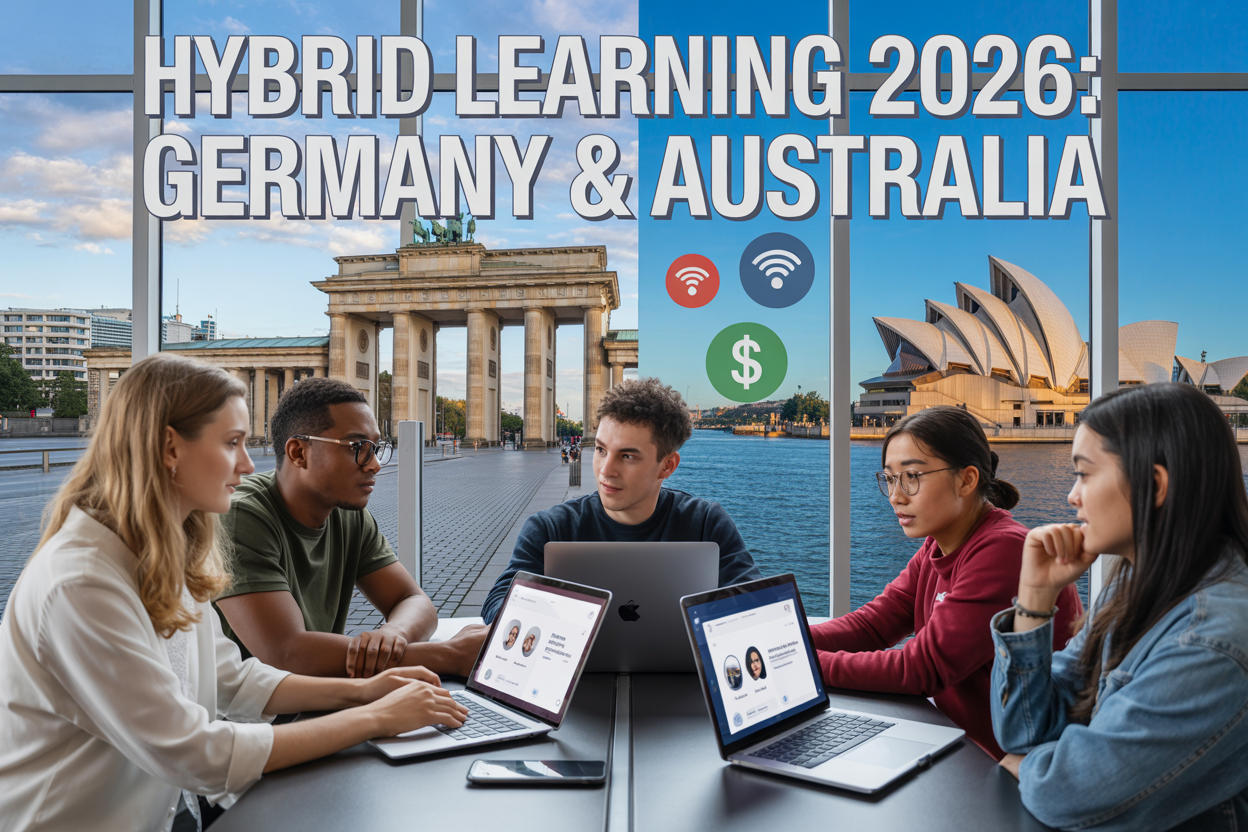
International students exploring study abroad options in 2026 can slash education costs while gaining valuable global experience through hybrid learning programs that combine online coursework with on-campus experiences. This comprehensive guide targets prospective students, education counselors, and parents seeking cost-effective pathways to international education in Germany and Australia.
Hybrid learning 2026 offers a game-changing approach where students complete foundational courses online from their home country before transitioning to on-campus study for specialized modules and practical training. This blended learning model cuts accommodation costs, reduces visa processing time, and provides flexible scheduling that fits different budgets and circumstances.
We’ll explore Germany’s hybrid education programs that allow students to earn credits remotely before joining renowned institutions for hands-on learning experiences. You’ll discover Australia’s online learning visa pathways that offer unique immigration advantages and potential cost reductions of up to 40% compared to traditional full-time on-campus programs.
The guide covers strategic program planning that maximizes cost savings for study abroad while maintaining academic quality and career prospects. We’ll break down hybrid learning visa benefits including extended stay options, work permit advantages, and simplified application processes that make international education more accessible than ever before.
Understanding Hybrid Learning Models for International Students

Online foundation programs that qualify for campus transfer
Modern hybrid learning 2026 programs offer international students a smart pathway that starts online and transitions to traditional campus life. These foundation programs typically run 6-12 months and cover core subjects like mathematics, English, academic writing, and discipline-specific basics. What makes them special is their seamless integration with partner universities in Germany and Australia.
Students can begin their academic journey from anywhere in the world, completing prerequisites and earning credits that automatically transfer to their chosen on-campus program. Major institutions like TU Munich and University of Sydney have developed robust online-to-campus pathways that guarantee admission upon successful completion. The beauty lies in the flexibility – you’re not locked into a rigid timeline, and many programs offer multiple entry points throughout the year.
These blended learning international students programs also provide cultural orientation modules, helping students adapt to German or Australian academic expectations before physically relocating. The cost savings are immediate since you’re avoiding accommodation and living expenses during the foundation phase while still making meaningful academic progress.
Flexible scheduling between virtual and physical attendance
The scheduling revolution in hybrid education allows students to customize their learning experience like never before. Many programs offer what’s called “flexible residency requirements” – you might attend campus intensives for 2-3 weeks per semester while completing the majority of coursework online.
Popular scheduling models include:
- Block scheduling: Intensive on-campus periods (2-4 weeks) followed by extended online learning
- Alternating semesters: One semester on campus, next semester online
- Weekend intensives: Monthly campus visits for labs, seminars, and collaborative projects
- Seasonal programs: Summer or winter on-campus intensives
Universities are increasingly accommodating international students’ visa constraints and financial limitations through these flexible arrangements. Some Australian institutions even allow students to split their time between multiple campuses, spending one semester in Sydney and another in Melbourne, all while maintaining continuous enrollment.
The key advantage? You can maintain work commitments or internships in your home country while pursuing your degree. This approach particularly benefits working professionals looking to upskill without completely disrupting their careers.
Academic credit transfer systems across institutions
Credit transfer systems have become sophisticated networks that recognize learning regardless of delivery mode. The European Credit Transfer System (ECTS) in Germany and the Australian Qualifications Framework (AQF) ensure your online credits carry the same weight as traditional campus-earned credits.
Most hybrid programs maintain detailed credit mapping agreements with partner institutions. For example, completing an online business fundamentals course through a German university partner automatically satisfies the same requirement at the main campus. Students typically need to maintain a minimum GPA (usually 2.5-3.0) during their online phase to guarantee transfer eligibility.
Smart students often use this system strategically, completing general education requirements online at lower costs while reserving specialized coursework for the campus experience. Some institutions offer “credit banking” – you can accumulate credits from multiple online sources before transferring to complete your degree on campus.
Technology requirements for seamless learning transitions
Success in Germany hybrid education programs and Australia online learning visa programs demands reliable technology infrastructure. The baseline requirements include high-speed internet (minimum 25 Mbps), a modern laptop or desktop, quality webcam, and noise-canceling headphones.
Essential software includes:
| Platform Type | Common Tools | Purpose |
|---|---|---|
| Learning Management | Moodle, Canvas, Blackboard | Course content and assignments |
| Video Conferencing | Zoom, Teams, WebEx | Live lectures and discussions |
| Collaboration | Slack, Discord, Trello | Group projects and communication |
| Academic Software | MATLAB, SPSS, AutoCAD | Field-specific applications |
Universities often provide software licenses and technical support, but students should budget for potential hardware upgrades. Cloud storage becomes critical for accessing files seamlessly between online and campus phases. Many institutions now offer virtual desktop infrastructure, allowing students to access campus computers remotely for specialized software.
Mobile compatibility is increasingly important as students move between time zones and locations. Apps that work offline and sync when connectivity returns can be lifesavers during transitions. The most successful hybrid students invest in backup internet solutions and portable tech setups that work equally well in a home office or campus library.
Germany’s Hybrid Education Opportunities and Advantages

Public universities offering online-to-campus pathways
German public universities are rolling out innovative hybrid learning 2026 programs that let international students start their degrees remotely before transitioning to campus. Universities like TU Munich, Heidelberg University, and the University of Hamburg now offer structured pathways where students can complete foundational courses online during their first semester.
These programs work particularly well for engineering, computer science, and business administration degrees. Students typically spend 6-12 months taking core subjects and prerequisites online before arriving in Germany for hands-on labs, seminars, and specialized coursework. The beauty of this approach lies in its flexibility – you can maintain your current job or commitments while beginning your German education journey.
| University | Program Duration Online | Campus Transition | Popular Fields |
|---|---|---|---|
| TU Munich | 6 months | Spring semester | Engineering, CS |
| Heidelberg University | 8 months | Fall semester | Life Sciences, Medicine |
| University of Hamburg | 12 months | Flexible entry | Business, Economics |
The application process mirrors traditional admissions, but these Germany hybrid education programs often have rolling deadlines that give you more flexibility in planning your transition timeline.
Reduced living costs during online learning phases
Starting your German education online creates massive cost savings opportunities. While taking courses remotely, you avoid the immediate expenses of German housing, which averages €400-800 monthly in student cities like Berlin, Munich, or Frankfurt. Food costs, transportation, and daily living expenses can add another €600-900 per month.
Smart students use this online phase strategically. You can continue working in your home country, building savings specifically for your German campus experience. Many students report saving €8,000-15,000 during their online learning period, creating a substantial buffer for their on-campus transition.
Cost comparison breakdown:
- Online phase: Course fees only (€150-350 per semester at public universities)
- Campus phase: Full living costs (€1,000-1,500 monthly) plus course fees
- Total savings potential: €6,000-18,000 depending on online duration
This cost-effective study approach also lets you test your commitment to the program without the financial pressure of immediate relocation. You can explore whether German academia suits your learning style before making the full investment in moving abroad.
Student visa extensions for hybrid program participants
Germany offers specific visa accommodations for blended learning international students enrolled in recognized hybrid programs. The student visa process becomes more streamlined when you’re already enrolled and have completed coursework online, as you’ve demonstrated academic progress and commitment.
Initially, you might enter on a short-stay visa or student applicant visa for your campus transition. Once in Germany, converting to a full student residence permit becomes straightforward since you’re already enrolled and have academic records. Immigration offices particularly appreciate the structured nature of these programs.
Key visa advantages:
- Extended processing times due to pre-enrollment status
- Reduced documentation requirements (academic progress already established)
- Flexible entry dates aligned with your campus transition timeline
- Work permit eligibility from day one of campus arrival
The hybrid learning visa benefits extend beyond just entry permissions. Students in these programs often qualify for longer residence permits since their total study duration is clear and documented from the start.
Language preparation through digital platforms before arrival
German universities partnering with hybrid programs typically provide access to digital language learning platforms during your online phase. This preparation time proves invaluable for international students, as you can build German proficiency without the pressure of immediate academic deadlines.
Most programs include partnerships with Deutsche Welle, Babbel, or university-specific language platforms. You’ll often get access to conversation clubs via video calls with current German students or language exchange partners. This social aspect helps you start building networks before arriving on campus.
Effective preparation timeline:
- Months 1-3: Basic vocabulary and grammar through apps
- Months 4-6: Academic German through university platforms
- Months 7-8: Conversation practice with native speakers
- Pre-arrival: Intensive courses targeting your specific field
The language advantage gained during online learning phases often determines your success once you reach campus. Students who use this time effectively report smoother integration into German academic culture and better performance in their first on-campus semester.
Australia’s Blended Learning Programs and Benefits

Top-ranked Universities with Hybrid Degree Options
Australia’s leading universities have embraced hybrid learning 2026 models, creating flexible pathways for international students. The University of Melbourne offers blended programs in business and engineering where students complete foundational courses online before transitioning to campus-based labs and seminars. Similarly, the Australian National University (ANU) provides hybrid options in computer science and data analytics, allowing students to begin their studies remotely while maintaining access to world-class faculty.
Monash University stands out with its comprehensive blended learning international students framework across multiple campuses. Their hybrid MBA program combines online coursework with intensive on-campus residencies, perfect for working professionals. The University of Sydney has developed innovative pathway programs in health sciences and education that blend virtual simulations with hands-on clinical experience.
| University | Popular Hybrid Programs | Online Duration | Campus Duration |
|---|---|---|---|
| University of Melbourne | Business, Engineering | 6-12 months | 12-18 months |
| ANU | Computer Science, Data Analytics | 4-8 months | 16-20 months |
| Monash University | MBA, International Business | 8-12 months | 12-16 months |
| University of Sydney | Health Sciences, Education | 6-10 months | 14-18 months |
Work Permit Advantages During Online Study Periods
The Australia online learning visa framework provides unique benefits for hybrid learners. Students enrolled in approved blended programs can maintain their student visa status while completing online components from their home countries. This arrangement allows students to work part-time in Australia during campus periods while potentially working full-time in their home countries during online phases.
Recent policy updates have made it easier for hybrid students to transition between study modes without visa complications. Students can apply for part-time work permits that remain valid throughout their program duration, regardless of their physical location during online study periods. This flexibility means students can gain valuable work experience in both their home country and Australia, building a more diverse professional network.
The Department of Home Affairs has streamlined the process for students switching between online and on-campus study modes. Students no longer need to reapply for work permits when transitioning between study phases, saving both time and application fees.
Pathway Programs Connecting Online and On-Campus Study
Australian institutions have created sophisticated pathway programs that seamlessly integrate online and campus-based learning. These study abroad hybrid programs typically begin with foundational courses delivered online, allowing students to adapt to Australian academic standards while remaining in their home countries.
Griffith University’s pathway programs in business and IT feature a unique “bridge semester” where students complete online coursework while participating in virtual campus tours and orientation sessions. RMIT University offers similar programs in design and engineering, with students completing theoretical components online before joining intensive workshops and studio sessions on campus.
The University of Technology Sydney (UTS) has pioneered micro-credential pathways that stack online courses into full degree programs. Students earn certificates for each online module, creating tangible progress markers while building toward their final qualification.
Key pathway features include:
- Academic English preparation delivered online
- Industry-specific skill development through virtual labs
- Cultural adaptation workshops via digital platforms
- Peer networking opportunities through online communities
- Career counseling services accessible throughout the program
Post-study Work Visa Benefits for Hybrid Graduates
Graduates from Australian blended learning international students programs enjoy significant post-study work visa advantages. The Temporary Graduate visa (subclass 485) recognizes hybrid program graduates equally with traditional on-campus students, provided they meet minimum residency requirements during their campus-based study periods.
Students who complete bachelor’s degrees through hybrid programs typically qualify for 2-4 year work permits, depending on their field of study and campus time completed. Master’s degree graduates from hybrid programs can access extended work permits, particularly in priority sectors like healthcare, engineering, and technology.
The Australian government has introduced bonus points for hybrid program graduates applying for permanent residency, recognizing their adaptability and international experience. Students who complete hybrid programs often demonstrate stronger cross-cultural competencies and digital literacy skills, making them attractive candidates for Australian employers.
Regional study benefits apply to hybrid students who complete their campus components in designated regional areas. These students can access extended post-study work visas and additional migration pathways, creating long-term settlement opportunities for those who combine online flexibility with regional campus experience.
Maximizing Cost Savings Through Strategic Program Planning

Accommodation Savings During Online Learning Phases
Starting your international education journey from home gives you a massive financial head start. While your classmates rush to secure expensive student housing in Berlin or Sydney, you’ll be learning from your existing living situation, saving thousands of dollars in rent, utilities, and setup costs.
The typical student accommodation in Germany costs between €300-800 monthly, while Australia ranges from AUD $800-1,500. By completing your initial semesters online, you can bank these savings for your eventual relocation. Many hybrid learning programs offer flexible timelines, allowing students to transition to campus housing during off-peak seasons when rental prices drop significantly.
Smart students use this phase to research accommodation options thoroughly. You’ll have months to compare student residences, shared apartments, and homestay programs without the pressure of immediate deadlines. Some universities even offer priority housing placements for students who complete their online components successfully.
Create a dedicated savings account specifically for your accommodation fund. Set aside the money you would have spent on housing each month. This strategy gives you leverage when negotiating rental agreements and provides a substantial security deposit buffer when you’re ready to make the move.
Reduced Transportation and Daily Living Expenses
Online learning phases eliminate the daily grind of commuting costs that can quietly drain your budget. German students typically spend €80-150 monthly on public transportation, while Australian students face similar expenses ranging from AUD $120-200. These seemingly small amounts compound quickly over multiple semesters.
Your grocery bills also remain predictable during online phases. Instead of navigating expensive international food markets or relying on campus cafeterias, you’ll shop at familiar local stores where you understand pricing and can take advantage of bulk purchasing opportunities.
Healthcare costs represent another significant saving area. While maintaining your current health insurance, you avoid the immediate need for international student health coverage, which costs approximately €110 monthly in Germany and AUD $600+ annually in Australia.
Entertainment and social expenses naturally decrease when you’re not surrounded by the vibrant (and expensive) social scene of international student life. Use this time to build your financial foundation rather than immediately diving into the costly lifestyle changes that come with studying abroad.
Early Bird Discounts for Advance Program Enrollment
Universities reward students who commit to hybrid learning programs well in advance. Early registration typically offers 10-25% tuition discounts, which translates to substantial savings on your overall education investment. German institutions often provide additional incentives for international students who enroll 6-12 months ahead of their intended start date.
Australian universities frequently bundle early enrollment with accommodation guarantees and airport pickup services. These packages provide both financial benefits and peace of mind for your eventual transition to campus life.
Payment plan advantages multiply when you register early. Many institutions offer extended payment schedules with reduced or eliminated interest charges for advance enrollments. This flexibility allows you to spread costs across multiple months while your earning potential remains steady in your home country.
Scholarship opportunities also favor early applicants. Merit-based awards and need-based assistance programs typically have earlier deadlines for hybrid learning students. By planning ahead, you position yourself for funding opportunities that late applicants miss entirely.
Track enrollment cycles carefully, as many programs offer rolling discounts throughout the year. The highest savings typically occur during summer enrollment periods for following-year programs, when universities aim to secure their international student numbers for budget planning purposes.
Navigating Visa Requirements and Immigration Benefits

Student Visa Application Timelines for Hybrid Programs
Planning your visa application for hybrid learning 2026 requires understanding that both Germany and Australia have adapted their processes to accommodate blended learning international students. For Germany, apply for your student visa 8-12 weeks before your planned arrival, even if you’re starting with online components. The German consulates now recognize hybrid programs, but you’ll need confirmation that your program includes mandatory on-campus elements.
Australia’s Department of Home Affairs typically processes student visas within 4-6 weeks, though hybrid programs may require additional documentation. Submit your application as soon as you receive your Confirmation of Enrolment (CoE), regardless of whether your first semester is online. Both countries require proof of your hybrid program structure, including detailed schedules showing when you’ll transition to on-campus study.
Key timeline considerations:
- Germany: Apply 8-12 weeks early, include hybrid program documentation
- Australia: Submit immediately after receiving CoE, allow 4-6 weeks processing
- Both countries: Provide detailed program schedules and transition dates
Work Authorization During Online Study Periods
Germany offers unique advantages for hybrid learning visa benefits during online study phases. Students can work up to 120 full days or 240 half days annually, even while completing online coursework from outside Germany. This flexibility allows you to gain work experience in your home country while maintaining your student status.
Australia’s approach differs significantly. Student visa holders must be physically present in Australia to access work authorization benefits. However, the 48-hour fortnightly work limit applies once you arrive for your on-campus phase. Some institutions offer virtual internships and research opportunities during online periods that count toward graduation requirements without triggering work authorization restrictions.
Work authorization comparison:
| Country | Online Phase Work Rights | On-Campus Phase Limits |
|---|---|---|
| Germany | 120 full days annually | Same limits apply |
| Australia | No work rights remotely | 48 hours fortnightly |
Permanent Residency Pathways After Hybrid Program Completion
Completing hybrid programs opens distinct pathways in both destinations. Germany’s post-study visa allows 18 months to find employment related to your field, regardless of whether you completed portions online. The key factor is graduating from a recognized German institution with adequate on-campus time to meet degree requirements.
Australia’s Temporary Graduate visa (subclass 485) requires physical presence during the final two academic years. Hybrid students must carefully plan their on-campus periods to meet this requirement. The visa duration varies by qualification level – bachelor’s degrees offer 4 years, while master’s degrees provide 5 years for eligible students.
Both countries value the technical skills and adaptability demonstrated through successful hybrid program completion. Germany particularly appreciates digital literacy gained through blended learning formats, while Australia recognizes the international perspective developed through studying across multiple environments.
Health Insurance and Coverage Options Across Study Phases
Health insurance requirements for hybrid programs vary by study phase and location. Germany mandates health insurance from day one of enrollment, even during online periods. Students under 30 can access statutory health insurance (around €110 monthly) or choose private alternatives. Coverage remains active regardless of your physical location during online study phases.
Australia requires Overseas Student Health Cover (OSHC) for the entire visa duration. Premium costs range from $500-800 annually depending on the provider. OSHC only covers you while physically present in Australia, so additional coverage may be needed during online study periods in your home country.
Insurance planning strategies:
- Germany: Maintain German coverage throughout the program for seamless transitions
- Australia: Coordinate OSHC with home country coverage during online phases
- Both: Consider travel insurance for transitions between study locations
- Budget for continuous coverage even during online-only periods
Many institutions now offer guidance on coordinating coverage across hybrid learning phases, helping students avoid gaps while managing costs effectively.
Essential Technology and Infrastructure Setup

High-speed Internet Requirements for Virtual Classes
Virtual learning success depends heavily on your internet connection. For seamless participation in hybrid learning 2026 programs, you’ll need a minimum download speed of 25 Mbps and upload speed of 3 Mbps. This baseline ensures smooth video streaming, real-time interaction, and file sharing during live sessions.
Students joining international student Germany Australia programs should consider these upgraded requirements:
- Video conferencing: 50+ Mbps download for HD quality
- Multiple device usage: Add 10 Mbps per additional device
- Large file transfers: 10+ Mbps upload for assignment submissions
- Backup connection: Mobile hotspot or secondary internet source
Ethernet connections provide more stability than Wi-Fi for important classes. Test your connection speed regularly using tools like Speedtest.net, especially before major exams or presentations. Many students underestimate how internet lag affects their participation grades in blended learning international students programs.
Consider upgrading your plan before starting classes, as basic residential internet often struggles with demanding academic platforms. Some universities provide internet subsidies or technical support for students in cost savings study abroad programs.
Digital Learning Platforms and Software Access
Modern hybrid education requires familiarity with multiple digital platforms. Most universities use Learning Management Systems (LMS) like Canvas, Blackboard, or Moodle as their primary hub. These platforms host course materials, assignments, grades, and discussion forums.
Essential software categories for hybrid learning include:
| Platform Type | Common Examples | Primary Use |
|---|---|---|
| Video Conferencing | Zoom, Microsoft Teams, Google Meet | Live classes and meetings |
| Collaboration Tools | Slack, Discord, Microsoft Teams | Group projects and communication |
| Cloud Storage | Google Drive, OneDrive, Dropbox | File sharing and backup |
| Academic Software | MATLAB, Adobe Creative Suite, Statistical packages | Specialized coursework |
Germany hybrid education programs often integrate with European academic networks, while Australian institutions typically use Asia-Pacific compatible platforms. Check your university’s specific requirements early, as some software needs institutional licenses.
Download mobile apps for key platforms to stay connected during commutes or travel. Many students find tablet compatibility crucial for note-taking during video lectures. Budget for potential software costs, though many universities provide free access to premium educational versions.
Time Zone Management for International Online Sessions
Managing time zones becomes critical when participating in blended learning programs across different continents. Students in hybrid learning visa benefits programs often attend live sessions scheduled in their host country’s time zone while physically located elsewhere.
Create a comprehensive time zone strategy:
Planning Tools:
- World clock apps with multiple time zones
- Google Calendar with automatic time zone conversion
- University-provided scheduling platforms
- Smartphone widgets showing campus time
Scheduling Best Practices:
- Block calendar time in both your local and campus time zones
- Set multiple reminders for important sessions
- Account for daylight saving time changes in both locations
- Plan buffer time before critical meetings
Students transitioning between online campus learning combination phases need extra attention to scheduling. Record important sessions when possible, as time zone conflicts inevitably arise. Many professors accommodate international participants by offering session recordings or alternative meeting times.
Consider your natural productivity hours when choosing between live attendance and recorded viewing. Some students perform better joining live sessions despite inconvenient timing, while others prefer watching recordings during peak focus hours. Plan your sleep schedule around the most critical live sessions, particularly for courses requiring real-time participation or group work.

Hybrid learning opens up incredible opportunities for international students looking to study in Germany or Australia without breaking the bank. By starting your degree online and transitioning to campus later, you can save thousands on living expenses while still experiencing the full benefits of studying abroad. Both countries offer flexible visa arrangements that make this educational journey smoother than you might expect.
The key to success lies in choosing the right program, setting up reliable technology, and planning your transition carefully. Whether you’re drawn to Germany’s tuition-free universities or Australia’s world-class institutions, hybrid learning lets you get the best of both worlds. Start researching programs now, connect with admissions counselors, and begin preparing for an educational adventure that combines affordability with international exposure.