Top 11 Skills Employers Look for in Job Candidates
Landing a job today takes more than a impressive degree or a long list of credentials. Employers are shifting how they hire — and the skills employers look for now go well beyond what’s written on your diploma. With AI and automation reshaping entire industries, companies want people who can think, adapt, collaborate, and communicate clearly from day one.
This guide is for job seekers at any stage — recent grads, career switchers, or anyone trying to stay competitive in a tough market. You’ll get a straightforward breakdown of the top skills for job candidates that hiring managers actually care about in 2025 and beyond.
Here’s what we’ll dig into:
- Why problem-solving skills in the workplace sit at the top of every recruiter’s wish list
- How teamwork skills for employment separate good candidates from great ones
- The written communication skills for jobs that make employers take notice
You’ll also find practical tips on how to develop workplace skills you might be missing — and how to showcase skills to employers so they actually stick. Whether your resume needs a refresh or you’re prepping for interviews, this list gives you a clear picture of what today’s hiring landscape demands.
Problem-Solving as the Top Employer Priority
Why Problem-Solving Tops the 2025 Job Outlook Survey
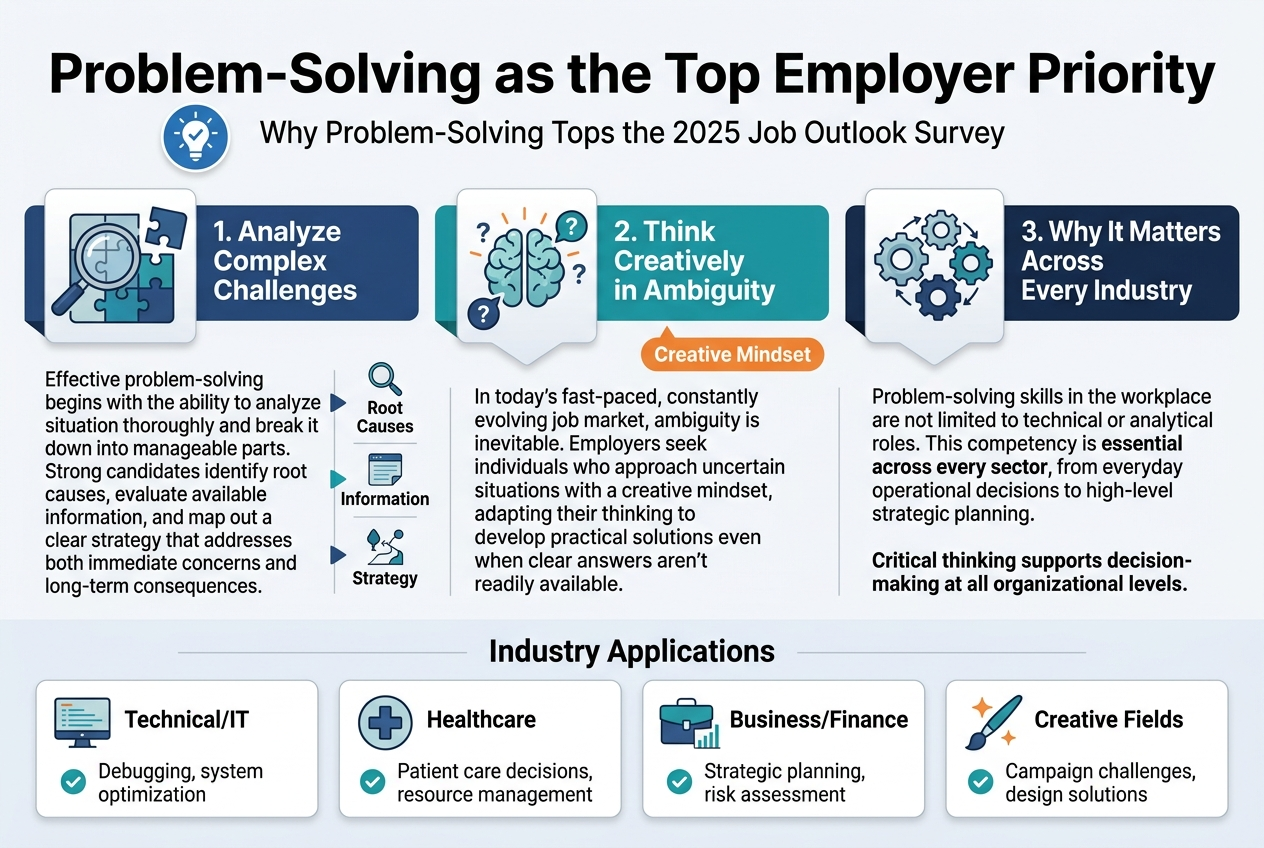
According to the National Association of Colleges & Employers (NACE) Job Outlook 2025 survey, problem-solving ranks as the number one skill employers look for in job candidates, making it the most critical competency job seekers can develop and showcase today.
How to Analyze and Break Down Complex Challenges
Effective problem-solving begins with the ability to analyze a situation thoroughly and break it down into manageable parts. Rather than feeling overwhelmed by complexity, strong candidates develop a structured approach — identifying root causes, evaluating available information, and mapping out a clear strategy that addresses both immediate concerns and long-term consequences.
Applying Creative Thinking to Ambiguous Situations
In today’s fast-paced, constantly evolving job market, ambiguity is inevitable. Employers seek individuals who approach uncertain situations with a creative mindset, adapting their thinking to develop practical solutions even when clear answers aren’t readily available. This reflects an in-demand skill for job seekers that goes far beyond technical knowledge.
Why Problem-Solving Matters Across Every Industry
Problem-solving skills in the workplace are not limited to technical or analytical roles. This competency is essential across every sector, from everyday operational decisions to high-level strategic planning. Employers need workers who think critically and contribute meaningfully to decision-making at all organizational levels.
| Industry Type | Application of Problem-Solving |
|---|---|
| Technical/IT | Debugging, system optimization |
| Healthcare | Patient care decisions, resource management |
| Business/Finance | Strategic planning, risk assessment |
| Creative Fields | Campaign challenges, design solutions |
Written Communication Skills That Set You Apart
Why Written Communication Has Grown More Critical in the Digital Age
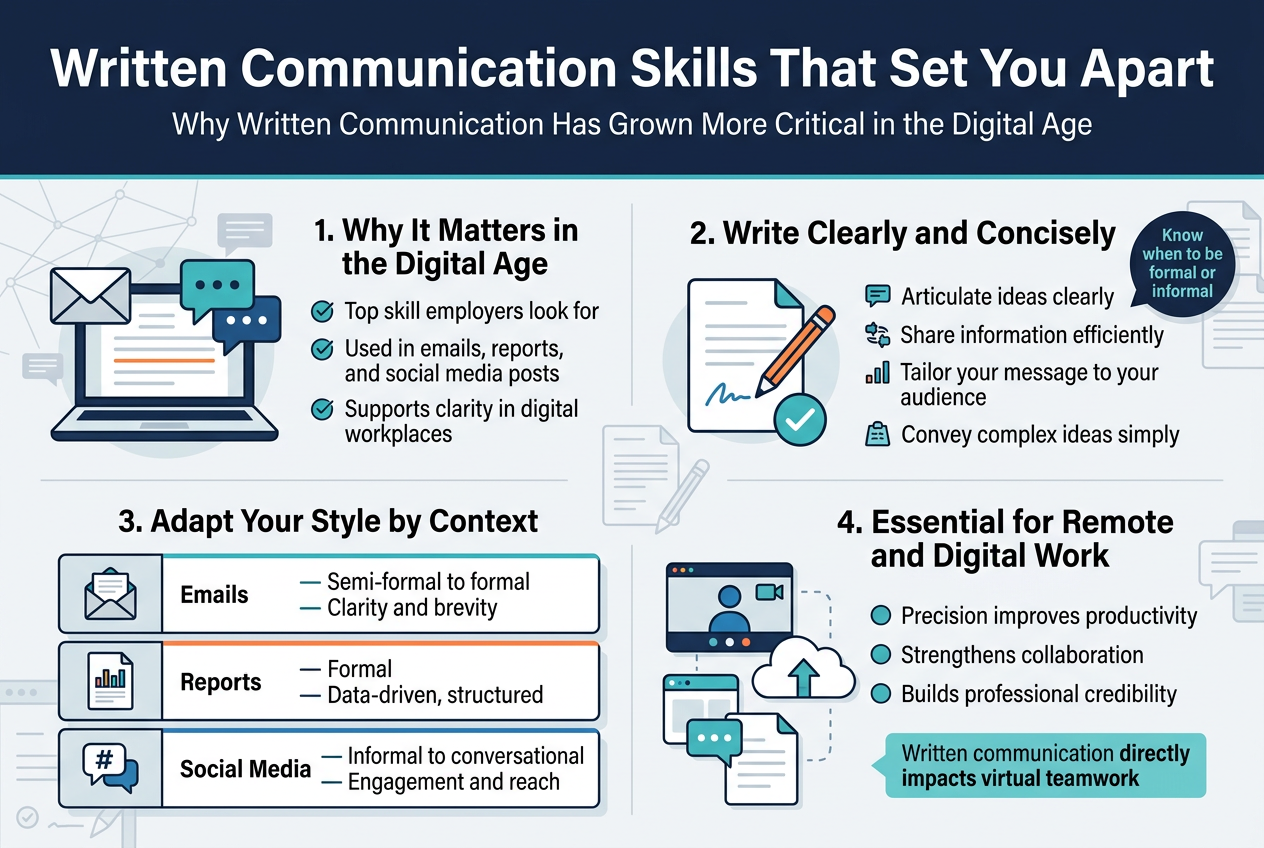
In today’s digital landscape, written communication skills for jobs have become one of the most sought-after attributes employers prioritize. According to the Job Outlook 2025 survey, written communication ranks among the top skills employers look for in new hires, spanning emails, reports, and social media posts.
Crafting Clear and Concise Messages for Any Audience
Effective written communication goes far beyond grammar and syntax. It involves:
- Articulating ideas clearly so messages are understood without ambiguity
- Sharing information efficiently to save time and reduce misunderstandings
- Tailoring your message to suit different audiences and contexts
- Conveying complex ideas in a digestible, straightforward manner
Knowing when to be formal or informal is equally critical to ensuring your message lands as intended.
Adapting Your Writing Style for Professional Contexts
| Context | Writing Style | Key Focus |
|---|---|---|
| Emails | Semi-formal to formal | Clarity and brevity |
| Reports | Formal | Data-driven, structured |
| Social Media | Informal to conversational | Engagement and reach |
Adapting your tone and style to the professional context demonstrates versatility — a quality that separates strong candidates from average ones.
Leveraging Strong Writing Skills in Remote and Digital Work Environments
With this in mind, the rise of remote work has made written communication more indispensable than ever. Employers increasingly rely on digital platforms to communicate with both employees and clients, meaning your ability to write with precision directly impacts productivity, collaboration, and professional credibility in virtual settings.
Additional Skills Employers Seek in Job Candidates
Critical Thinking and Decision-Making Abilities
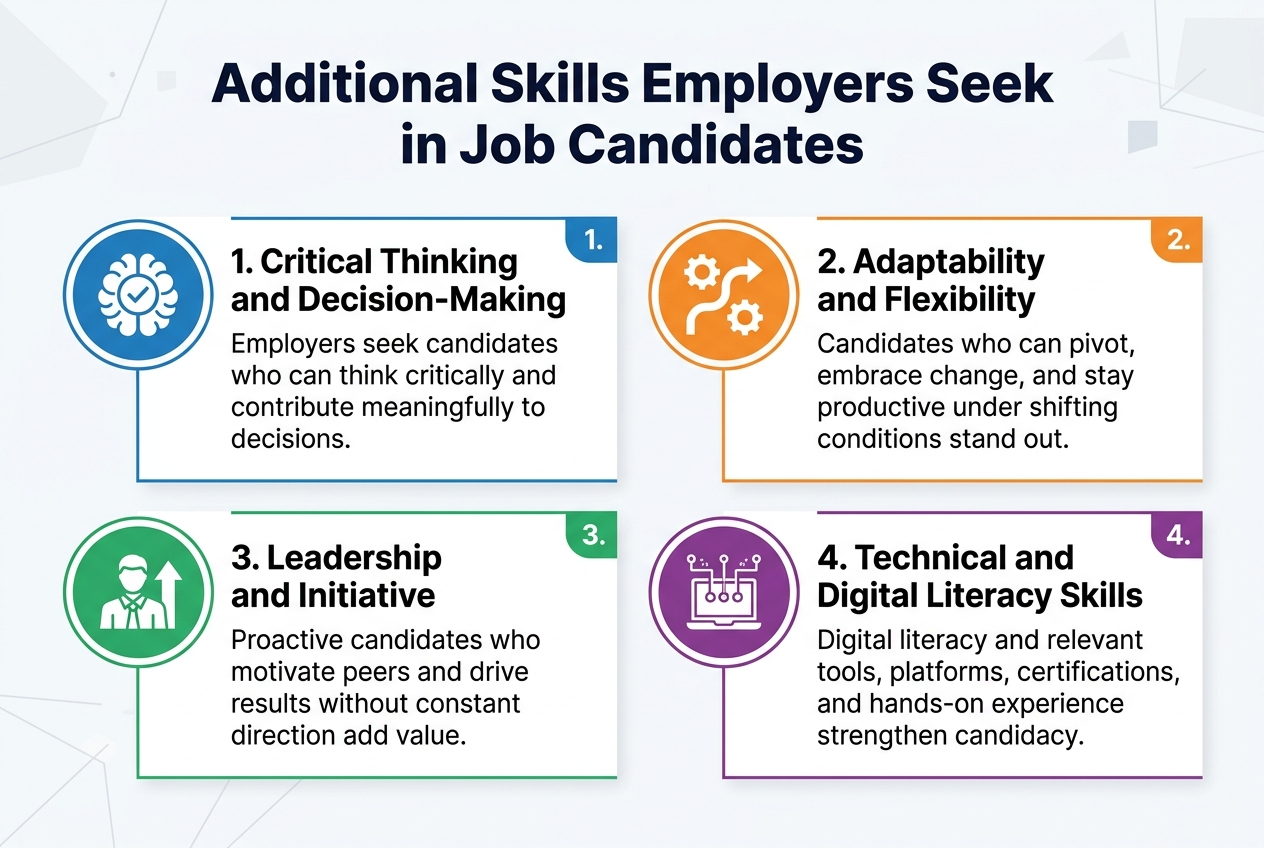
Beyond problem-solving and communication, employers consistently seek candidates who demonstrate strong critical thinking and decision-making abilities. These are among the most in-demand skills for job seekers today. Employers need workers who can think critically and contribute meaningfully to decision-making, making this a vital skill to put on a resume.
Adaptability and Flexibility in a Fast-Changing Job Market
With this in mind, adaptability ranks high among the top skills employers look for in job candidates. As industries evolve rapidly, employers prioritize candidates who can pivot, embrace change, and remain productive under shifting conditions — making flexibility a key employer priority in hiring decisions.
Leadership and Initiative in the Workplace
Now that we have covered adaptability, leadership and initiative are equally critical skills employers look for. Candidates who proactively take charge, motivate peers, and drive results without constant direction stand out significantly. Demonstrating initiative signals to employers that you can contribute beyond your defined role, adding measurable value to any team.
Technical and Digital Literacy Skills
Previously, technical skills were niche requirements, but today digital literacy is a baseline expectation across virtually all industries. Employers seek candidates proficient in relevant tools, platforms, and technologies. Showcasing these skills to employers — whether through certifications, portfolio work, or hands-on experience — can meaningfully strengthen your candidacy in a competitive job market.
How to Develop and Showcase These Skills to Employers
Practical Ways to Strengthen Problem-Solving Abilities
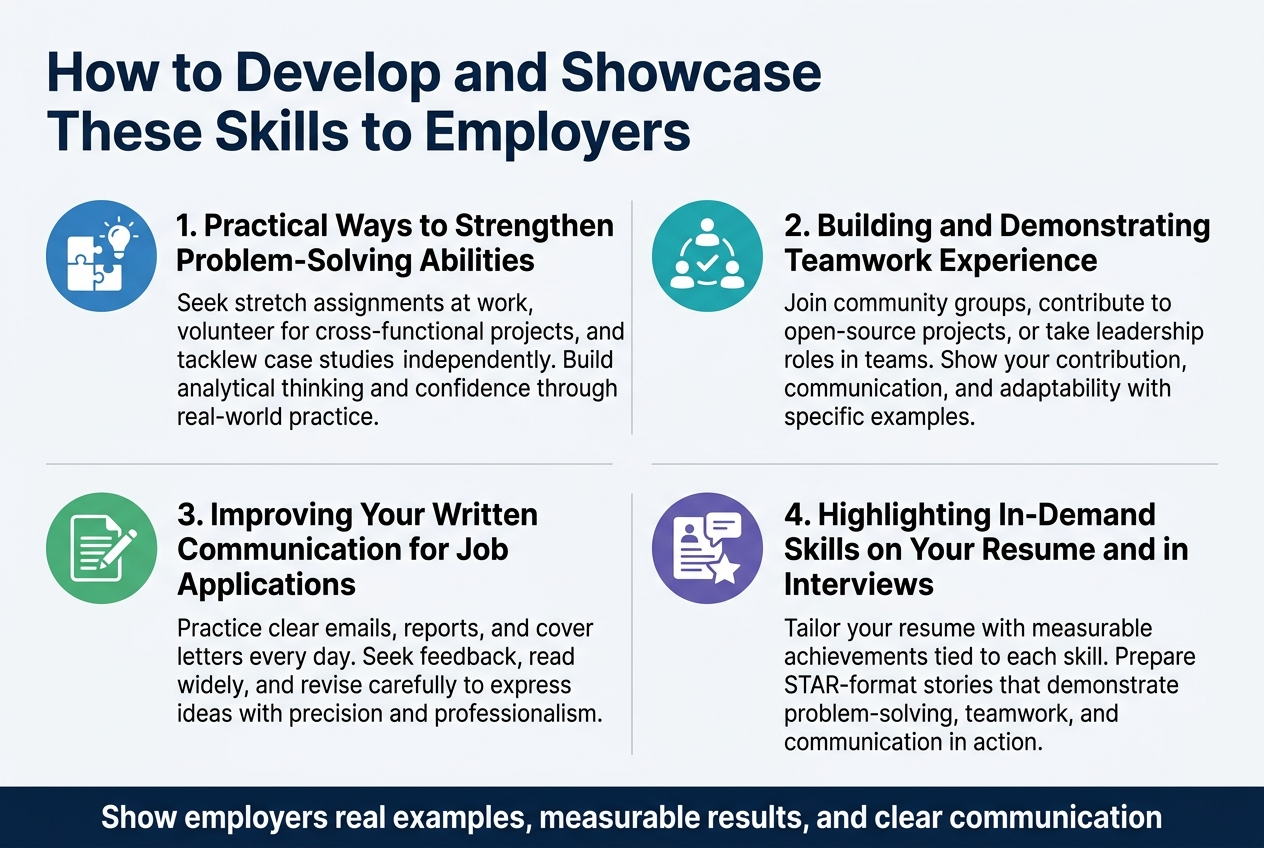
Developing problem-solving skills requires consistent, deliberate practice in real-world scenarios. Seek out stretch assignments at work, volunteer for cross-functional projects, or tackle case studies independently to sharpen your analytical thinking and build confidence when facing complex workplace challenges.
Building and Demonstrating Teamwork Experience
Teamwork skills for employment grow through active collaboration. Join community groups, contribute to open-source projects, or take on leadership roles in team settings. When showcasing these experiences, use specific examples that highlight your contribution, communication, and adaptability within diverse teams.
Improving Your Written Communication for Job Applications
Strong written communication skills for jobs start with daily habit-building. Practice drafting clear, concise emails, reports, and cover letters. Seek feedback regularly, read widely, and revise ruthlessly. Employers notice candidates who express ideas with precision and professionalism from the very first application document.
Highlighting In-Demand Skills on Your Resume and in Interviews
Now that we have covered how to build these competencies, focus on showcasing skills to employers strategically. Tailor your resume with measurable achievements tied to each skill, and prepare compelling STAR-format stories for interviews that clearly demonstrate your problem-solving, teamwork, and communication abilities in action.
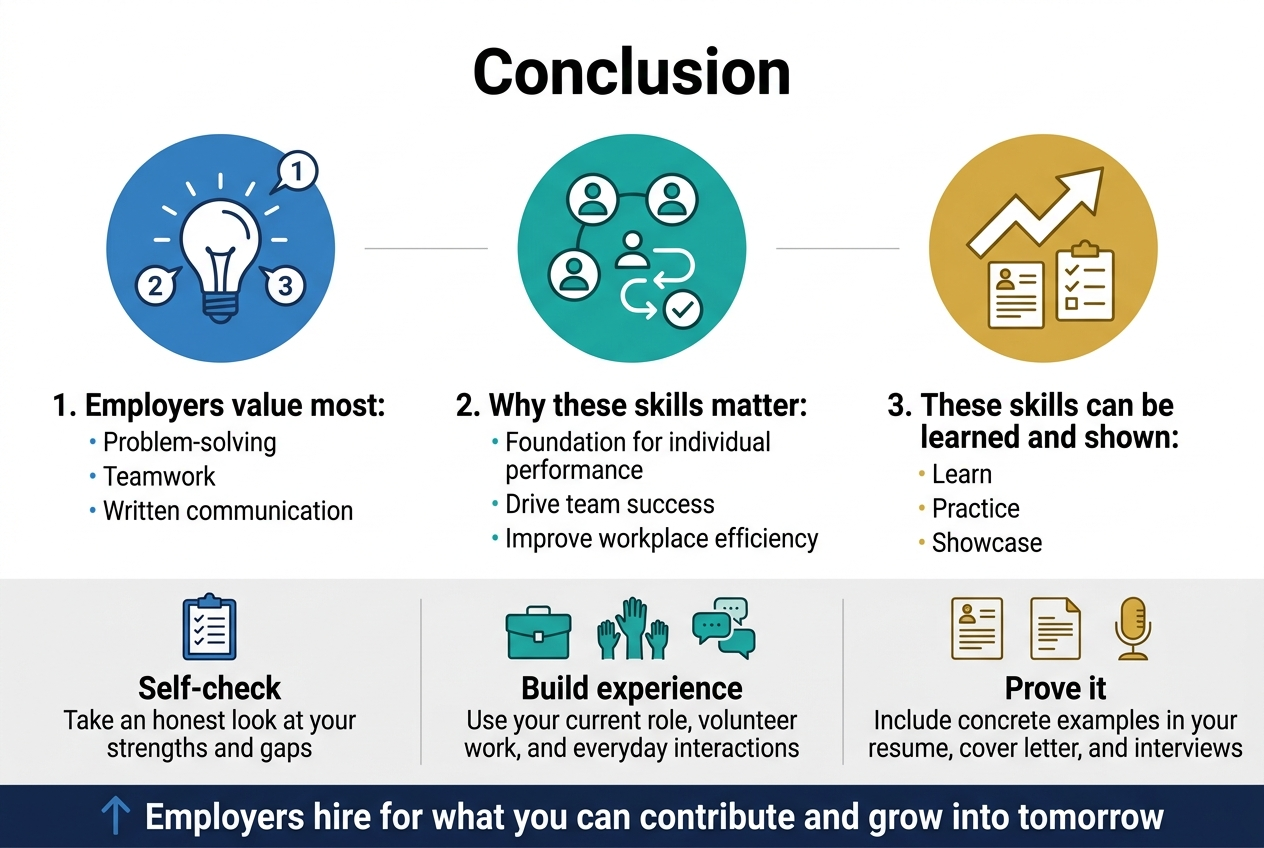
The skills employers value most are clear: problem-solving, teamwork, and written communication top the list, followed by a range of additional attributes that make candidates stand out in today’s competitive job market. These are not just buzzwords — they are foundational qualities that drive individual performance, team success, and overall workplace efficiency. Whether you are just starting your career or looking to advance, developing and consistently demonstrating these skills can make a real difference in how employers perceive you.
The good news is that these skills can be learned, practiced, and showcased. Take an honest look at where you stand with each of these areas and look for opportunities — in your current role, volunteer work, or everyday interactions — to strengthen them. When you are ready to apply, make sure your resume, cover letter, and interviews reflect these qualities with concrete examples. Employers are not just hiring for what you know today; they are investing in what you can contribute and grow into tomorrow.