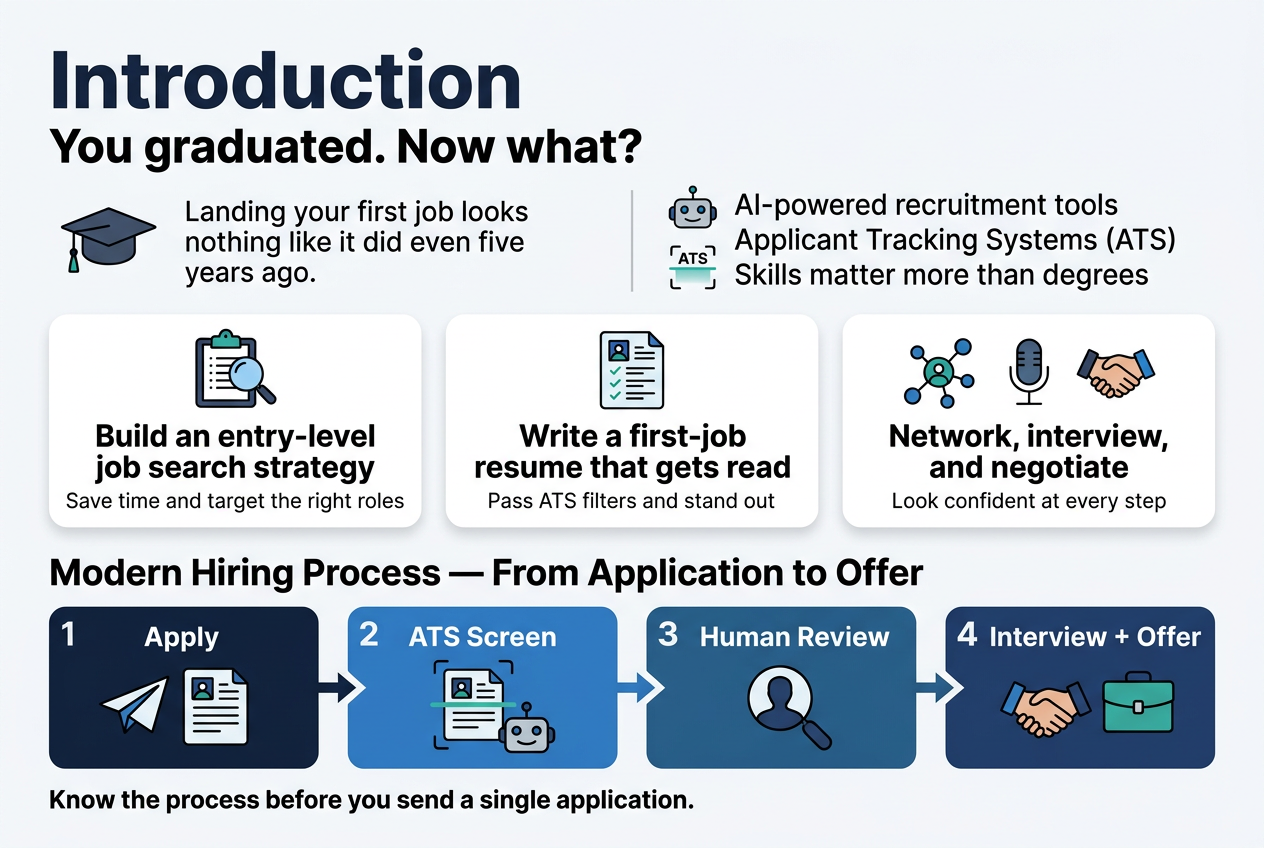
You graduated. Now what?
Landing your first job looks nothing like it did even five years ago. Companies now use AI-powered recruitment tools and applicant tracking systems (ATS) to screen candidates before a human ever reads a resume. Employers are also hiring more on skills than degrees, which means the way you present yourself matters just as much as where you went to school.
This guide is for recent college graduates and anyone stepping into the job market for the first time with little to no professional experience.
Here’s what you’ll walk away knowing:
- How to build an entry-level job search strategy that saves time and targets the right roles
- How to write a resume for your first job that gets past ATS filters and actually gets read
- How to network, interview, and negotiate like someone who knows what they’re doing
The modern hiring process has more moving parts than most graduates realize. The infographic below breaks it down so you know exactly what you’re dealing with before you send a single application.
[INFOGRAPHIC: Modern Hiring Process — From Application to Offer]
Ready? Let’s go step by step.
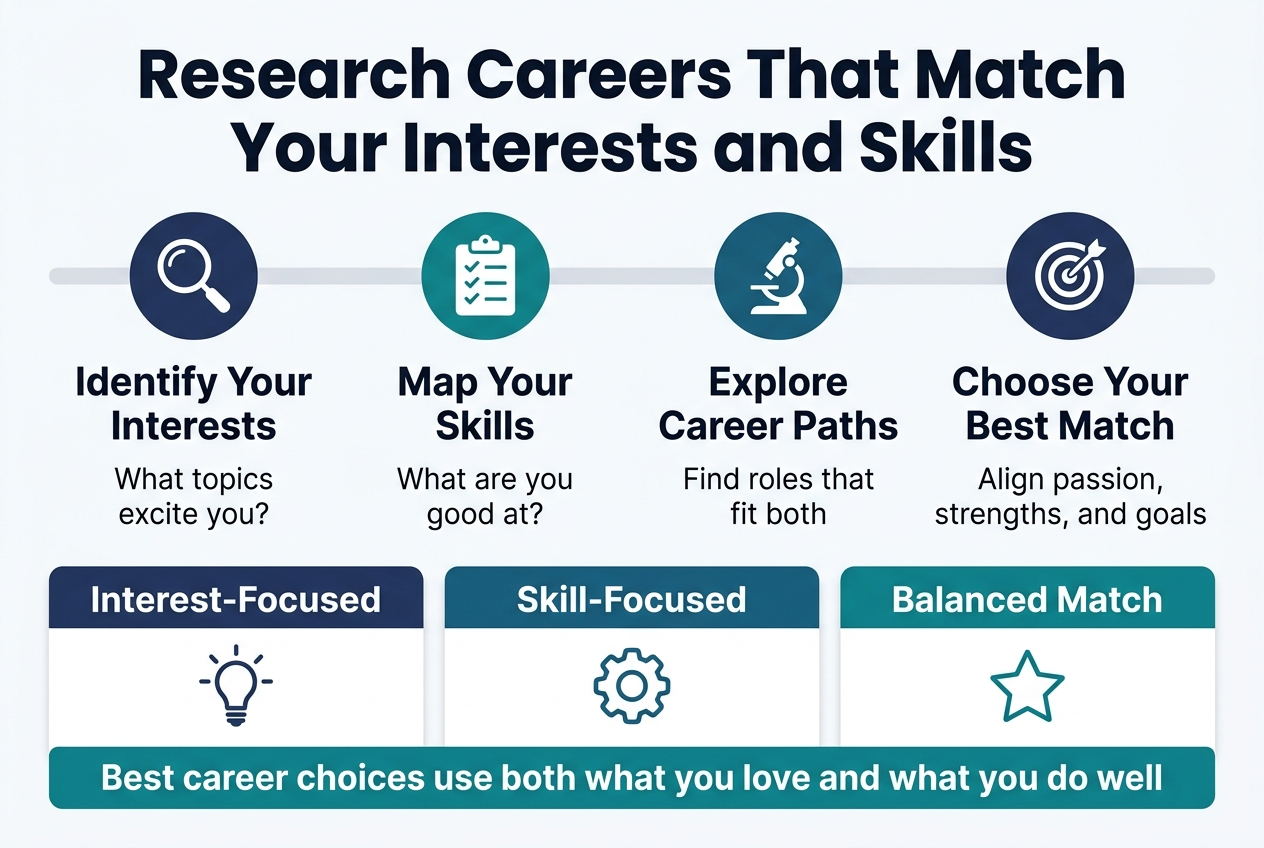
Research Careers That Match Your Interests and Skills
Use Career Assessments to Discover the Right Path
Start your job search after graduation by using career assessments like PathwayU, which matches job titles to your unique profile and connects you to specific job listings tailored to your interests and strengths.
Consult Professors, Advisors, and Career Centers for Guidance
Talk to your professors, academic advisor, and campus career centers — such as the Center for Career Connections — to explore the types of roles professionals with your major typically pursue. These resources offer invaluable career advice for fresh graduates navigating entry-level job searches.
Translate Academic Experiences Into Professional Language
One of the most overlooked job hunting tips for college graduates is learning how to reframe academic work in professional terms. List your skills, projects, relevant coursework, internships, and leadership experiences on your resume to clearly demonstrate value to employers — even with limited formal work history.
Build a Smart and Realistic Job Search Strategy
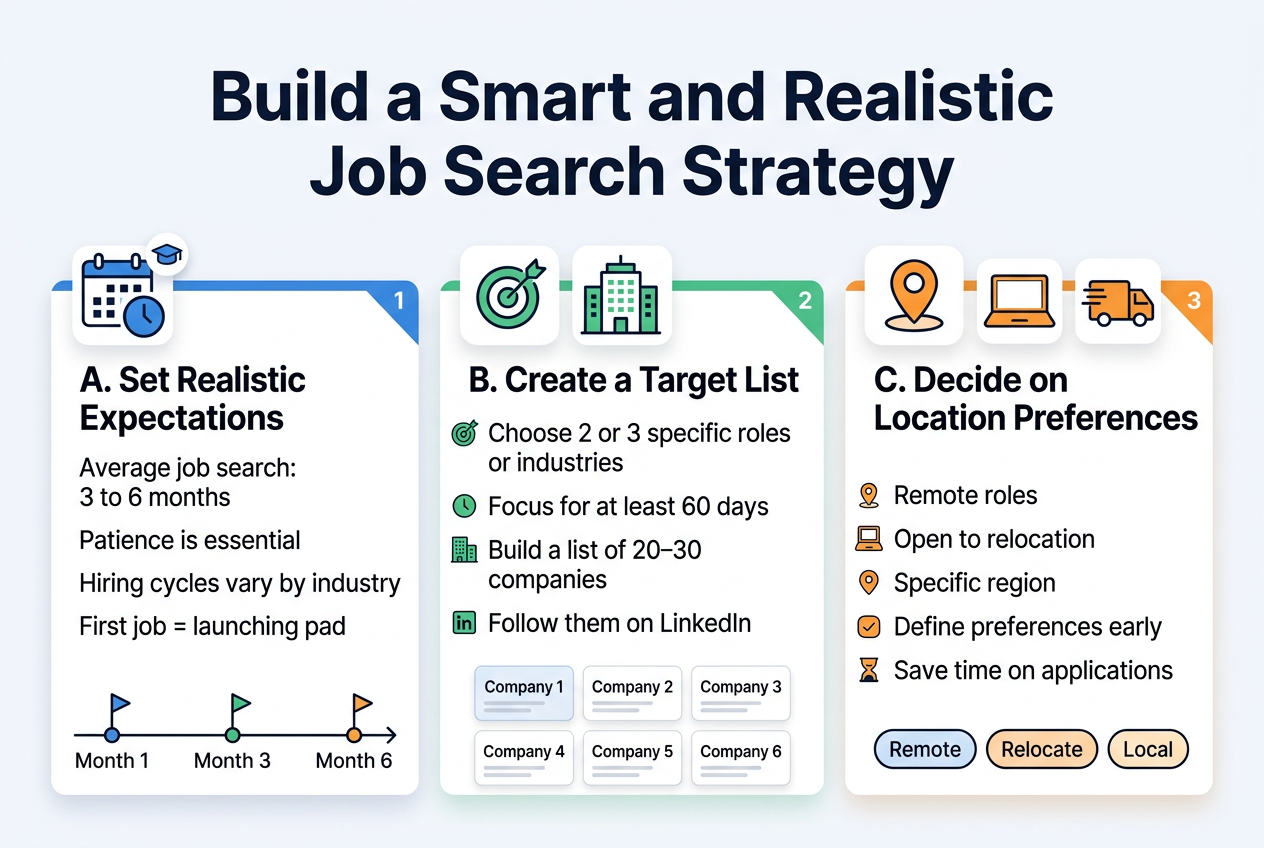
A. Set Realistic Expectations About the Job Search Timeline
The average job search for recent graduates takes three to six months, so patience is essential — the timeline reflects hiring realities, not your personal worth. Research when companies in your field typically hire, as hiring cycles vary by industry. Remember, your first job is a launching pad, not necessarily your dream role.
B. Create a Target List of Companies and Industries to Pursue
A focused entry-level job search strategy begins with narrowing your focus. Choose two or three specific roles or industries to explore for at least 60 days, then build a target list of 20–30 companies. Follow them on LinkedIn to stay informed about openings and company news, keeping yourself positioned for emerging opportunities.
C. Decide on Location Preferences Including Remote and Relocation Options
As part of your job search strategy, clearly define your location preferences early. Consider whether you are open to remote roles, willing to relocate, or focused on a specific region. Having this clarity upfront saves time during applications and ensures you pursue opportunities that genuinely align with your lifestyle and career goals.
Craft Application Materials That Get Noticed
Build an ATS-Friendly Resume With Strong Action-Oriented Bullet Points
Now that you have a job search strategy in place, your next priority is crafting application materials that actually get you in front of a hiring manager. Learning how to write a resume for your first job starts with understanding Applicant Tracking Systems (ATS). Use a clean, single-column format, avoid graphics or tables, and stick to standard section headings like Work Experience, Education, and Skills. Mirror keywords directly from each job description to pass ATS filters.
For bullet points, follow an action + task + result structure and quantify outcomes wherever possible:
- ✅ “Managed social media for a 500-member student organization, increasing followers by 34% in one semester”
- ❌ “Helped with social media posts”
Keep your resume to one page and tailor it to every specific role, spotlighting your most relevant accomplishments.
Write a Compelling Cover Letter That Sets You Apart
A strong cover letter is one of the most underused job search tips for new graduates. Open with a hook that references the company or role specifically, connect your experience to their needs using concrete examples, and close with confidence. Structure it in three to four concise paragraphs, customize it per employer, and avoid simply repeating your resume — instead, expand on shared experiences to add depth and context.
Optimize Your LinkedIn and Handshake Profiles to Attract Employers
With your documents ready, your online presence becomes equally critical for career advice for fresh graduates. On LinkedIn:
| Profile Element | Best Practice |
|---|---|
| Photo | Professional headshot |
| Headline | Clearly states your interests and skills |
| About Section | First-person narrative highlighting key strengths |
| Skills | Add 10–15 relevant skills |
Stay active by sharing articles, commenting on posts, and engaging with professionals in your field. Additionally, build out your Handshake profile — it is designed specifically for recent graduates, and employers listing jobs there are actively seeking candidates with limited experience, making it an ideal platform for entry-level job searches.
Search and Apply for Jobs Effectively
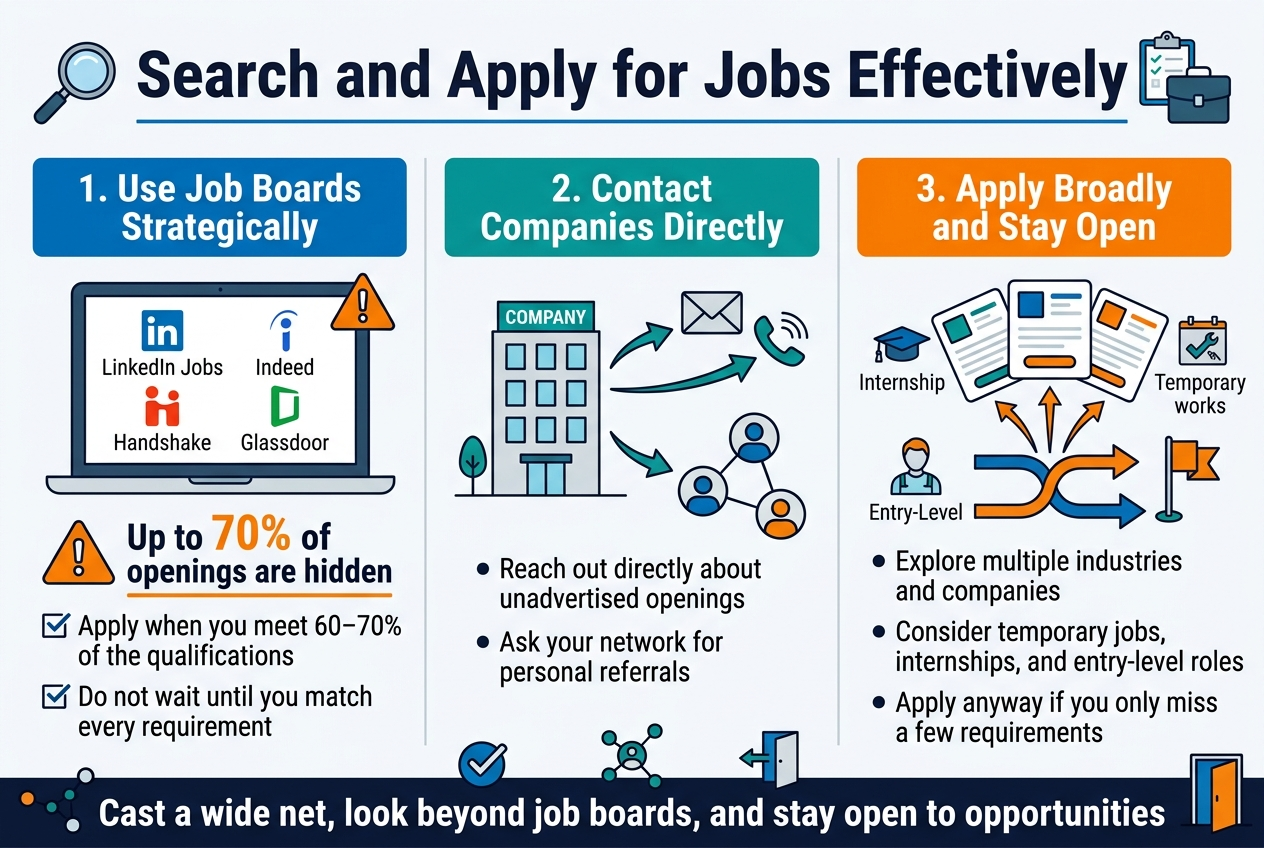
Use Job Boards Strategically Without Relying on Them Alone
Platforms like LinkedIn Jobs, Indeed, Handshake, and Glassdoor are valuable starting points for your entry-level job search strategy, but don’t depend on them exclusively. Research suggests that up to 70% of job openings are never publicly advertised, meaning the majority of opportunities are hidden from standard job board searches. Apply for roles where you meet at least 60–70% of the listed qualifications — waiting until you check every box will cost you valuable opportunities.
Contact Companies Directly to Discover Unadvertised Openings
If there’s a specific company you’re eager to work for, reach out directly to inquire about openings, even if none are listed. This proactive approach is one of the most underused job hunting tips for college graduates. Additionally, leverage your existing network — ask connections about opportunities rather than relying solely on online applications, as a personal referral can open doors that job boards simply can’t.
Apply Broadly and Stay Open to Entry-Level and Temporary Roles
As a new graduate on how to get a job with no experience, casting a wide net is essential. Explore multiple industries and companies rather than narrowing your focus to a single field. Be open to temporary jobs, internships, or entry-level positions outside your primary interest — these roles build experience and can lead directly to your dream job. If a role excites you but you don’t meet every requirement, apply anyway.
Prepare Thoroughly to Ace Every Interview
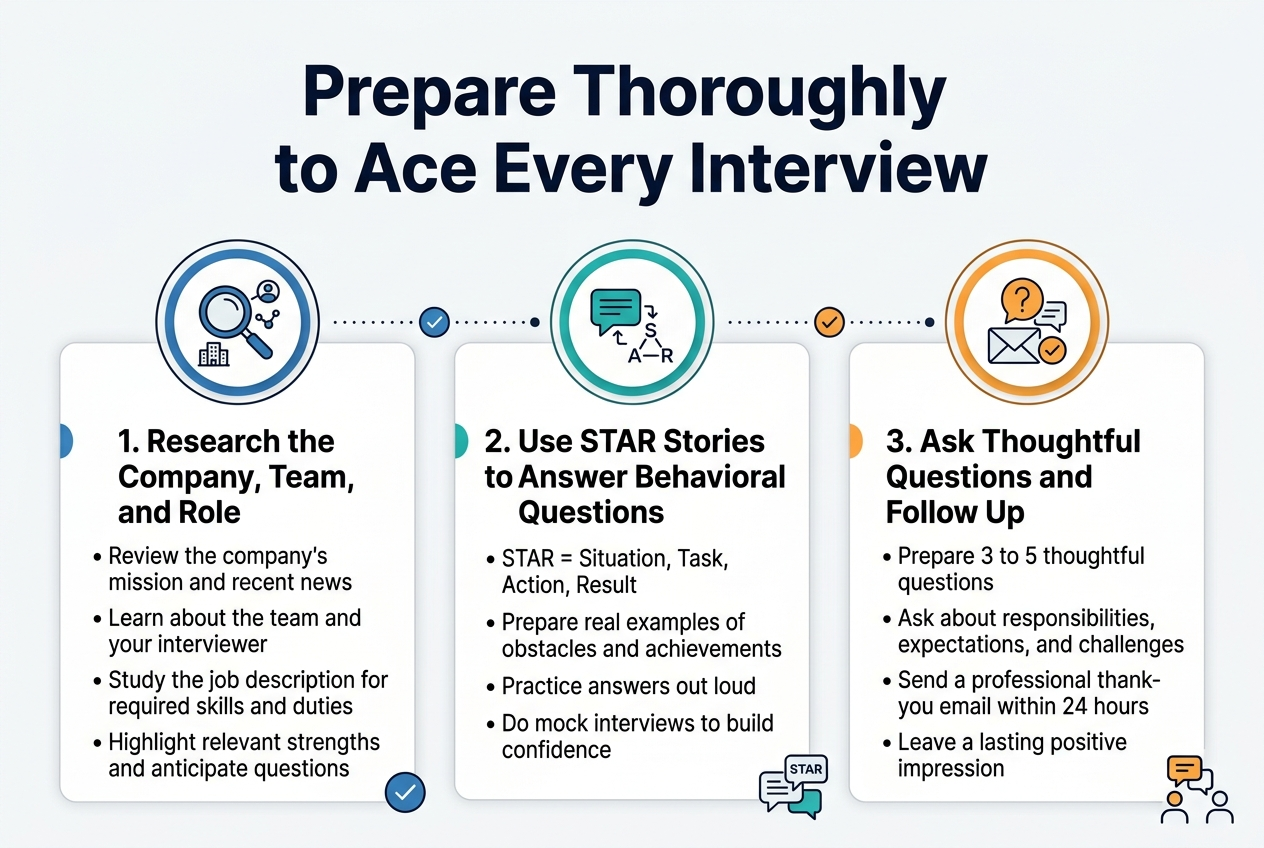
Research the Company, Team, and Role Before Every Interview
Before walking into any interview, invest time in researching the company’s mission, recent news, the team you’d be joining, and your interviewer’s professional background. Review the job description carefully to understand the required skills and duties, so you can highlight your most relevant strengths and anticipate the questions you’re likely to face.
Use STAR Stories to Answer Behavioral Questions Confidently
One of the most effective ways to prepare for a job interview as a new graduate is mastering the STAR method — Situation, Task, Action, and Result. Structure your responses around real experiences where you tackled obstacles or demonstrated key skills. Practice answering behavioral questions out loud, or arrange mock interviews to build confidence and improve your delivery before the actual conversation.
Prepare Thoughtful Questions and Send a Thank You Email After
Arrive with three to five well-considered questions for the interviewer. Ask about day-to-day responsibilities, the qualities they value most in an employee, the most challenging aspects of the role, or what they personally enjoy about working there. These questions signal genuine interest and engagement. Finally, always send a professional thank-you email within 24 hours after the interview to reinforce your enthusiasm and leave a lasting positive impression.
Finding a job after graduation takes patience, strategy, and resilience in roughly equal measure. You’ve worked through every critical step — researching careers that match your interests, building a realistic job search strategy, crafting standout application materials, growing your network, applying strategically, preparing thoroughly for interviews, and learning how to negotiate offers and handle rejection without losing momentum. None of these steps work in isolation, but together they form a clear path forward.
Remember, your first job is a launching pad, not your final destination. The candidates who succeed aren’t always the most experienced — they’re the most persistent and intentional. Start early, stay consistent, lean on your network, and don’t be discouraged if the process takes longer than expected. You’ve already done the hard work of earning your degree. Now it’s time to build what comes next.