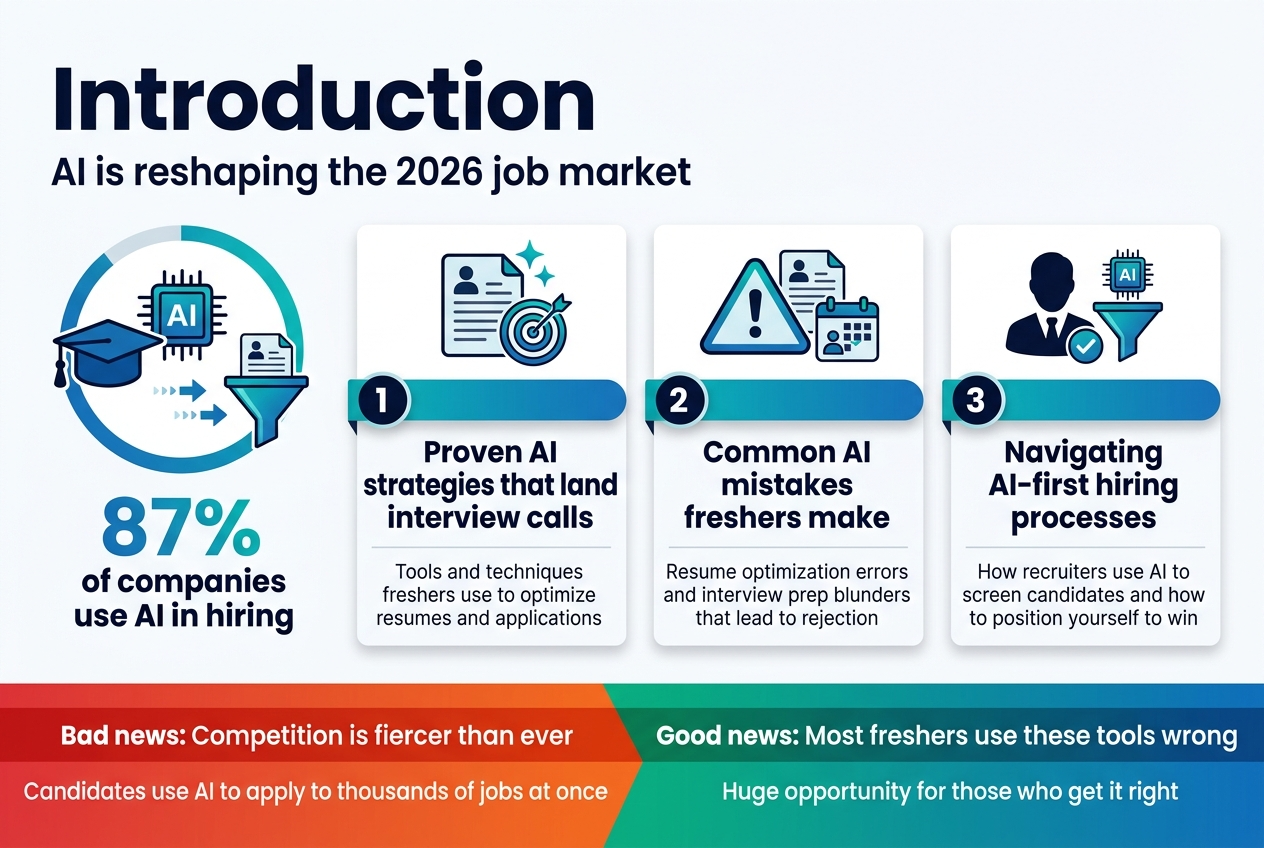
The job market in 2026 looks completely different than it did just two years ago. Fresh graduates are now competing in an AI-driven landscape where 87% of companies use artificial intelligence in their hiring process, and the old playbook of sending out generic resumes simply doesn’t work anymore.
This guide is for recent graduates and final-year students who want to break through the noise and actually land interview calls in today’s competitive market. You’re probably frustrated by the silence after submitting applications, watching AI tools filter out your resume before any human even sees it.
Here’s what we’ll cover to help you get ahead: First, proven AI strategies that actually land interview calls – the specific tools and techniques that successful freshers are using right now to optimize their resumes and applications. Second, common AI mistakes freshers make that hurt their chances – including the resume optimization errors and interview prep blunders that can get you rejected instantly. Finally, we’ll walk through navigating the new reality of AI-first hiring processes so you understand exactly how recruiters are using AI to screen candidates and how to position yourself to win.
The bad news? The competition is fiercer than ever, with candidates using AI to apply to thousands of jobs at once. The good news? Most freshers are using these tools wrong, which means there’s a huge opportunity for those who get it right.
How AI is Transforming the Job Search Landscape for Fresh Graduates
The Rise of AI-Powered Application Tools for Mass Job Applications
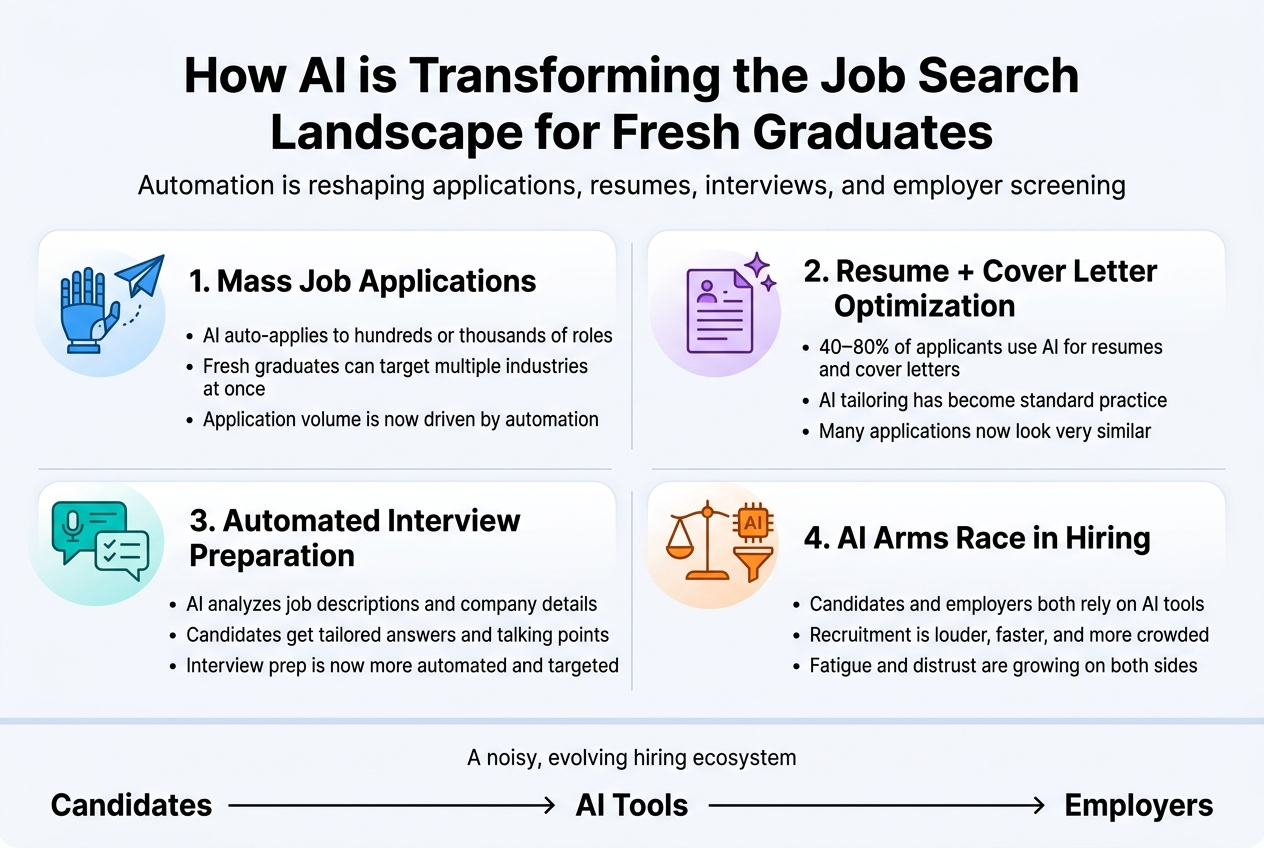
The job search landscape has fundamentally shifted with AI-powered application tools enabling unprecedented scale in job applications. Some services now allow job seekers to auto-apply to large numbers of roles with just a few clicks, transforming what used to be hundreds of applications into thousands per day for employers. This automation revolution has created a volume-driven approach where freshers can cast an incredibly wide net across multiple industries and positions simultaneously.
AI Resume and Cover Letter Optimization Strategies
Current estimates suggest that 40-80% of applicants now rely on AI to draft resumes, cover letters, and even interview responses, making AI resume optimization a standard practice rather than an advantage. However, this widespread adoption has created a significant challenge: when everyone tailors their resume to the same job description using identical AI tools for job seekers, many applications start to look remarkably similar, creating a paradox where AI assistance both helps and hinders differentiation in the competitive job market.
Automated Interview Preparation and Response Systems
AI interview preparation has evolved beyond simple practice sessions to comprehensive response systems that help freshers craft tailored answers for specific roles and companies. These automated systems analyze job descriptions and company information to generate relevant talking points and example responses. The technology has become so sophisticated that it now influences how candidates prepare for and conduct interviews, fundamentally changing the traditional interview preparation process.
The Growing Arms Race Between Candidate AI Tools and Employer Screening
The current hiring environment has transformed into a noisy, crowded arms race of automation, with both candidates and employers heavily leaning on AI systems. This technological escalation has led to increased application volumes, more noise in the recruitment process, and a growing sense of fatigue and distrust among both job seekers and hiring managers. The result is a complex ecosystem where AI hiring trends are constantly evolving as both sides adapt their strategies to maintain competitive advantages.
Proven AI Strategies That Actually Land Interview Calls
Time-Saving Administrative Automation for Application Management
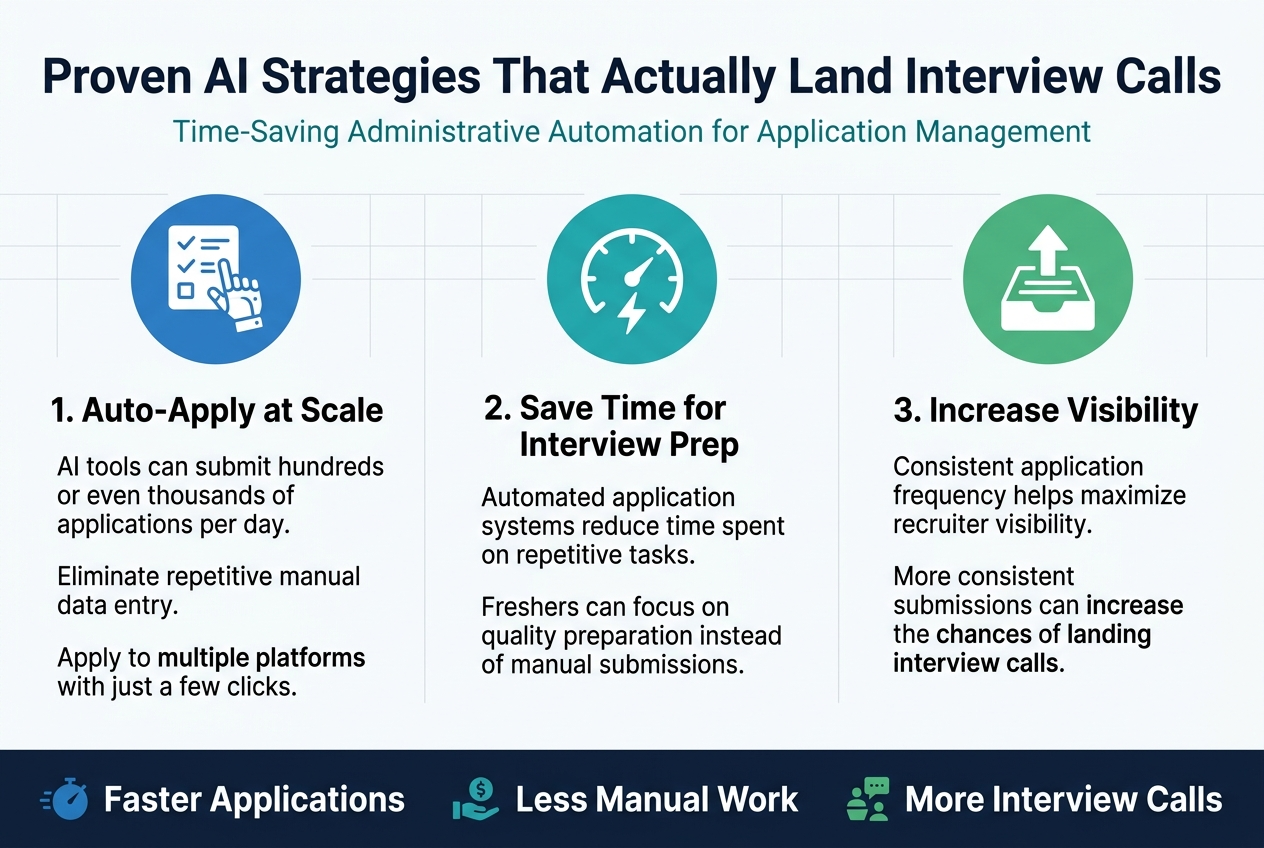
Job seekers can now leverage AI services to auto-apply to large numbers of roles with just a few clicks, enabling hundreds or even thousands of applications per day. This AI job search automation dramatically reduces the time spent on repetitive application tasks, allowing freshers to focus on quality preparation for interviews.
The strategic use of AI tools for job seekers transforms the traditional application process by eliminating manual data entry and customizing submissions across multiple platforms. With automated job application systems, fresh graduates can maximize their visibility to recruiters while maintaining consistent application frequency, significantly increasing their chances of landing interview calls in today’s competitive job market.
Smart Job Matching and Targeting Using AI Analytics
Currently, specific data on AI analytics for job matching and targeting is not available in our reference sources.
AI-Enhanced Personal Branding and LinkedIn Optimization
Detailed information on AI-enhanced personal branding and LinkedIn optimization strategies is not available in our current reference materials.
Strategic Use of Chatbots for Initial Screening Preparation
Information regarding the strategic use of chatbots for initial screening preparation is not available in our reference content at this time.
Common AI Mistakes Freshers Make That Hurt Their Chances
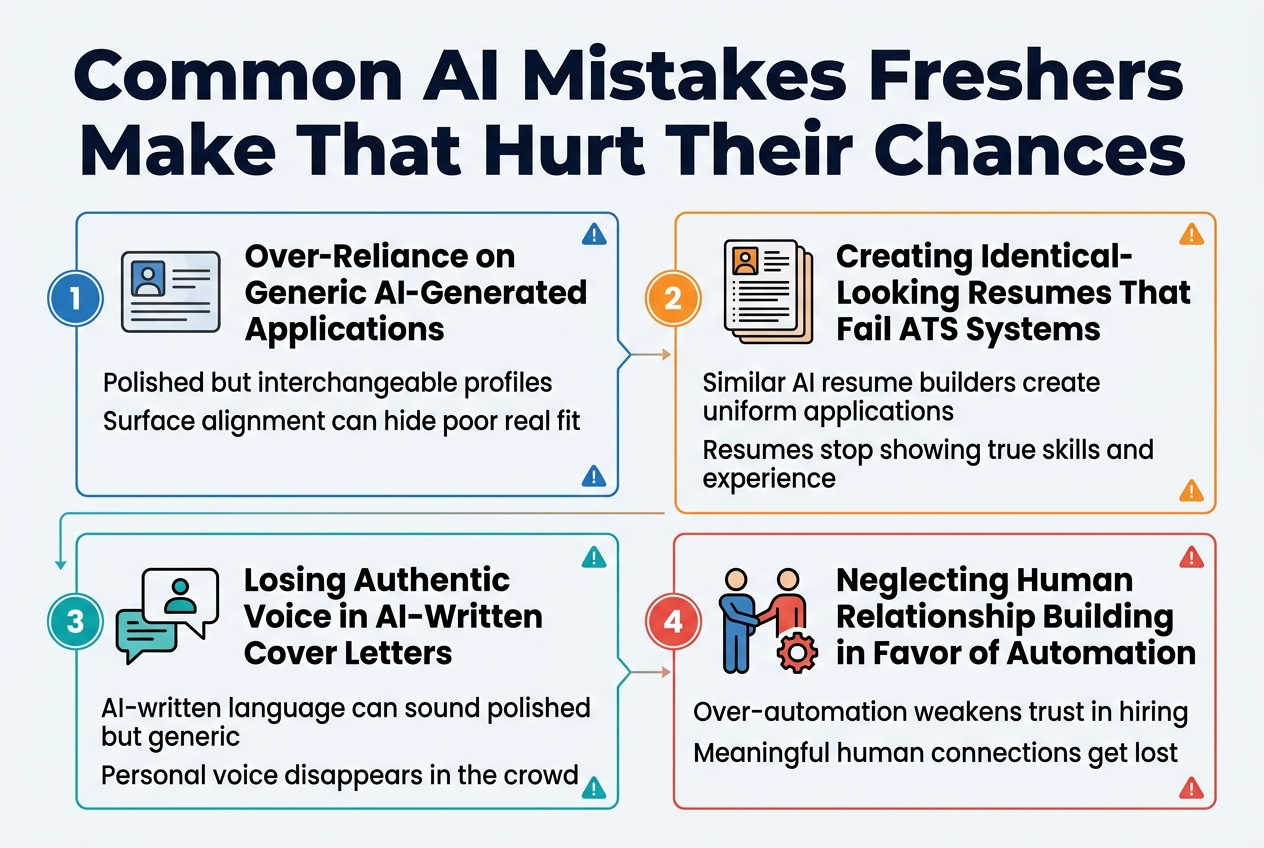
Over-Reliance on Generic AI-Generated Applications
When freshers use AI tools without customization, they create polished but interchangeable profiles that make AI-based matching systems less effective. These generic applications fail to reflect real fit between candidates and roles, as surface alignment no longer indicates genuine qualifications or interest.
Creating Identical-Looking Resumes That Fail ATS Systems
The widespread use of similar AI resume builders and optimization tools creates a problematic trend where candidates produce nearly identical applications for the same job descriptions. This uniformity reduces the effectiveness of resumes as trustworthy indicators of actual skills and experience.
Losing Authentic Voice in AI-Written Cover Letters
AI-generated cover letters often lack the personal touch that distinguishes candidates from one another. When employers receive multiple applications with similar AI-polished language and structure, the authentic voice that could set a fresher apart gets lost in the sea of automated content.
Neglecting Human Relationship Building in Favor of Automation
Over-automation in job search strategies contributes to a trust crisis in hiring processes. Candidates become wary of opaque AI hiring systems, while talent specialists worry about creating an impersonal candidate experience that undermines meaningful connections between employers and potential hires.
Navigating the New Reality of AI-First Hiring Processes
Understanding How Employers Are Using AI to Screen Candidates
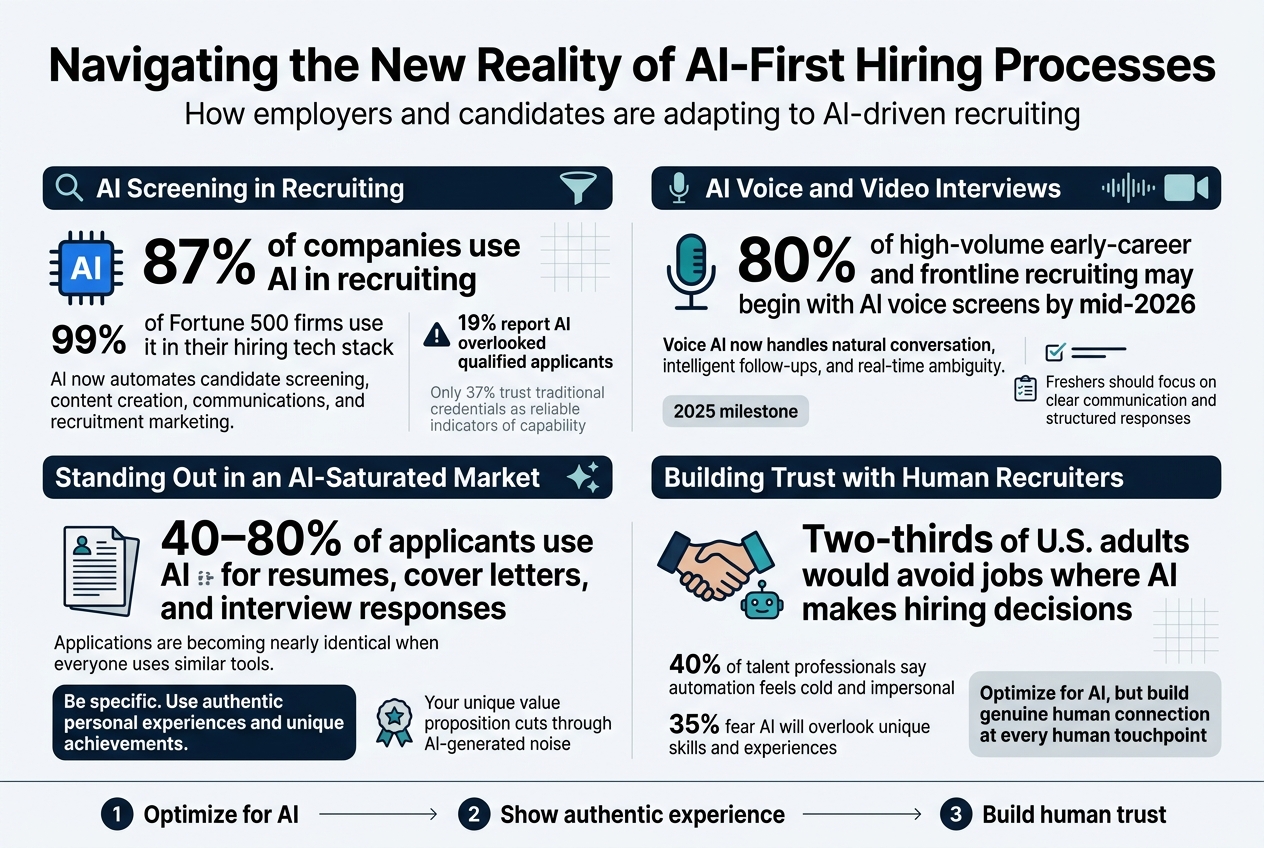
With 87% of companies now using AI in recruiting and 99% of Fortune 500 firms incorporating it into their hiring tech stack, AI has fundamentally transformed candidate screening processes. These systems have evolved beyond simple candidate matching to automate content creation, manage communications, and run recruitment marketing campaigns, making the screening process more sophisticated than ever.
However, this automation comes with significant challenges – 19% of organizations report their AI tools have overlooked qualified applicants, while only 37% of employers consider traditional credentials reliable indicators of capability.
Preparing for AI-Powered Voice and Video Interviews
Voice AI systems reached a critical milestone in 2025, now capable of conducting natural conversations with intelligent follow-ups and real-time ambiguity handling. By mid-2026, experts anticipate that 80% of high-volume recruiting for early-career and frontline roles will begin with AI-powered voice screens, marking the shift from experimental pilots to fully operational hiring workflows.
This transformation means freshers must prepare differently for interviews, focusing on clear communication and structured responses that AI systems can effectively evaluate and process.
Standing Out When 80% of Applicants Use Similar AI Tools
Current estimates suggest 40-80% of applicants now rely on AI to draft resumes, cover letters, and interview responses, creating a paradox where enhanced applications become indistinguishable from one another. When the majority of candidates use generative AI to upgrade their materials, resumes lose their effectiveness as trustworthy skill proxies, resulting in nearly identical applications flooding hiring systems.
To differentiate yourself in this saturated landscape, focus on authentic personal experiences and specific achievements that AI tools cannot replicate, ensuring your unique value proposition cuts through the AI-generated noise.
Building Trust with Human Recruiters Despite AI Mediation
Despite widespread AI adoption, two-thirds of U.S. adults would avoid applying for jobs where AI makes hiring decisions, reflecting deep concerns about opaque evaluation systems. This sentiment is echoed by talent professionals, with 40% worrying that automation makes the candidate experience feel cold and impersonal, while 35% of recruiters fear AI will overlook candidates with unique skills and experiences.
Successfully navigating this environment requires balancing AI optimization with authentic human connection, demonstrating genuine personality and building rapport during any human touchpoints in the hiring process.
The Future-Proof Approach to AI-Assisted Job Hunting
Balancing AI Efficiency with Human Authenticity
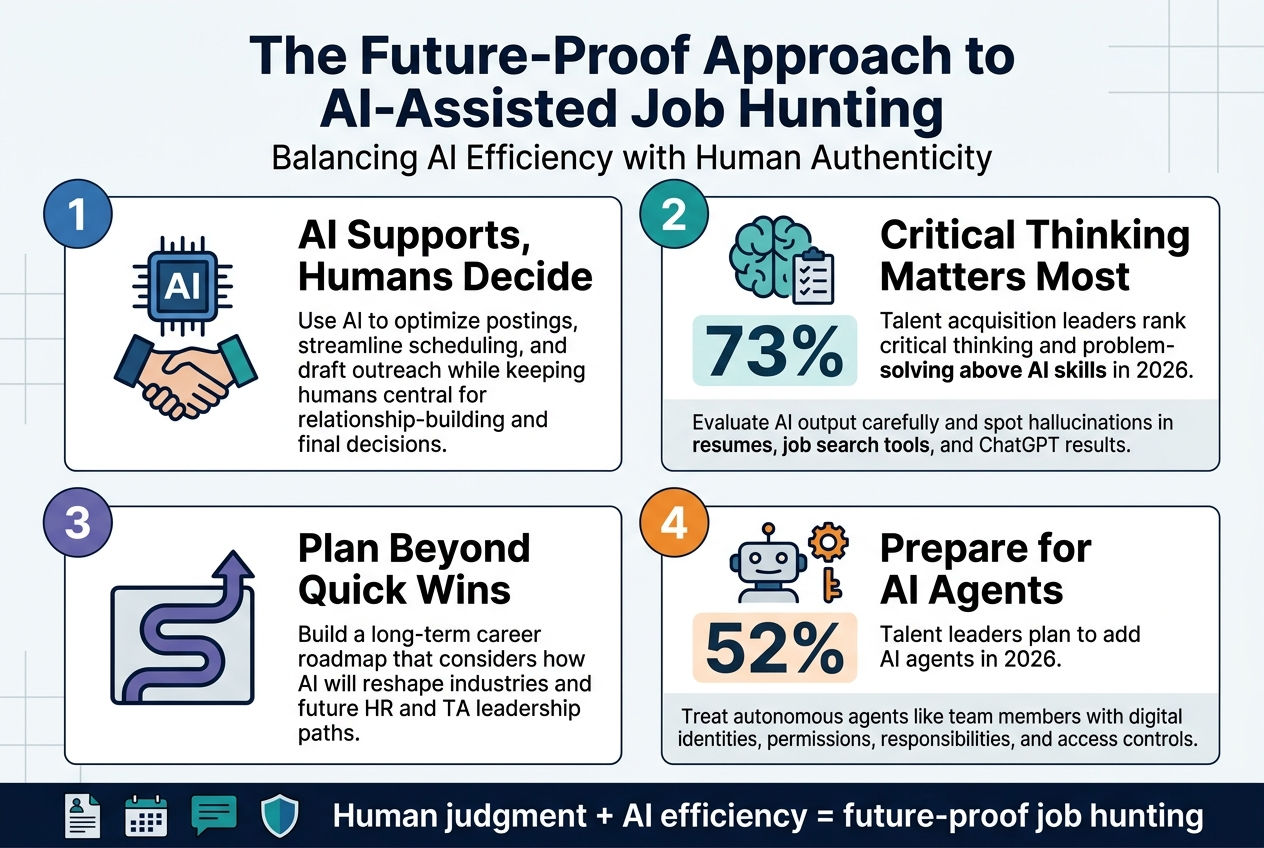
Now that we have covered proven AI strategies, it’s crucial to understand that the strongest evidence suggests using AI as a complement to human judgment, not a replacement. Successful organizations in 2026 are those treating AI as a way to enhance human judgment, focusing on strategic decisions that shape their talent future rather than chasing full automation. This approach optimizes postings, streamlines scheduling, and drafts outreach while keeping humans central for relationship-building and final decisions.
Developing Critical Thinking Skills That AI Cannot Replace
With this in mind, 73% of talent acquisition leaders identify critical thinking and problem-solving as the number-one skill needed in 2026, ranking higher than AI skills. While most people can learn to use AI tools for job search, fewer can rigorously evaluate their output, emphasizing the need for strong critical thinking to discern hallucinations from real data when using AI resume builders or ChatGPT for job search optimization.
Building Long-Term Career Strategies Beyond Quick Interview Wins
Previously, I’ve mentioned immediate AI applications, but the disappearance of early-career HR roles due to AI raises concerns about where future HR and TA leadership will come from. This highlights the need for long-term career planning beyond immediate job wins, requiring freshers to develop a comprehensive career roadmap that considers how AI will reshape their chosen industries over time.
Preparing for Emerging AI Agent Technologies in Recruitment
Looking ahead, AI agents, unlike assistive tools, act autonomously to perform tasks without constant prompts, with 52% of talent leaders planning to add them to their teams in 2026. Organizations are beginning to treat autonomous AI agents as team members, creating digital identities for them complete with permissions, responsibilities, and access controls, fundamentally changing how freshers will interact with AI in recruitment and career development processes.
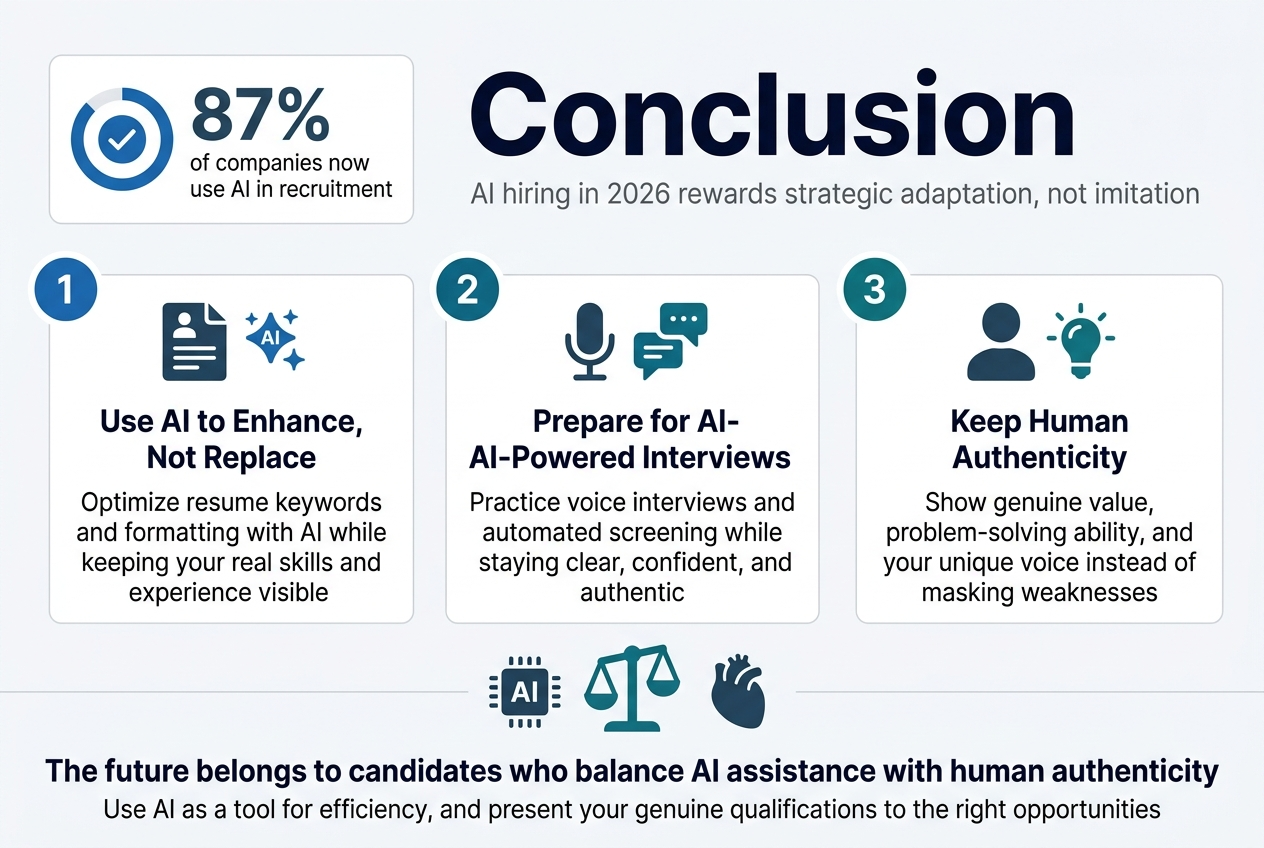
The AI revolution in hiring has created both unprecedented opportunities and significant challenges for fresh graduates in 2026. While 87% of companies now use AI in their recruitment processes, success lies not in fighting the technology but in understanding how to work with it strategically. The most effective freshers are those who use AI as a complement to their authentic skills and experiences, rather than relying on it to mask their true capabilities. From optimizing resume keywords to preparing for AI-powered voice interviews, the key is maintaining genuine value while adapting to new technological realities.
As the hiring landscape continues to evolve, freshers who master the balance between AI assistance and human authenticity will stand out in an increasingly crowded field. The future belongs to candidates who can leverage AI tools for efficiency while preserving their unique voice and demonstrating real problem-solving abilities. Rather than viewing AI as a shortcut to success, treat it as a powerful tool that, when used thoughtfully, can help you present your genuine qualifications more effectively to the right opportunities.