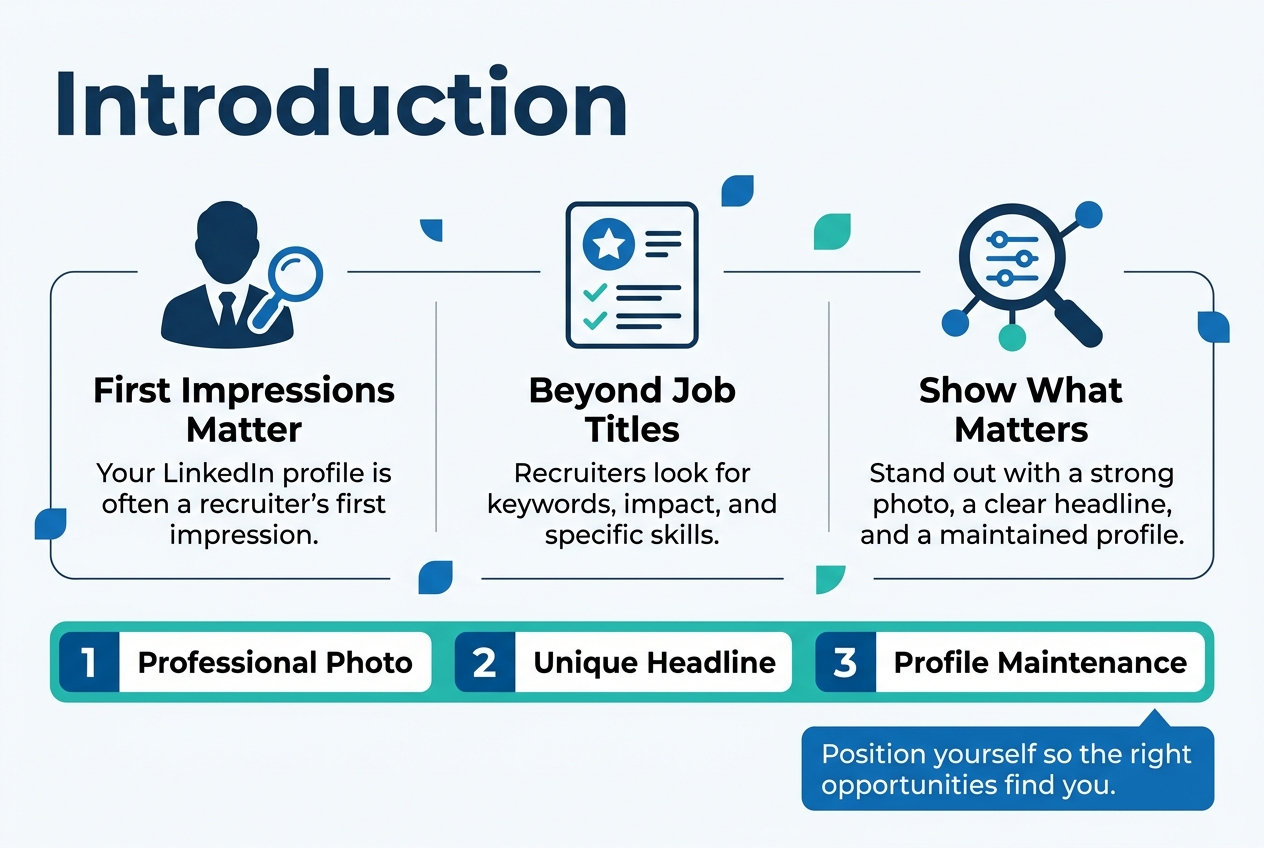
Your LinkedIn profile is often a recruiter’s first impression of you—and it can make or break your chances of landing that dream role. This guide is for job seekers, career changers, and professionals who want to catch recruiter attention, whether you’re actively searching or simply open to new opportunities.
Too many qualified candidates get overlooked simply because their profiles don’t show what recruiters are really looking for. Job titles and company names alone won’t cut it anymore. Today’s recruiters dig deeper, using keyword searches and advanced tools to find candidates who can demonstrate real impact and specific skills.
We’ll cover what recruiters want to see in your professional photos that make you stand out, how to craft a headline that showcases your unique value, and essential tips for maintaining your profile to maximize visibility. You’ll learn exactly how to position yourself so the right opportunities find you—not the other way around.
Professional Photos That Make Recruiters Take Notice
Upload a Current, High-Quality Headshot
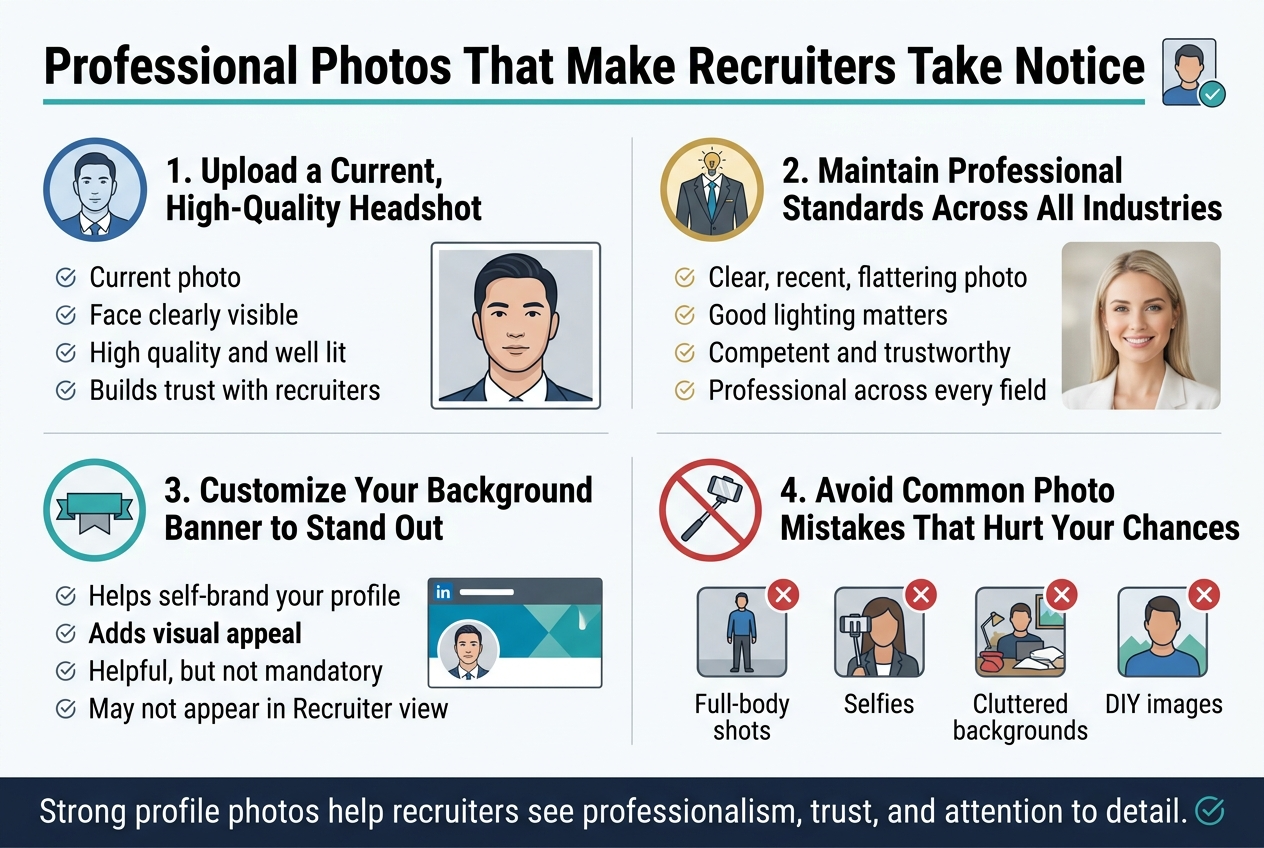
Your LinkedIn profile photo serves as the digital handshake between you and potential recruiters, making it one of the most critical elements of your professional presence. A current, high-quality headshot is essential to avoid creating negative impressions and building the trust that recruiters seek when evaluating candidates. The key is ensuring your face is clearly visible and prominently featured in the image.
When selecting your headshot, prioritize recency and quality over casual convenience. An outdated photo can immediately signal to recruiters that you may not be actively engaged in your professional development or that your profile lacks attention to detail. The investment in a proper headshot demonstrates your commitment to your professional image and shows recruiters that you take your career seriously.
Maintain Professional Standards Across All Industries
Regardless of your industry—whether you’re in traditional corporate environments or creative fields—maintaining professional standards in your LinkedIn photo is non-negotiable. Your headshot should feature a clear, well-lit view of your face that appears recent and flattering. Good lighting is crucial as it conveys professionalism and ensures that recruiters can clearly see your facial features, which helps build that essential human connection even in digital interactions.
Professional standards don’t mean you need to appear rigid or unapproachable. The goal is to present yourself as competent, trustworthy, and someone that recruiters would feel confident recommending to their clients or hiring managers. A well-executed professional photo communicates that you understand workplace norms and can represent an organization appropriately.
Customize Your Background Banner to Stand Out
While your profile photo captures immediate attention, your background banner provides an additional opportunity for self-branding and making a strong first impression. Customizing this banner can help differentiate you from other candidates and reinforce your professional identity. However, it’s important to note that while helpful, the background banner is not mandatory for a successful LinkedIn profile.
Keep in mind that the background banner may not appear in the LinkedIn Recruiter view that many hiring professionals use when searching for candidates. This means while it can enhance your profile’s visual appeal for direct profile visitors, don’t rely solely on it to communicate critical information about your professional value proposition.
Avoid Common Photo Mistakes That Hurt Your Chances
Several photo mistakes can immediately turn off recruiters and damage your chances of being considered for opportunities. Full-body shots are inappropriate for LinkedIn as they shift focus away from your professional presence and don’t serve the platform’s networking purpose. Similarly, selfies convey a casual, unprofessional approach that suggests you haven’t invested properly in your career presentation.
Cluttered backgrounds create visual distractions that draw attention away from you as the subject. Whether it’s busy office environments, personal spaces, or outdoor settings with too many elements, these backgrounds can make your photo appear amateur. Additionally, DIY images that look hastily taken or poorly composed can signal to recruiters that you may not pay attention to important details—a quality that could extend to your work performance. Professional recruiters are trained to notice these details, and avoiding these common mistakes can significantly improve how your profile is perceived.
Craft a Headline That Showcases Your Unique Value
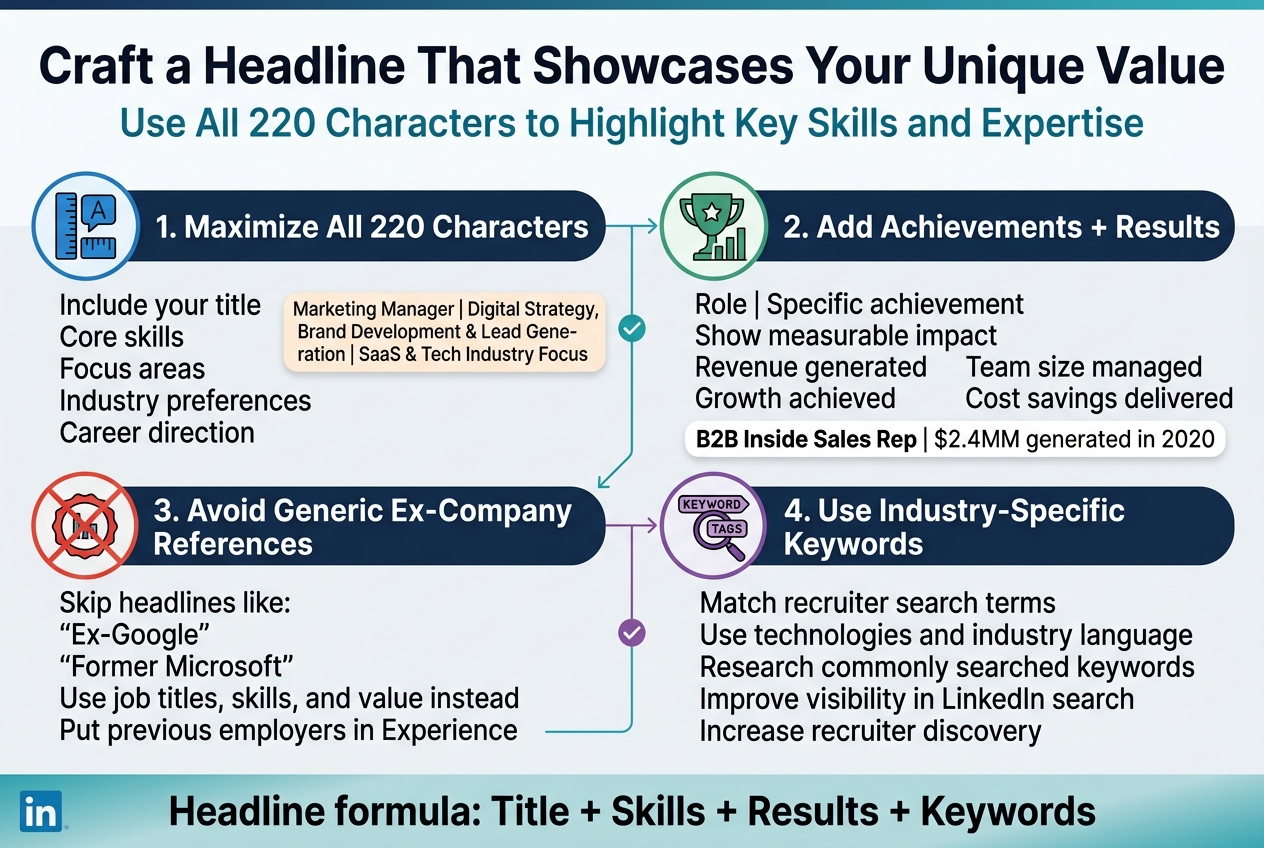
Use All 220 Characters to Highlight Key Skills and Expertise
Maximizing your LinkedIn headline’s 220-character limit is crucial for creating a powerful first impression with recruiters. Your headline should strategically include your title, core skills, focus areas, industry preferences, and career direction. This comprehensive approach ensures recruiters immediately understand your professional value proposition without needing to dive deeper into your profile.
Think of your headline as prime real estate – every character counts. Rather than simply stating your job title, expand to showcase the breadth of your expertise. For example, instead of “Marketing Manager,” consider “Marketing Manager | Digital Strategy, Brand Development & Lead Generation | SaaS & Tech Industry Focus.”
Include Specific Achievements and Quantifiable Results
Now that we understand the importance of maximizing character usage, incorporating specific achievements and quantifiable results takes your headline to the next level. The most effective approach follows the “Role | Specific achievement” framework, which immediately demonstrates your impact and capabilities.
Consider this powerful example: “B2B Inside Sales Rep | $2.4MM generated in 2020.” This headline structure instantly communicates both your role and your measurable success, giving recruiters concrete evidence of your performance. Quantifiable results could include revenue generated, percentage growth achieved, team size managed, or cost savings delivered.
Avoid Generic “Ex-Company” References
Previously successful professionals often make the mistake of leading with “Ex-Google” or “Former Microsoft” references in their headlines. However, most recruiters find these generic company references unhelpful and prefer to see job titles, skills, or areas of expertise instead.
While your previous employers are important, they belong in your experience section, not your headline. Recruiters want to quickly understand what you can do for their organization, not just where you’ve worked. Focus on showcasing your capabilities, achievements, and the value you bring rather than relying solely on brand recognition.
Incorporate Industry-Specific Keywords for Better Searchability
With this in mind, incorporating industry-specific keywords ensures your headline effectively introduces your experience and helps you stand out in recruiter searches. LinkedIn’s algorithm relies heavily on keyword matching, making strategic keyword placement essential for visibility.
Research the specific terms and technologies that recruiters in your industry commonly search for, then naturally weave these into your headline. This approach not only improves your searchability but also demonstrates your familiarity with industry terminology and current trends.
Write a Compelling About Section That Tells Your Story
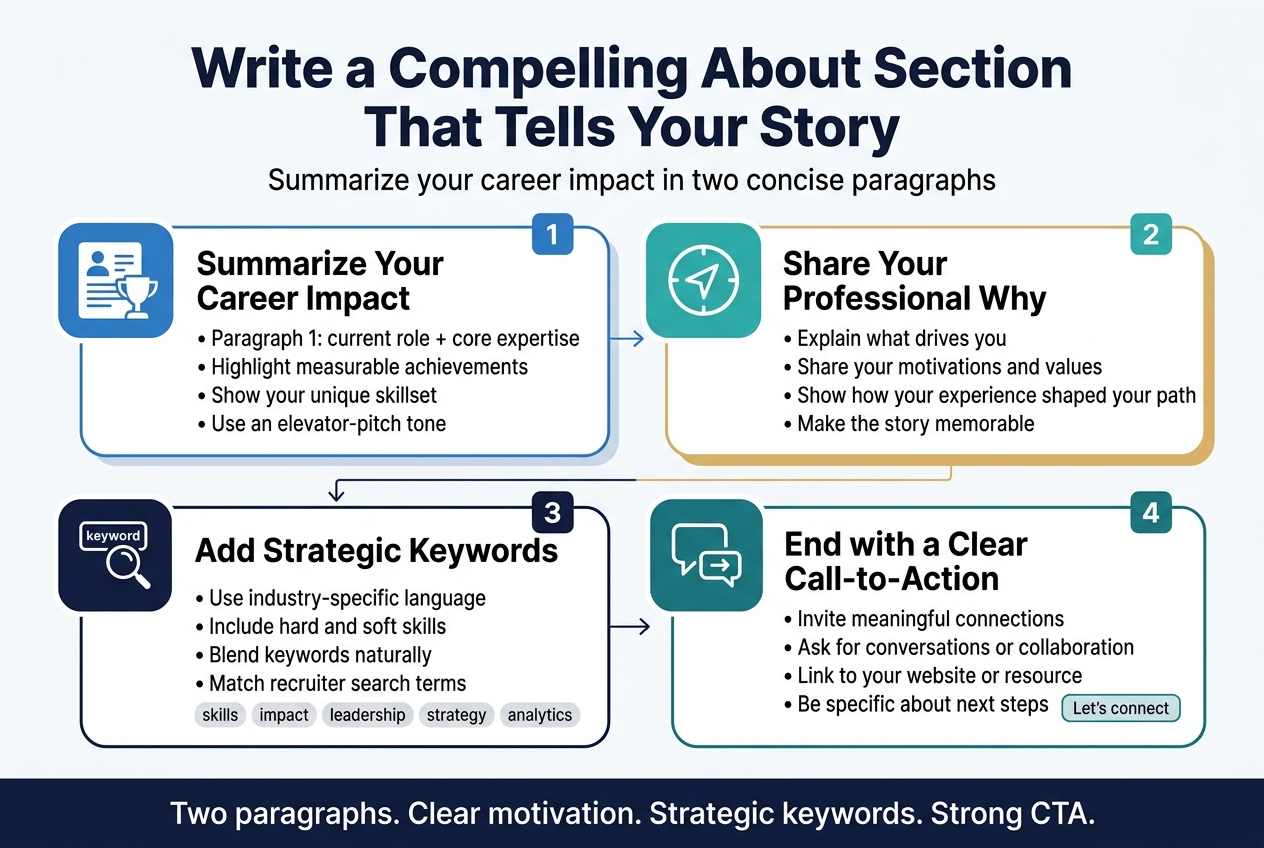
Summarize Your Career Impact in Two Concise Paragraphs
Your About section should serve as a powerful career synopsis that immediately communicates your professional value. The first paragraph should establish your current role and core expertise, while highlighting the measurable impact you’ve made throughout your career. Focus on quantifiable achievements and the unique skillset that sets you apart from other professionals in your field. This opening statement acts as your professional elevator pitch, giving recruiters a clear understanding of what you bring to the table.
The second paragraph should expand on your professional ambitions and personal brand. This is where you demonstrate your forward-thinking approach and showcase how your past experiences have shaped your current professional trajectory. Rather than simply listing responsibilities, emphasize the outcomes of your work and how you’ve contributed to organizational success. This two-paragraph structure creates a compelling narrative that positions you as both accomplished and ambitious.
Include Your Professional “Why” and What Drives You
Now that you’ve established your credentials, it’s essential to share the motivations that fuel your professional journey. Your “why” is what transforms a basic summary into a compelling story that resonates with recruiters and potential collaborators. Whether you’re driven by advancing equity in your industry, scaling innovative programs, or solving complex technical challenges, this personal motivation adds depth to your professional persona.
This element of storytelling helps recruiters understand not just what you do, but why you do it. When you articulate what drives you, you’re providing insight into your values, work ethic, and long-term commitment to your field. This emotional connection can be the differentiating factor that makes your profile memorable among hundreds of similar candidates.
Add Strategic Keywords Throughout Your Narrative
With your story framework in place, the next critical step involves weaving industry-specific language and strategic keywords throughout your narrative. This optimization ensures your profile appears in relevant recruiter searches while maintaining the authentic voice of your personal brand. Include terminology that’s commonly used in job descriptions within your target roles, but integrate these keywords naturally within the context of your accomplishments and strengths.
Your keyword strategy should encompass both hard and soft skills relevant to your industry. Focus on including an overview of your core competencies while demonstrating measurable impact through specific examples. This approach satisfies both algorithmic search requirements and human readers who want to quickly identify your relevant qualifications.
End with a Clear Call-to-Action for Networking
Your About section should conclude with a compelling call-to-action that invites meaningful professional connections. This final element transforms your profile from a passive display of credentials into an active networking tool. Consider inviting readers to contact you directly, visit your professional website, or explore a specific resource that demonstrates your expertise.
The most effective calls-to-action are specific and provide clear next steps for engagement. Rather than generic statements like “feel free to connect,” consider more targeted invitations such as requesting conversations about industry trends, collaboration opportunities, or specific professional interests that align with your goals.
Optimize Your Experience Section with Detailed Accomplishments
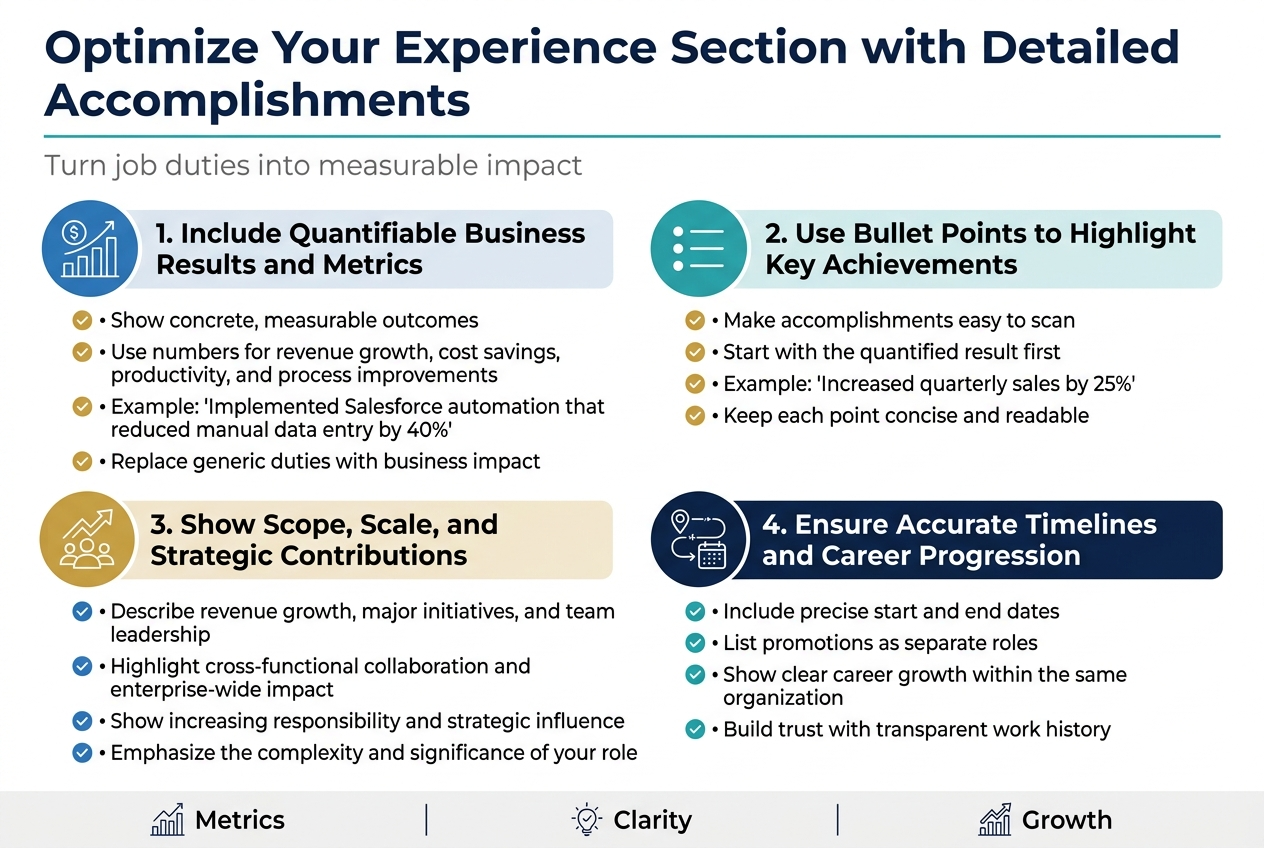
Include Quantifiable Business Results and Metrics
The most powerful way to capture a recruiter’s attention is by showcasing concrete, measurable outcomes from your work. Rather than simply listing job duties, focus on specific results that demonstrate your impact on the organization. For instance, instead of stating “managed sales processes,” transform this into “Implemented Salesforce automation that reduced manual data entry by 40%.” This approach immediately communicates your ability to drive efficiency and solve business problems.
Quantifiable metrics provide recruiters with tangible proof of your capabilities and help them envision the value you could bring to their organization. Whether it’s revenue growth, cost savings, productivity improvements, or process optimizations, numbers tell a compelling story that generic descriptions cannot match.
Use Bullet Points to Highlight Key Achievements
Formatting your accomplishments with bullet points significantly improves readability and allows recruiters to quickly scan your most impressive achievements. This presentation style makes your measurable accomplishments easy to understand and digest, which is crucial when recruiters are reviewing numerous profiles.
Structure your bullet points strategically by starting with the quantified result whenever possible. This front-loading technique ensures that the most impactful information catches the reader’s eye first. For example, begin with “Increased quarterly sales by 25%” rather than burying this metric at the end of a lengthy sentence. This approach respects the recruiter’s time while maximizing the impact of your achievements.
Show Scope, Scale, and Strategic Contributions
Demonstrate your professional growth and leadership capabilities by detailing how you’ve increased revenue, led major initiatives, built or managed teams, or shaped new programs. These elements reveal your ability to operate at different organizational levels and handle increasing responsibilities.
When describing your contributions, emphasize the strategic nature of your work and the scope of your influence. This might include cross-functional collaboration, enterprise-wide implementations, or initiatives that shaped company direction. Such details help recruiters understand not just what you accomplished, but the complexity and significance of your role within the broader organizational context.
Ensure Accurate Timelines and Career Progression
Maintaining precise start and end dates for all positions creates transparency and builds trust with potential employers. Accurate timelines allow recruiters to understand your career journey and identify any gaps that might require explanation during interviews.
When you’ve received promotions within the same organization, list each role separately to demonstrate clear career progression. This approach showcases your ability to grow within an organization and take on increasing responsibilities over time, which is highly valuable to recruiters seeking candidates with proven advancement potential.
Strategic Use of Additional Profile Sections
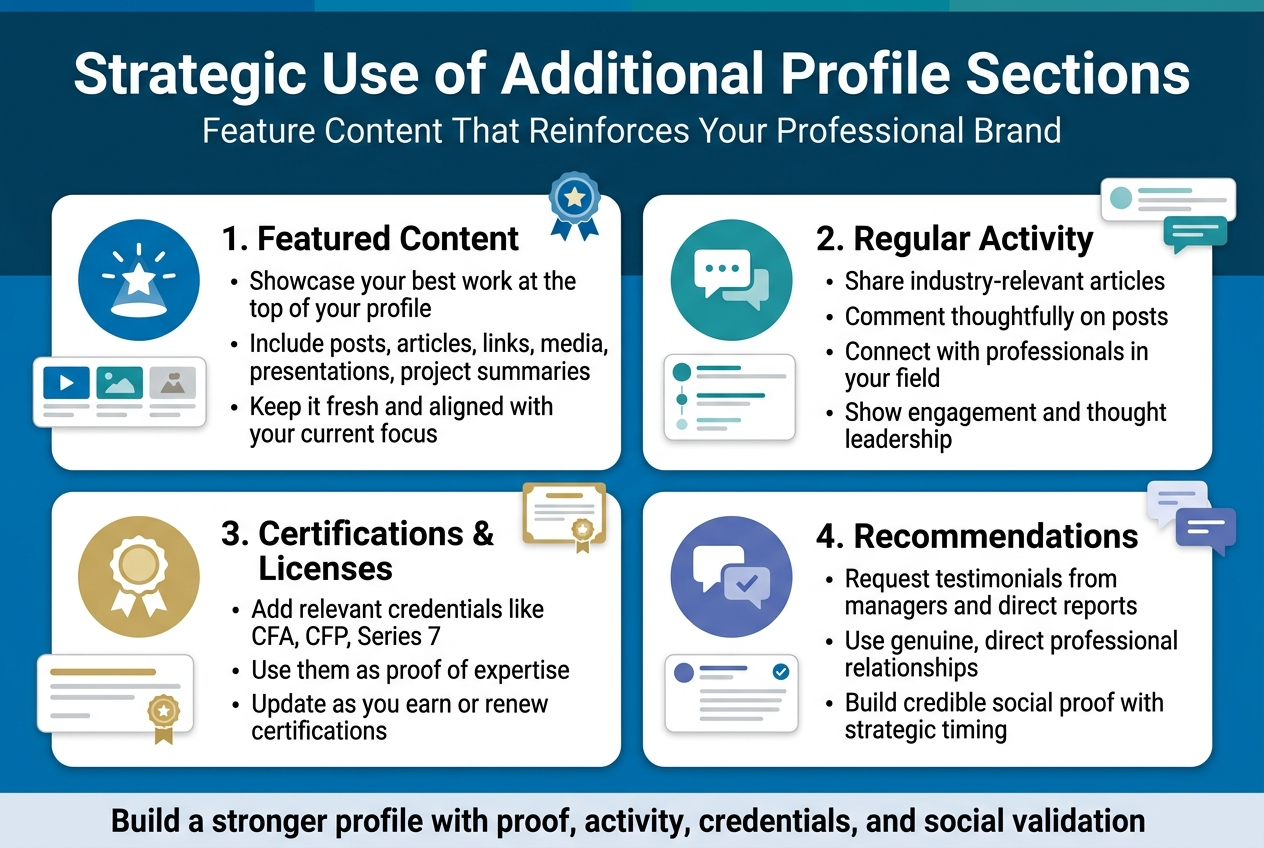
Feature Content That Reinforces Your Professional Brand
The “Featured” section serves as your professional showcase, allowing you to highlight your most impressive work directly at the top of your profile. This strategic placement ensures recruiters immediately see your best content when they visit your LinkedIn page. Populate this section with posts, articles, links, or media that demonstrate your expertise and achievements. Include presentations that showcase your thought leadership, project summaries that highlight your problem-solving abilities, and published articles that establish your industry knowledge.
Your featured content should tell a cohesive story about your professional capabilities and reinforce the personal brand you’ve established in your headline and about section. Whether it’s a successful case study, an industry presentation, or a thought-provoking article you’ve written, each piece should contribute to building your credibility. Keep this section fresh and current by regularly updating it with new accomplishments and removing outdated content that no longer represents your current professional focus.
Maintain Regular Activity to Show Professional Engagement
Now that we have covered the importance of featured content, consistent platform activity demonstrates your commitment to professional growth and industry engagement. Recruiters value candidates who show active participation in their professional community, as it indicates a proactive approach to career development.
Regular activity encompasses sharing insightful articles relevant to your industry, commenting thoughtfully on posts from colleagues and industry leaders, and actively connecting with other professionals in your field. This engagement pattern signals to recruiters that you’re not just passively job searching but genuinely invested in your professional development and industry trends. Your activity feed becomes a testament to your expertise and thought leadership, providing recruiters with additional insights into your professional interests and knowledge base.
Include Relevant Certifications and Industry Licenses
Professional credentials carry significant weight in recruiters’ evaluation processes, particularly those that are recognized prerequisites within your specific field. Certifications such as CFA, CFP, or Series 7 demonstrate your commitment to continuous professional development and validate your expertise in specialized areas.
These credentials serve as immediate proof points for recruiters, showing that you’ve invested time and effort in obtaining industry-standard qualifications. They also indicate your dedication to staying current with industry standards and best practices. Make sure to include all relevant certifications and licenses, as they can often serve as initial screening criteria for many positions. Keep this section updated as you earn new certifications or as existing ones require renewal.
Gather Recommendations from Direct Professional Relationships
With this in mind, recommendations from direct professional relationships provide powerful social proof that can significantly impact recruiters’ perceptions of your capabilities. Focus on gathering recommendations from current or past managers and direct reports, as these carry the most weight due to their firsthand knowledge of your work performance and leadership abilities.
These testimonials offer recruiters valuable third-party validation of your skills and work ethic, potentially reducing the due diligence time they need to spend verifying your capabilities. However, pace yourself when requesting recommendations to avoid having too many appear suddenly on your profile, which could appear inauthentic. Strategic timing and genuine relationships are key to building a credible collection of recommendations that reinforce your professional brand and provide compelling evidence of your value to potential employers.
Essential Profile Maintenance Tips for Maximum Visibility
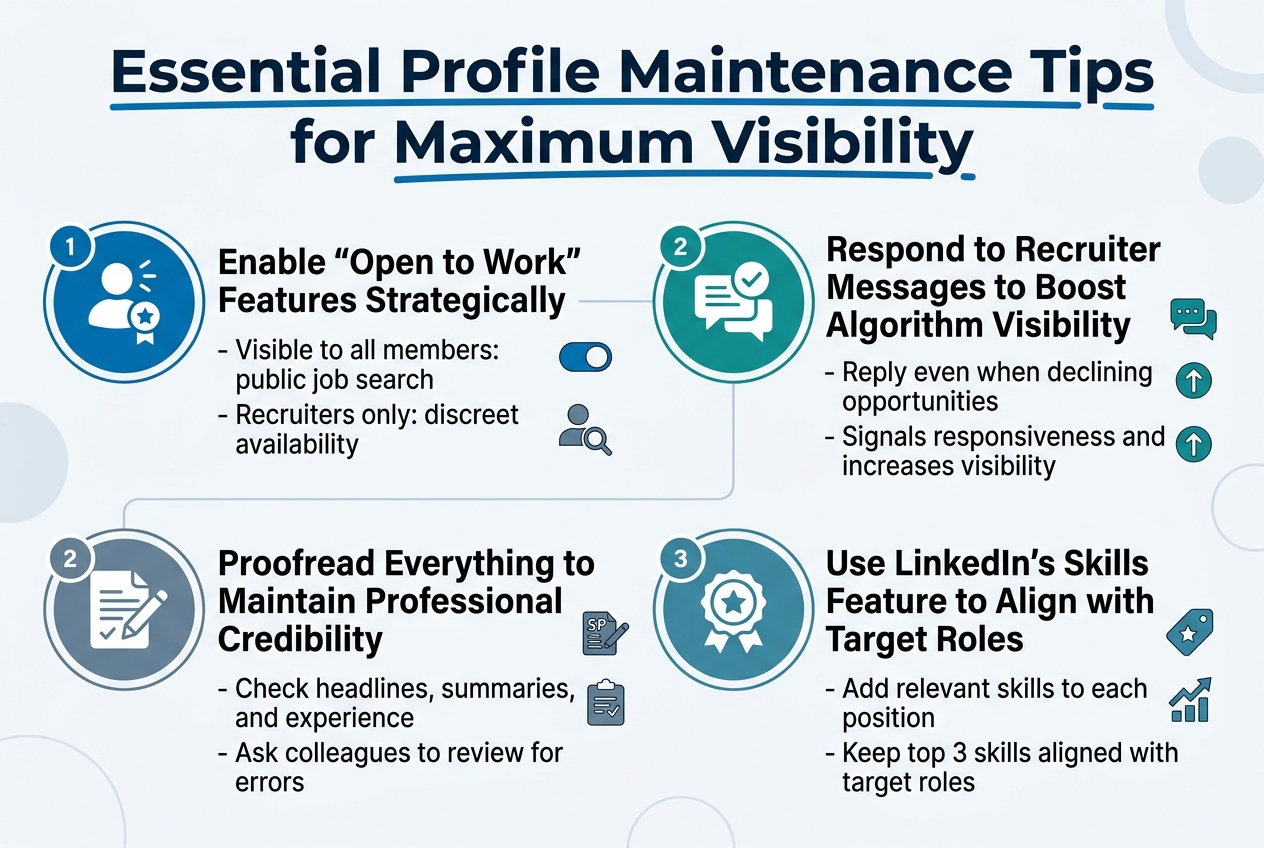
Enable “Open to Work” Features Strategically
The “Open to Work” feature on LinkedIn serves as a powerful signal to recruiters, but timing and visibility settings are crucial for maximum effectiveness. When you’re actively seeking new opportunities, enable this feature to increase your discoverability in recruiter searches. However, the strategic approach lies in choosing the right visibility setting based on your current employment situation.
For professionals who are publicly searching for new roles, making the “Open to Work” banner visible to all LinkedIn members demonstrates transparency and active engagement in the job market. This broad visibility can attract opportunities from unexpected sources and expand your networking reach beyond traditional recruiting channels.
Conversely, if you’re currently employed and prefer discretion, setting the feature to “recruiters only” maintains your privacy while still signaling availability to potential employers. This targeted approach protects your current professional relationships while keeping you accessible to hiring professionals who might have relevant opportunities.
Respond to Recruiter Messages to Boost Algorithm Visibility
Now that we’ve covered strategic visibility settings, responding to recruiter outreach plays a surprisingly significant role in your LinkedIn profile’s algorithmic performance. Even when opportunities don’t align with your career goals, sending a simple reply to recruiter messages can substantially boost your visibility within LinkedIn’s algorithm.
This engagement signals to the platform that you’re an active, responsive professional, which keeps you on recruiters’ active lists for future opportunities. The algorithm interprets your responsiveness as a positive engagement metric, potentially increasing your profile’s visibility in subsequent recruiter searches.
A brief, professional decline message serves dual purposes: it maintains courteous professional relationships while simultaneously enhancing your algorithmic standing. This simple practice can lead to increased profile views and more relevant opportunities appearing in your network.
Proofread Everything to Maintain Professional Credibility
With this engagement strategy in mind, maintaining impeccable written communication across your profile is non-negotiable for professional credibility. Typos and grammatical errors on your LinkedIn profile carry the same professional consequences as mistakes on a traditional resume, potentially undermining your expertise and attention to detail.
Careful proofreading demonstrates professionalism and respect for your audience, particularly recruiters who review hundreds of profiles weekly. Every section of your profile, from headlines to experience descriptions, should undergo thorough review before publication.
Consider having colleagues or professional contacts review your profile content, as fresh eyes often catch errors that become invisible through repeated self-editing. This collaborative approach not only improves accuracy but also ensures your messaging resonates with your intended professional audience.
Use LinkedIn’s Skills Feature to Align with Target Roles
Previously, I’ve emphasized the importance of strategic visibility and communication, and now we’ll explore how LinkedIn’s skills feature creates powerful alignment with your target roles. Adding relevant skills to each position in your experience section creates multiple touchpoints for recruiter searches and demonstrates consistent expertise across your career trajectory.
The strategic value lies in ensuring your top three displayed skills directly align with the types of positions you’re targeting. These prominently featured skills appear at the top of your profile and influence how LinkedIn’s algorithm matches you with relevant job opportunities and recruiter searches.
Regular skills assessment and updates ensure your profile remains current with industry trends and role requirements. This ongoing maintenance keeps you competitive in recruiter searches while accurately representing your evolving professional capabilities and career focus areas.
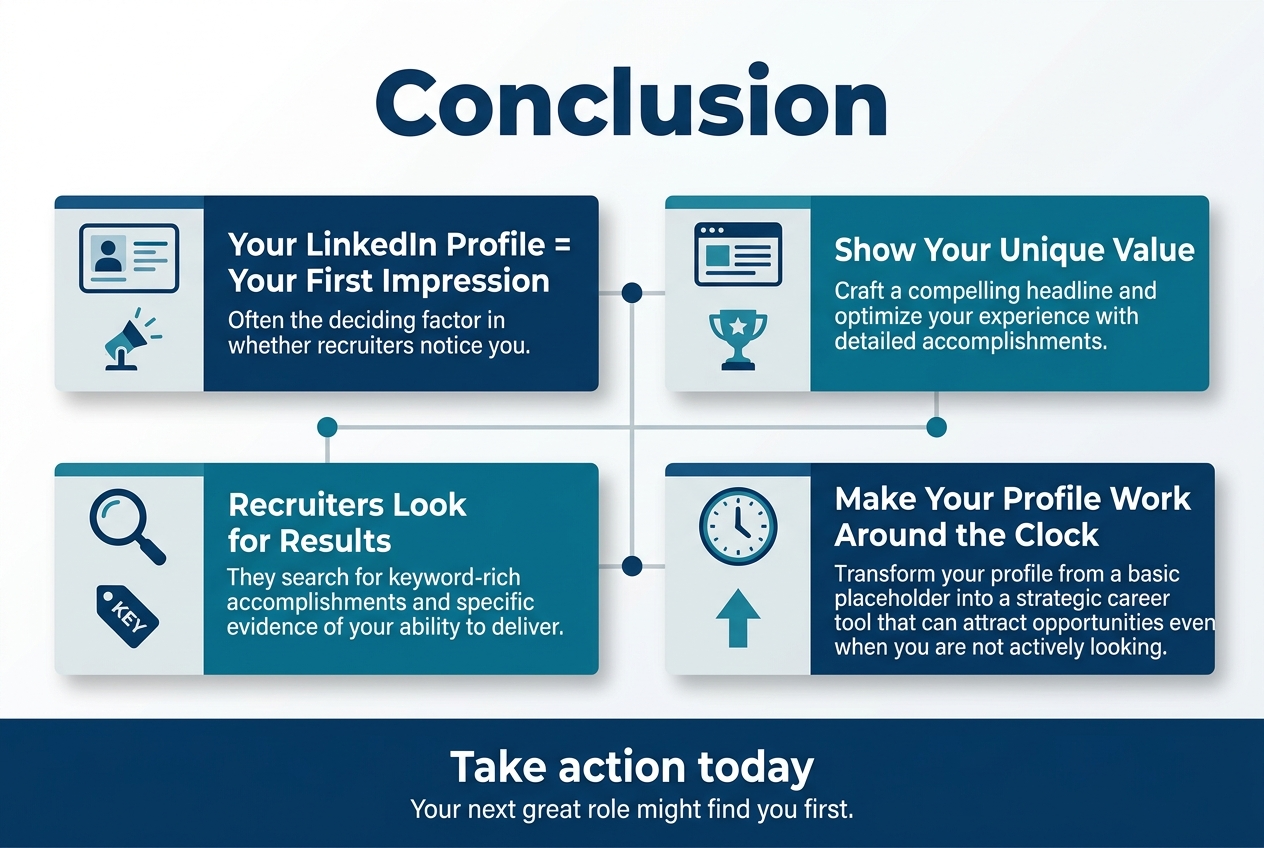
Your LinkedIn profile is your digital first impression and often the deciding factor in whether recruiters take notice of your candidacy. By implementing the strategies outlined above—from crafting a compelling headline that showcases your unique value to optimizing your experience section with detailed accomplishments—you create a powerful professional narrative that cuts through the noise of millions of other profiles.
Remember, recruiters don’t just look at job titles and company names anymore. They’re searching for keyword-rich accomplishments and specific evidence of your ability to deliver results. Whether you’re actively job hunting or simply open to new opportunities, investing time in these profile optimizations ensures that your next great role might find you long before you’re officially looking. Take action today to transform your LinkedIn profile from a basic placeholder into a strategic career tool that works for you around the clock.