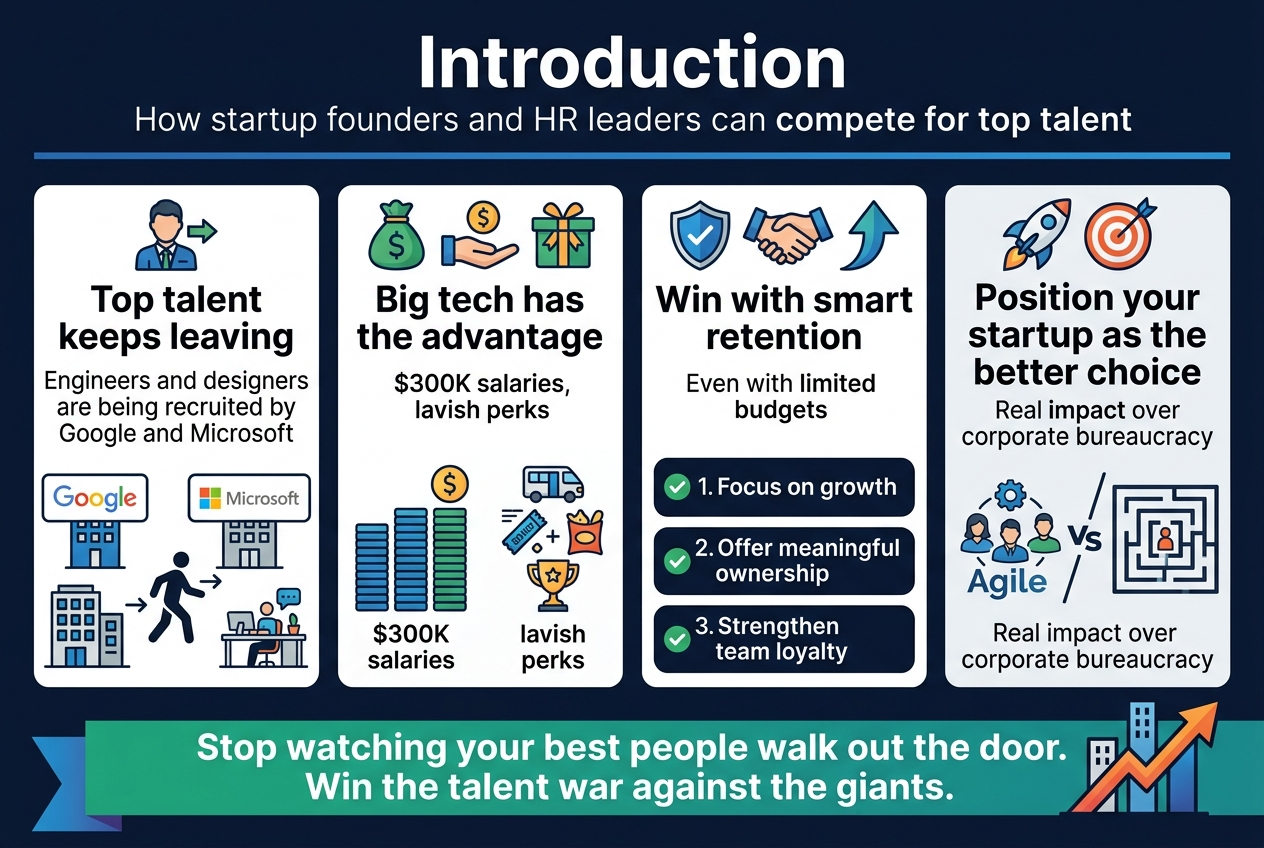
Your top engineers keep jumping ship to Google. Your star designer just accepted an offer at Microsoft. Sound familiar?
This guide is for startup founders and HR leaders who are tired of losing their best talent to tech giants and want to build a competitive hiring strategy that actually works.
Tech companies like Microsoft and Google seem to have endless resources to poach your people, but you’re not as powerless as you think. While you can’t match their $300K salaries or lavish perks, you can beat them at their own game by playing to your unique strengths.
We’ll break down why big tech dominates talent acquisition and reveal the compensation gaps that are bleeding your startup dry. You’ll discover smart retention strategies that work even with limited budgets, plus learn how to position your company as the better choice for ambitious professionals who want real impact over corporate bureaucracy.
Stop watching your best people walk out the door. Let’s talk about how to win the talent war against the giants.
The Brutal Reality of Competing Against Tech Giants
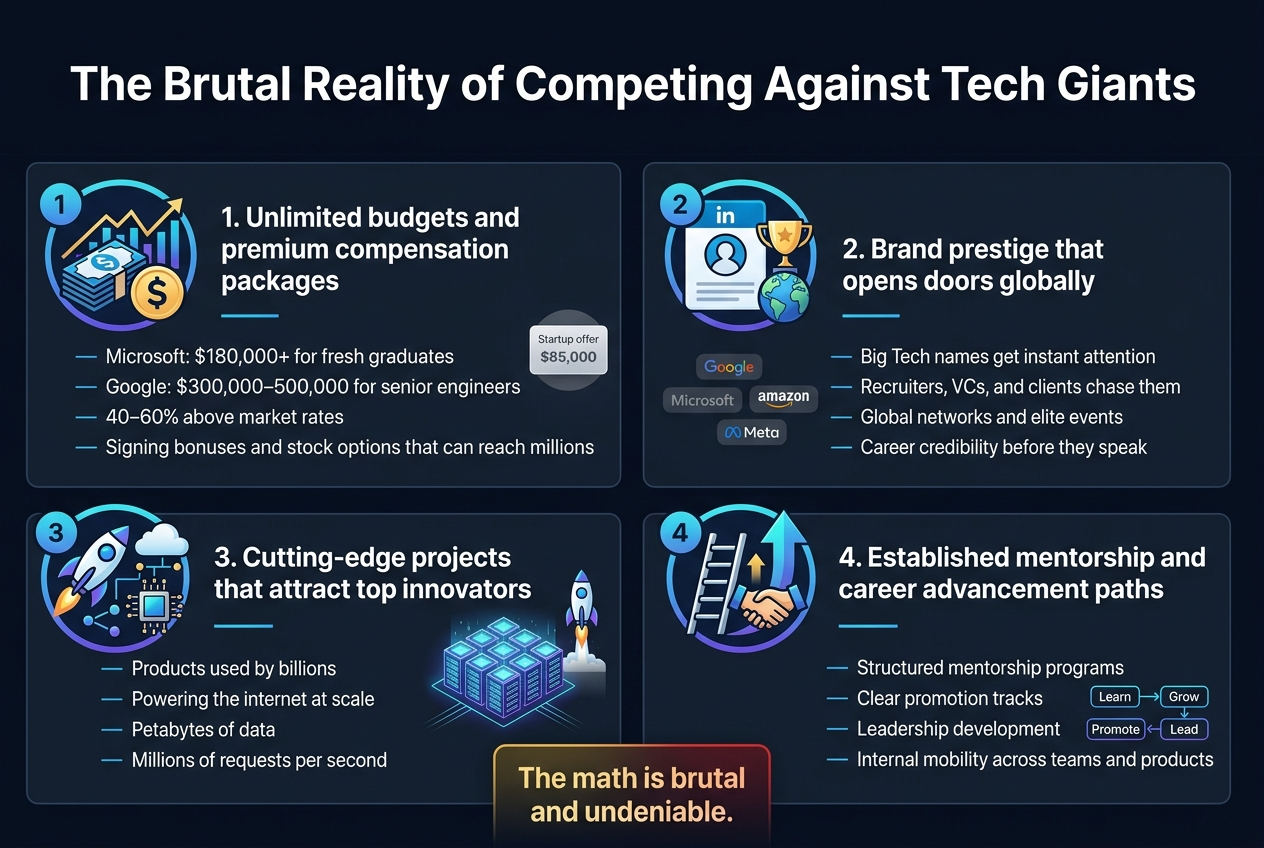
Unlimited budgets and premium compensation packages
When Microsoft offers a fresh graduate $180,000 plus stock options, your startup’s $85,000 offer suddenly feels like pocket change. Tech giants operate with war chests that would make small countries jealous. They throw around signing bonuses that match your entire annual salary budget, and their equity packages often vest into life-changing money.
Google’s total compensation packages regularly hit $300,000-500,000 for senior engineers, while Amazon’s stock grants can turn into million-dollar windfalls. These companies view talent acquisition as an investment with unlimited upside, not a cost center to optimize. They’ll happily pay 40-60% above market rates because they know one exceptional hire can generate millions in value.
Your startup? You’re counting every dollar, negotiating over coffee stipends, and hoping candidates will accept equity that might be worth nothing. The math is brutal and undeniable.
Brand prestige that opens doors globally
A Google or Microsoft badge on LinkedIn is like a golden ticket. Recruiters chase these employees relentlessly. Their resumes get instant attention from VCs, other startups, and enterprise clients. The brand recognition alone validates their expertise before they even speak.
When a Google engineer walks into a conference, people assume they’re brilliant. When your startup engineer introduces themselves, they get blank stares and have to explain what your company does. This prestige gap affects everything from networking opportunities to speaking engagements to future career prospects.
Big Tech employees build global networks effortlessly. They attend exclusive company events, work with international teams, and get access to industry leaders that your employees can only dream of meeting. This network effect compounds over time, making their career trajectory exponentially more valuable.
Cutting-edge projects that attract top innovators
Microsoft employees work on Azure, which powers half the internet. Google engineers build products used by billions daily. Meta developers shape the future of virtual reality. These aren’t just jobs – they’re opportunities to impact humanity at scale.
Your startup might be building innovative solutions, but you’re likely solving problems for hundreds or thousands of users. The scope and impact simply don’t compare. Top engineers crave challenges that push technological boundaries, and big tech delivers those challenges with unlimited resources and global distribution.
The technical infrastructure alone is mind-blowing. Google’s engineers have access to computing power that most startups can’t even comprehend. They work with data sets containing petabytes of information and build systems that handle millions of requests per second. Your startup’s technical challenges, while real, often feel small in comparison.
Established mentorship and career advancement paths
Big Tech has perfected the art of employee development. They offer structured mentorship programs, clear promotion tracks, and leadership development that would cost your startup millions to replicate. Senior engineers at Google have access to internal training programs, external conferences, and one-on-one coaching from industry legends.
Career progression is transparent and merit-based. Employees know exactly what they need to achieve to reach the next level, and the company provides resources to help them get there. Your startup might promise rapid growth opportunities, but you likely can’t offer the systematic development infrastructure that turns good engineers into great leaders.
The internal mobility alone is staggering. An engineer at Amazon can transition between AWS, retail, devices, or advertising without leaving the company. They can explore different domains, learn new technologies, and build diverse skill sets all while maintaining their compensation and benefits. Your startup offers depth in one area, but can’t match this breadth of opportunity.
Hidden Disadvantages That Big Tech Creates for Talent
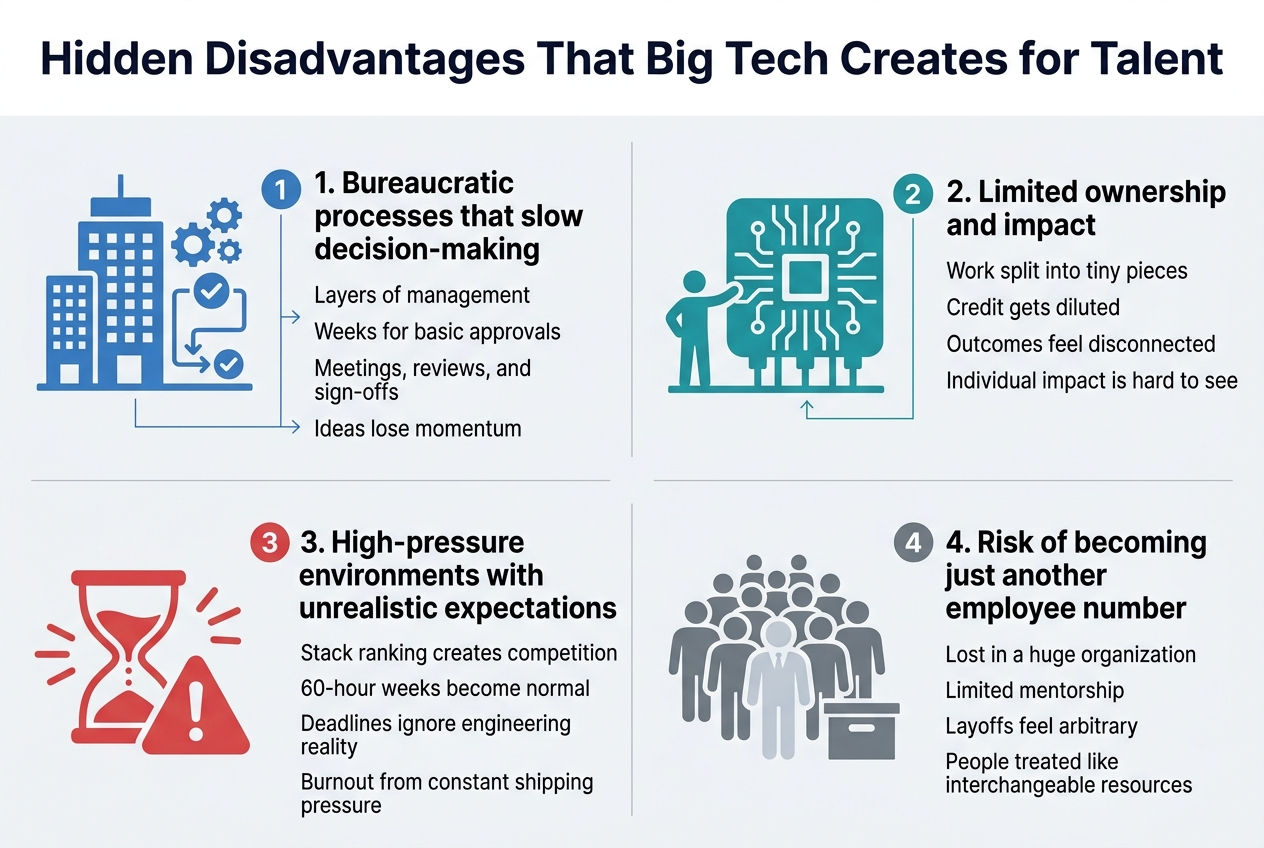
Bureaucratic processes that slow decision-making
Tech giants operate with layers upon layers of management, creating approval chains that can turn simple decisions into month-long ordeals. Engineers at companies like Google or Microsoft often report waiting weeks just to get permission for basic changes to their projects. Every feature update, budget request, or team restructuring must pass through multiple committees, each with their own priorities and timelines.
This red tape kills innovation momentum. When a developer has a breakthrough idea at 2 AM, they can’t just build it and ship it. Instead, they face a gauntlet of stakeholder meetings, design reviews, legal approvals, and executive sign-offs. By the time their idea gets the green light, the market opportunity has often passed or the developer has lost their initial enthusiasm.
The sheer size of these organizations means that even minor decisions require extensive documentation and justification. Want to try a new development framework? Prepare a 20-page proposal. Need to pivot your project direction based on user feedback? Schedule meetings with product managers, engineering leads, and business stakeholders who may not understand the technical nuances.
Limited ownership and impact on individual projects
Big tech companies divide massive projects into tiny pieces, leaving individual contributors feeling like small cogs in an enormous machine. A software engineer might spend months perfecting a single button’s animation or optimizing one database query among thousands. The connection between their daily work and the final product becomes virtually invisible.
Career advancement often depends more on navigating internal politics than on actual technical contributions. Engineers watch their code get merged into systems so complex that even senior architects struggle to understand the full picture. The satisfying feeling of building something from scratch and seeing users interact with your creation becomes rare.
Project ownership gets diluted across so many people that nobody feels truly responsible for outcomes. When something breaks, finger-pointing begins instead of collaborative problem-solving. When something succeeds, credit gets distributed so thinly that individual achievements feel meaningless. This environment breeds disengagement and reduces the sense of personal investment that drives exceptional performance.
High-pressure environments with unrealistic expectations
The performance review systems at major tech companies create constant anxiety among employees. Stack ranking forces colleagues to compete against each other instead of collaborating toward shared goals. Engineers find themselves working 60-hour weeks not because the work requires it, but because everyone around them is doing the same thing.
Deadlines often ignore technical reality. Product managers promise features to customers before consulting with the engineering teams who must build them. This leads to rushed implementations, technical debt, and burnout as developers struggle to meet impossible timelines with insufficient resources.
The “move fast and break things” mentality sounds exciting in theory but becomes exhausting in practice. Constant pressure to ship features quickly leaves little time for thoughtful architecture, proper testing, or knowledge sharing. Employees burn out trying to maintain the pace, and many talented individuals leave despite generous compensation packages.
Risk of becoming just another employee number
In organizations with hundreds of thousands of employees, individual recognition becomes nearly impossible. Talented engineers who could be stars at smaller companies find themselves lost in the crowd. Their managers often oversee dozens of people, making meaningful mentorship and career development challenging.
Layoffs happen regularly and seemingly arbitrarily, reminding employees that their individual contributions matter less than quarterly financial targets. Even high performers worry about their job security when entire teams get eliminated due to strategic shifts decided by executives they’ve never met.
The standardized career paths and compensation bands treat people like interchangeable resources rather than unique individuals with different strengths and aspirations. Creativity gets stifled by processes designed to manage large groups efficiently rather than nurture individual talent and innovation.
Your Startup’s Secret Weapons in Talent Acquisition
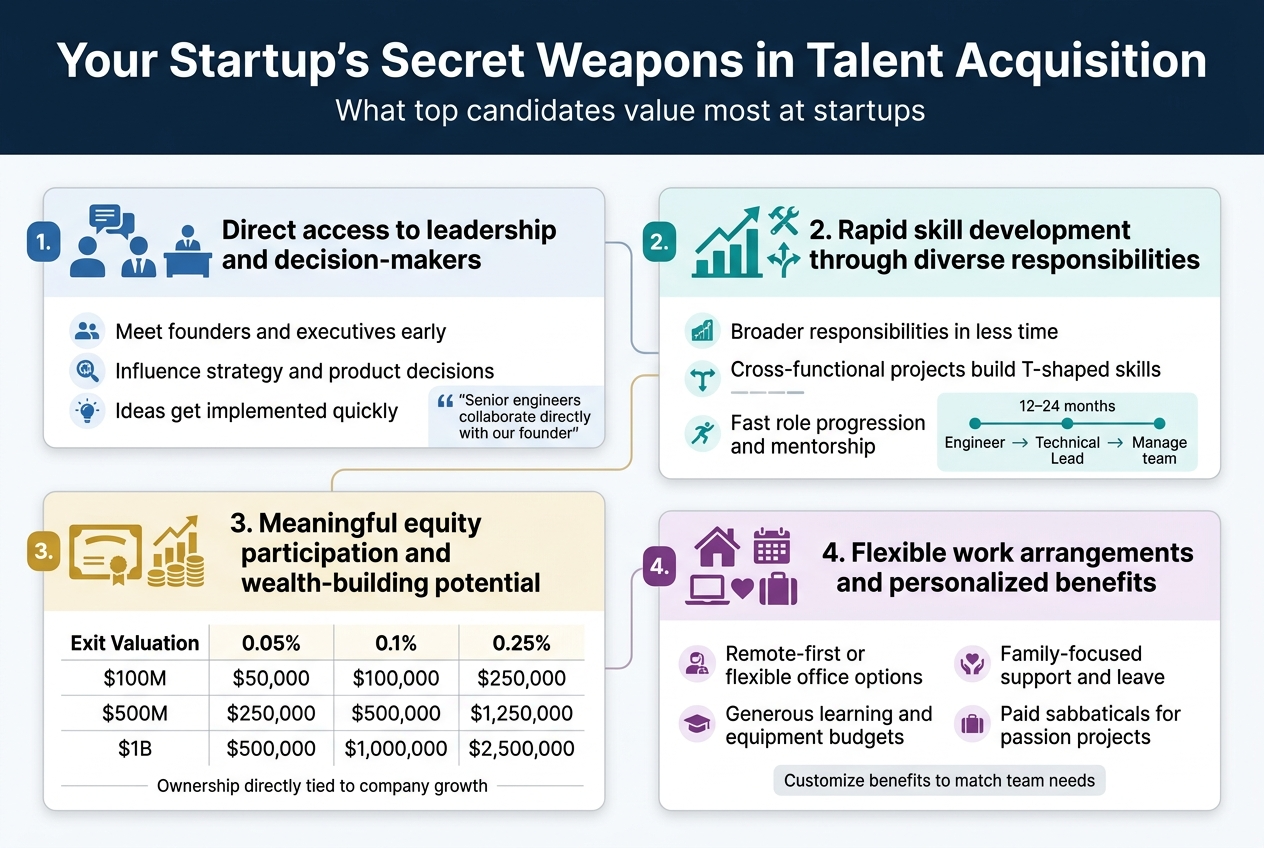
Direct access to leadership and decision-makers
When Sarah joined a Series A fintech startup as a product manager, she found herself sitting across from the CTO during her second week, debating architecture decisions that would shape the company’s next two years. At her previous role at Amazon, it took eight months just to get on her VP’s calendar.
This level of access represents one of your most powerful advantages. Top talent craves the ability to influence strategy and see their ideas implemented quickly. At startups, engineers regularly present to founders, junior marketers shape go-to-market strategies, and sales reps provide direct feedback that influences product roadmaps.
Smart candidates recognize this access as career acceleration. They understand that learning from seasoned executives who’ve built successful companies offers insights impossible to gain through traditional corporate hierarchies. When recruiting, emphasize specific examples: “Our senior engineers collaborate directly with our founder on technical architecture” or “Marketing team members present quarterly strategy to the entire leadership team.”
Document these interactions in your recruiting materials. Share stories of how employee suggestions led to pivotal company decisions. Create opportunities for candidates to meet leadership during the interview process, demonstrating this accessibility firsthand.
Rapid skill development through diverse responsibilities
At Google, a software engineer might spend two years optimizing a single algorithm. At your startup, that same engineer could build APIs, design user interfaces, implement DevOps practices, and mentor junior developers within six months.
This breadth of experience creates what career experts call “T-shaped professionals” – individuals with deep expertise in one area and broad competency across multiple disciplines. For ambitious professionals, this accelerated learning curve often outweighs higher salaries at big tech companies.
Quantify this advantage when recruiting:
-
Role Expansion Timeline: Show how positions evolve. “Our last backend engineer became a technical lead within 18 months, managing both infrastructure and a team of four developers.”
-
Cross-Functional Projects: Highlight collaborative opportunities. “Product managers work directly with customers, analyze data, and contribute to technical specifications.”
-
Learning Budget Impact: Demonstrate how smaller teams mean larger per-person development budgets. “Each team member receives $3,000 annually for conferences, courses, or certifications – often 3x what large companies offer.”
-
Mentorship Density: Emphasize the ratio. “With one senior professional for every two junior team members, mentoring happens naturally and consistently.”
Create role progression maps showing realistic 12-24 month advancement opportunities. Include specific skills gained and responsibilities acquired at each stage.
Meaningful equity participation and wealth-building potential
Stock options at big tech companies often feel like lottery tickets – potentially valuable but largely beyond individual influence. Startup equity represents direct ownership in outcomes you can personally impact.
Break down the math for candidates. If your company achieves a modest 10x return and they own 0.1% through options, that’s significantly more meaningful than receiving RSUs worth $50,000 annually at a mature company with limited upside.
Present realistic scenarios:
| Exit Valuation | 0.05% Ownership | 0.1% Ownership | 0.25% Ownership |
|---|---|---|---|
| $100M | $50,000 | $100,000 | $250,000 |
| $500M | $250,000 | $500,000 | $1,250,000 |
| $1B | $500,000 | $1,000,000 | $2,500,000 |
Explain vesting acceleration triggers, double-trigger provisions, and early exercise options. Many candidates don’t understand these mechanisms can significantly increase their financial outcomes.
Share success stories from previous companies you’ve built or advisors’ experiences. “Our advisor joined Stripe as employee #30 with 0.2% equity – that stake became worth $8 million at their last valuation.”
Flexible work arrangements and personalized benefits
Big tech companies offer impressive benefit packages, but they’re standardized across thousands of employees. Your advantage lies in customization and genuine flexibility.
Design benefits that reflect your team’s actual needs:
Location Flexibility: Offer true remote-first policies or flexible office arrangements. “Work from anywhere for up to three months annually” beats Google’s return-to-office mandates for many candidates.
Professional Development: Provide individual education budgets with minimal restrictions. Allow conference attendance, course enrollments, or even sabbaticals for senior contributors.
Equipment and Setup: Give generous hardware allowances. “Choose any laptop configuration plus a $2,000 home office setup budget” often exceeds what large companies provide.
Family-Focused Perks: Implement policies big companies can’t match. Unlimited sick days for family care, flexible parental leave beyond legal minimums, or childcare stipends.
Career Sabbaticals: Offer extended time off for personal projects. “After two years, team members can take a six-week paid sabbatical to pursue passion projects or additional education.”
Track which benefits matter most to your hires and refine accordingly. Survey your team quarterly about benefit utilization and satisfaction. Use this data to continuously improve your offering and differentiate from corporate competitors.
Proven Strategies to Attract High-Caliber Candidates
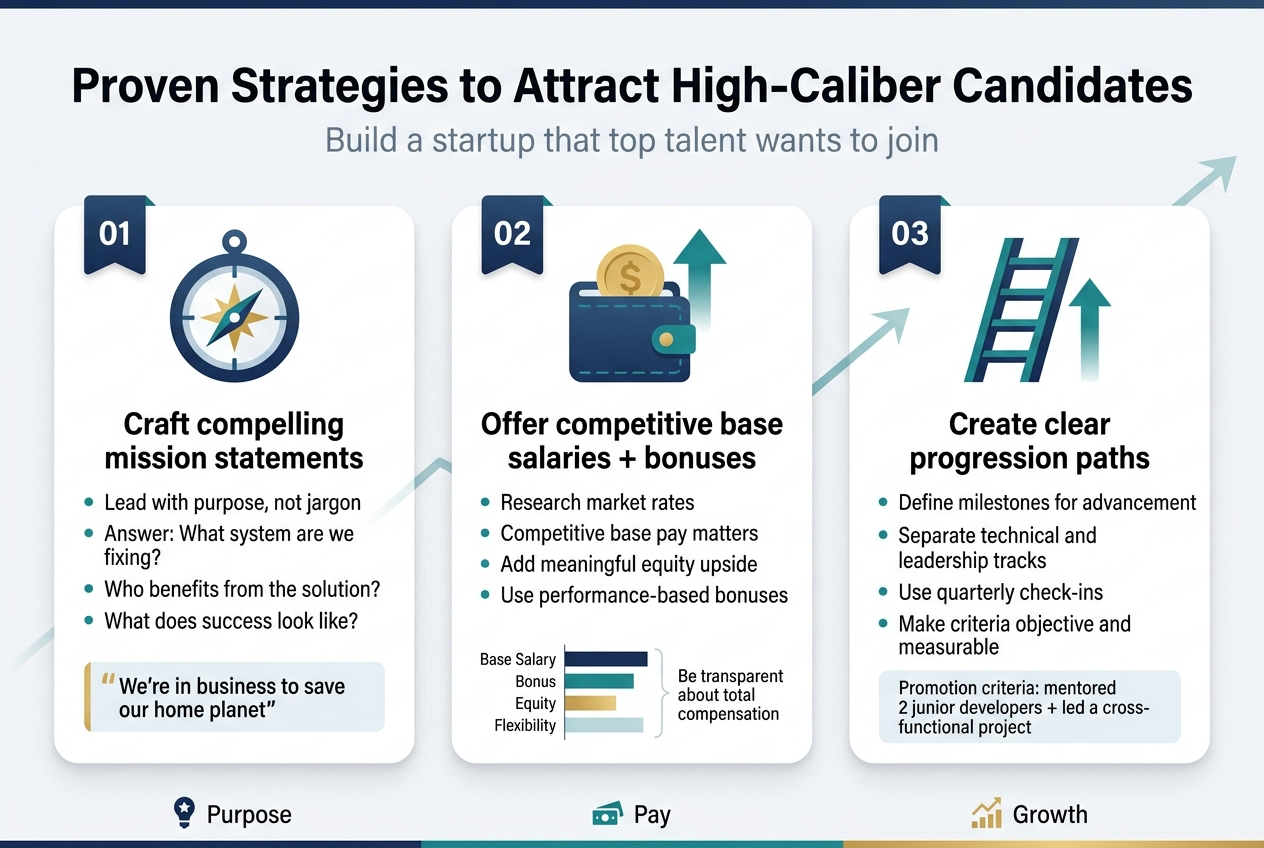
Craft compelling mission statements that inspire purpose
Top talent craves meaning beyond a paycheck. Your mission statement becomes your North Star for attracting candidates who want to change the world, not just collect stock options. Skip the corporate jargon and buzzword soup that makes people’s eyes glaze over. Instead, paint a vivid picture of the problem you’re solving and why it matters.
Consider how Patagonia’s “We’re in business to save our home planet” instantly communicates their purpose. Your startup might be building fintech solutions, but frame it as “democratizing financial access for underserved communities” rather than “leveraging innovative blockchain technologies for optimized capital allocation.”
Your mission should answer three critical questions: What broken system are you fixing? Who benefits from your solution? What does success look like for the world? When software engineers at Google hear your mission, they should feel a spark of excitement about tackling meaningful challenges instead of optimizing ad click-through rates.
Test your mission statement with current employees. If they can’t recite it passionately or struggle to connect their daily work to the bigger picture, you need to refine it. The best mission statements become rally cries that candidates remember weeks after the interview.
Offer competitive base salaries plus performance bonuses
Forget the startup stereotype of paying in equity and pizza parties. High-caliber candidates have mortgages, student loans, and family obligations that require actual money. Your compensation package needs to compete with Big Tech’s cash-heavy offers, even if you can’t match them dollar for dollar.
Research market rates using platforms like Levels.fyi, Glassdoor, and AngelList. Your base salaries should fall within 10-15% of what Google or Microsoft offers for similar roles. When you can’t match their base salary, bridge the gap with meaningful equity packages and performance bonuses tied to clear metrics.
Structure your bonuses around individual achievements and company milestones. A senior developer might earn 20% bonus for shipping a major feature on time, while the entire engineering team shares a bonus pool when you hit revenue targets. This approach rewards both individual excellence and collective success.
| Compensation Element | Big Tech Approach | Startup Advantage |
|---|---|---|
| Base Salary | $150K-$300K | $120K-$250K + equity upside |
| Annual Bonus | 10-20% guaranteed | 20-50% performance-based |
| Equity | Minimal upside | Significant wealth potential |
| Flexibility | Limited | High autonomy + remote options |
Be transparent about your total compensation philosophy during interviews. Explain how equity could multiply their earnings if the company succeeds, but don’t oversell pie-in-the-sky scenarios.
Create clear progression paths with defined milestones
Ambitious professionals want to see their career trajectory mapped out clearly. Big Tech companies excel at this with well-defined levels, promotion criteria, and skill development frameworks. Your startup needs similar clarity, even if your structure looks different.
Build a career progression framework that outlines specific roles, responsibilities, and requirements for advancement. A junior developer should know exactly what skills and achievements lead to senior developer status, then to tech lead, and eventually to engineering manager or principal engineer tracks.
Define both technical and leadership progression paths. Some engineers want to become people managers, while others prefer staying hands-on as technical experts. Create parallel tracks that value both paths equally with comparable compensation and influence.
Set quarterly check-ins to review progress against these milestones. Use tools like Notion or Airtable to track skill development, project contributions, and growth goals. When employees see their advancement happening in real-time, they’re less likely to chase opportunities elsewhere.
Document success stories of current employees who’ve grown within your organization. New hires want proof that progression isn’t just theoretical. Share how your lead designer started as a junior contributor or how your VP of Engineering began as an individual contributor just two years ago.
Make advancement criteria objective and measurable. Instead of vague requirements like “demonstrates leadership,” specify “successfully mentored two junior developers and led a cross-functional project with 5+ stakeholders.” Clear expectations eliminate politics and favoritism from promotion decisions.
Retention Tactics That Keep Top Performers Engaged
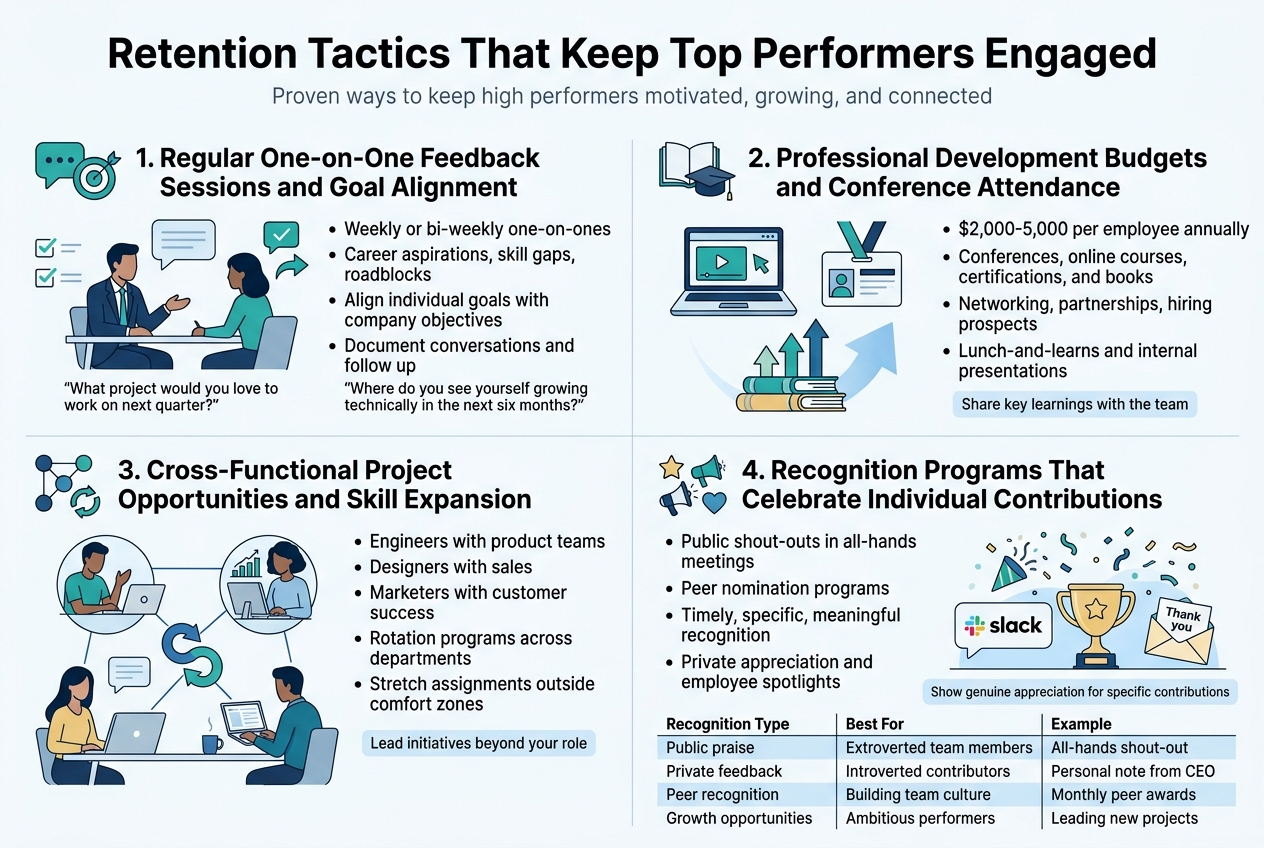
Regular One-on-One Feedback Sessions and Goal Alignment
Creating meaningful connections with your top performers starts with consistent, structured communication. Schedule weekly or bi-weekly one-on-ones that go beyond project updates. These sessions should focus on career aspirations, skill development gaps, and removing roadblocks that prevent your team from doing their best work.
Smart startups use these conversations to align individual goals with company objectives. When employees see how their work directly impacts the bigger picture, engagement skyrockets. Ask specific questions: “What project would you love to work on next quarter?” or “Where do you see yourself growing technically in the next six months?” Document these conversations and follow up on commitments.
The magic happens when you turn these discussions into actionable plans. If someone wants to learn machine learning, connect them with team members who have that expertise. If they’re interested in product strategy, include them in relevant planning sessions. This proactive approach shows you’re invested in their growth, not just their output.
Professional Development Budgets and Conference Attendance
Top talent expects continuous learning opportunities, and smart startups budget for this reality. Allocate $2,000-5,000 per employee annually for conferences, online courses, certifications, and books. This investment pays dividends when employees bring fresh ideas and cutting-edge knowledge back to your team.
Conference attendance offers networking opportunities that benefit both the individual and your startup. When team members connect with industry leaders, they often discover partnership opportunities, hiring prospects, or innovative solutions to current challenges. Plus, having your employees speak at conferences builds your company’s reputation in the tech community.
Create a simple approval process for development requests. Require employees to share key learnings with the team through lunch-and-learns or internal presentations. This multiplies the value of your investment and creates a culture of knowledge sharing.
Cross-Functional Project Opportunities and Skill Expansion
Breaking down silos keeps your best people challenged and engaged. Create opportunities for engineers to work with product teams, for designers to collaborate with sales, or for marketers to partner with customer success. These cross-functional experiences prevent the tunnel vision that often leads to boredom and eventual departure.
Implement rotation programs where employees can spend a few weeks in different departments. A backend engineer working with the customer support team gains invaluable perspective on user pain points. A product manager shadowing the sales team understands customer objections firsthand. These experiences create more well-rounded professionals and stronger company culture.
Project-based rotations work particularly well for startups. Assign high performers to lead initiatives outside their comfort zone. Let your data analyst spearhead a customer research project or have your frontend developer lead a technical documentation overhaul. These stretch assignments demonstrate trust and provide growth opportunities that big tech companies often can’t match due to rigid role definitions.
Recognition Programs That Celebrate Individual Contributions
Recognition fuels motivation more than most leaders realize. Create multiple ways to celebrate achievements, from public shout-outs in all-hands meetings to peer nomination programs. The key is making recognition timely, specific, and meaningful to the individual.
Implement a peer recognition system where team members can nominate colleagues for exceptional work. This builds a positive culture and helps leadership identify contributions they might miss. Some startups use Slack channels dedicated to celebrating wins, while others create monthly recognition ceremonies with small rewards.
Consider non-monetary recognition that addresses different personality types. Some people love public praise, while others prefer private appreciation. Written thank-you notes from leadership, featured employee spotlights on the company blog, or special parking spots can be surprisingly effective. The goal is showing genuine appreciation for specific contributions rather than generic “good job” feedback.
| Recognition Type | Best For | Example |
|---|---|---|
| Public praise | Extroverted team members | All-hands shout-out |
| Private feedback | Introverted contributors | Personal note from CEO |
| Peer recognition | Building team culture | Monthly peer awards |
| Growth opportunities | Ambitious performers | Leading new projects |
Building Your Employer Brand to Compete Effectively
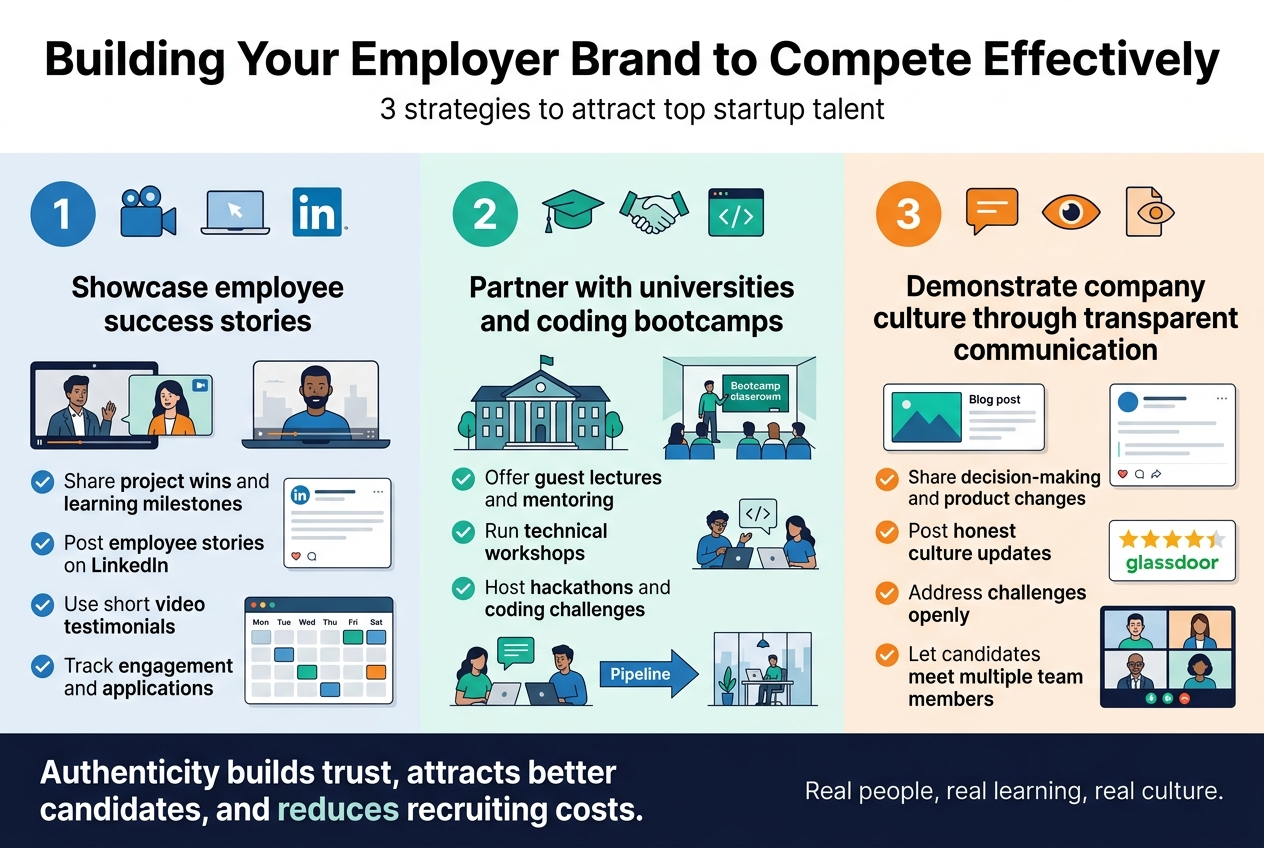
Showcase employee success stories across digital platforms
Your team members’ career journeys pack more punch than any corporate marketing campaign ever could. When potential candidates see real people talking about their growth, learning experiences, and meaningful work at your startup, it creates genuine connection that sterile job postings can’t match.
LinkedIn becomes your strongest ally here. Encourage employees to share their project wins, skill development milestones, and behind-the-scenes moments. Create a simple content calendar where different team members highlight their work each week. Software engineers can walk through solving complex technical challenges, while designers share their creative process from concept to final product.
Video content performs exceptionally well for startup employer branding. Short interviews with team members discussing what they’ve learned, how they’ve grown, or why they chose your company over larger alternatives resonate deeply with job seekers. These authentic testimonials carry weight because they’re unfiltered and personal.
Track which stories generate the most engagement and applications. You’ll likely find that content showing career progression, learning opportunities, and direct impact on product development attracts the highest-quality candidates. Smart startups also encourage employees to speak at conferences, write technical blog posts, and participate in industry podcasts – all while representing your company brand.
Partner with universities and coding bootcamps for pipeline development
Building relationships with educational institutions creates a steady flow of fresh talent while establishing your startup as an industry thought leader. This approach requires patience and consistency, but the long-term payoff significantly outweighs the initial investment.
Start by identifying schools and bootcamps that align with your technical needs and company values. Reach out to career services departments and offer to guest lecture, mentor students, or provide real-world project experience through internships or capstone projects.
Create structured programs that benefit both students and your company:
- Technical workshops where your engineers teach cutting-edge skills not covered in standard curricula
- Mentorship programs pairing students with your team members for ongoing guidance
- Hackathons and coding challenges that showcase your company’s technical problems and culture
- Scholarship programs that demonstrate your commitment to developing talent
The key lies in providing genuine value rather than just pitching your company. Students and instructors quickly recognize when companies are only there to recruit versus those genuinely invested in education. Your team members often enjoy teaching and mentoring, making this a win-win situation that builds goodwill across the entire academic community.
Many successful startups hire 30-40% of their engineering teams directly from these partnerships, creating a reliable talent pipeline that reduces recruiting costs and timeline pressures.
Demonstrate company culture through transparent communication
Transparency builds trust faster than any other employer branding strategy. Job seekers want to understand what they’re signing up for, especially when choosing a startup over established tech companies with predictable environments.
Share your company’s decision-making processes openly. When you pivot product strategy, face technical challenges, or celebrate major wins, bring candidates into those conversations. This honesty helps them envision themselves as part of your team while differentiating you from companies that only showcase polished success stories.
Regular “culture updates” work exceptionally well across multiple channels:
| Platform | Content Type | Example |
|---|---|---|
| Company Blog | Deep-dive posts | How we handled a major outage and what we learned |
| Social Media | Quick updates | Behind-the-scenes photos from team meetings or celebrations |
| Glassdoor | Employee reviews | Encourage honest feedback that helps candidates set expectations |
| YouTube | Video series | Monthly updates from leadership about company direction |
Address challenges head-on. Candidates respect startups that acknowledge the realities of early-stage company life – including long hours during critical launches, the uncertainty of funding cycles, and the fast-paced learning environment. This honesty attracts people who thrive in startup environments while filtering out those who prefer more structured corporate settings.
Create opportunities for candidates to interact with multiple team members during the interview process. Group lunches, informal coffee chats, or virtual team introductions give prospects authentic insights into your workplace dynamics and help them make informed decisions about cultural fit.
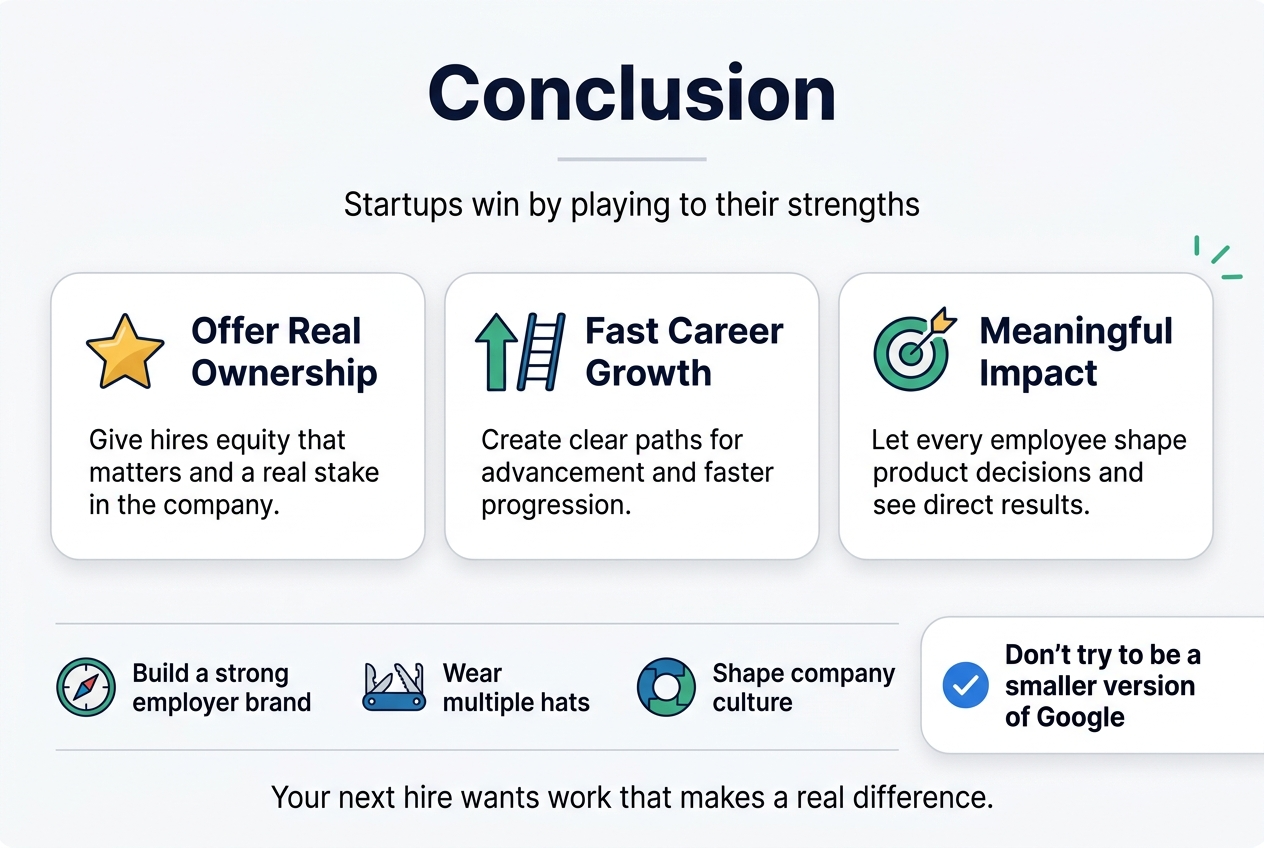
Tech giants like Microsoft and Google have massive advantages in the talent game, but your startup doesn’t have to wave the white flag. While you can’t match their seven-figure packages or sprawling campuses, you’ve got something they don’t: the chance to offer real ownership, faster career progression, and meaningful impact on every product decision. The key is playing to your strengths rather than trying to compete dollar-for-dollar.
Stop trying to be a smaller version of Google. Instead, focus on what makes startups irresistible – the opportunity to shape company culture, wear multiple hats, and see direct results from your work. Build a strong employer brand that highlights these unique benefits, create clear career advancement paths, and offer equity that actually matters. Your next hire isn’t looking for free lunch and nap pods; they’re looking for a place where their work makes a real difference.