IELTS vs PTE Choosing between IELTS and PTE can feel overwhelming when you’re planning to study abroad or immigrate. If you’re an Indian student trying to figure out which is easier IELTS or PTE, you’re not alone in this dilemma.
This guide is designed for Indian students, working professionals, and anyone planning international education or immigration who wants to make an informed choice between these two popular English proficiency tests.
We’ll break down the IELTS PTE test format differences to help you understand which test suits your learning style better. You’ll also discover how the PTE vs IELTS scoring system works and why this matters for Indian test-takers specifically. Plus, we’ll cover practical aspects like IELTS PTE cost comparison India and IELTS PTE booking availability India so you can plan your test journey without any surprises.
By the end, you’ll know exactly which test gives you the best shot at achieving your target score with the least stress.
Understanding IELTS VS PTE Test Formats

IELTS structure breakdown for Indian test-takers
IELTS follows a traditional four-module format with Listening (30 minutes), Reading (60 minutes), Writing (60 minutes), and Speaking (11-14 minutes). The Speaking section happens face-to-face with an examiner, which many Indian students find comfortable due to familiar classroom interactions. The paper-based format requires strong handwriting skills and time management across different question types including multiple choice, gap-fills, and essay writing.
PTE Academic format and computer-based advantages
PTE Academic delivers all sections through computer interface within a single 2-hour session. Indian students often prefer the computer-based format since they’re accustomed to typing and digital interfaces. The integrated skills approach means speaking responses are recorded via microphone, writing involves typing, and all sections flow seamlessly without breaks. This eliminates handwriting concerns and provides immediate audio playback options during listening tasks.
Key differences in test duration and sections
| Test Aspect | IELTS | PTE Academic |
|---|---|---|
| Total Duration | 2 hours 45 minutes | 2 hours |
| Speaking Format | Face-to-face interview | Computer recorded |
| Number of Sessions | 2 separate sessions | Single session |
| Section Breaks | Scheduled breaks | No formal breaks |
| Question Types | Traditional formats | Integrated tasks |
The shorter duration and single-session format of PTE often appeals to Indian students who prefer completing everything in one sitting rather than returning for the Speaking test on a different day.
Registration process comparison for Indian students
Both tests offer straightforward online registration through their official websites. IELTS booking requires selecting test centers in major Indian cities like Mumbai, Delhi, Bangalore, and Chennai, with Speaking tests sometimes scheduled separately. PTE registration provides more flexibility with frequent test dates and immediate slot availability. Indian students can reschedule PTE tests up to 24 hours before without penalty, while IELTS requires longer notice periods. Payment options include credit cards, debit cards, and net banking for both tests, making the process accessible for Indian students.
Scoring Systems That Impact Indian Students

IELTS band score interpretation and requirements
IELTS uses a 9-band scoring system where each skill receives individual bands from 0-9, averaged for an overall score. Most universities require 6.5-7.5 overall with no band below 6.0-6.5. Indian students often struggle with Writing, which can pull down their overall score even if other skills are strong.
PTE score scale and university acceptance rates
PTE scores range from 10-90 points, calculated by algorithms that assess communicative skills rather than individual sections. Universities typically accept 58-79 PTE scores, equivalent to IELTS 6.5-8.0. The PTE vs IELTS scoring system shows PTE’s computer-based evaluation eliminates human bias, potentially benefiting Indian students who perform consistently across integrated tasks.
Which scoring method favors Indian English proficiency
Indian students often find PTE scoring more predictable since machines evaluate responses using standardized criteria. The IELTS PTE comparison India reveals that PTE’s integrated approach suits students comfortable with Indian English accents and rapid speaking patterns. However, IELTS allows partial credit in Writing, which can help students who express ideas well despite minor grammatical errors.
Common score requirements for popular destinations
| Destination | IELTS Requirements | PTE Requirements |
|---|---|---|
| Australia | 6.5-7.0 overall | 58-65 overall |
| Canada | 6.0-7.0 per band | 60-70 overall |
| UK | 6.0-7.5 overall | 59-76 overall |
| USA | 6.5-7.0 overall | 58-68 overall |
Canadian immigration demands equal scores across all IELTS bands, while Australian universities often accept lower PTE scores for the same programs, making PTE advantageous for Indian students targeting these destinations.
Language Skills Assessment Differences
Speaking test formats – human vs computer interaction
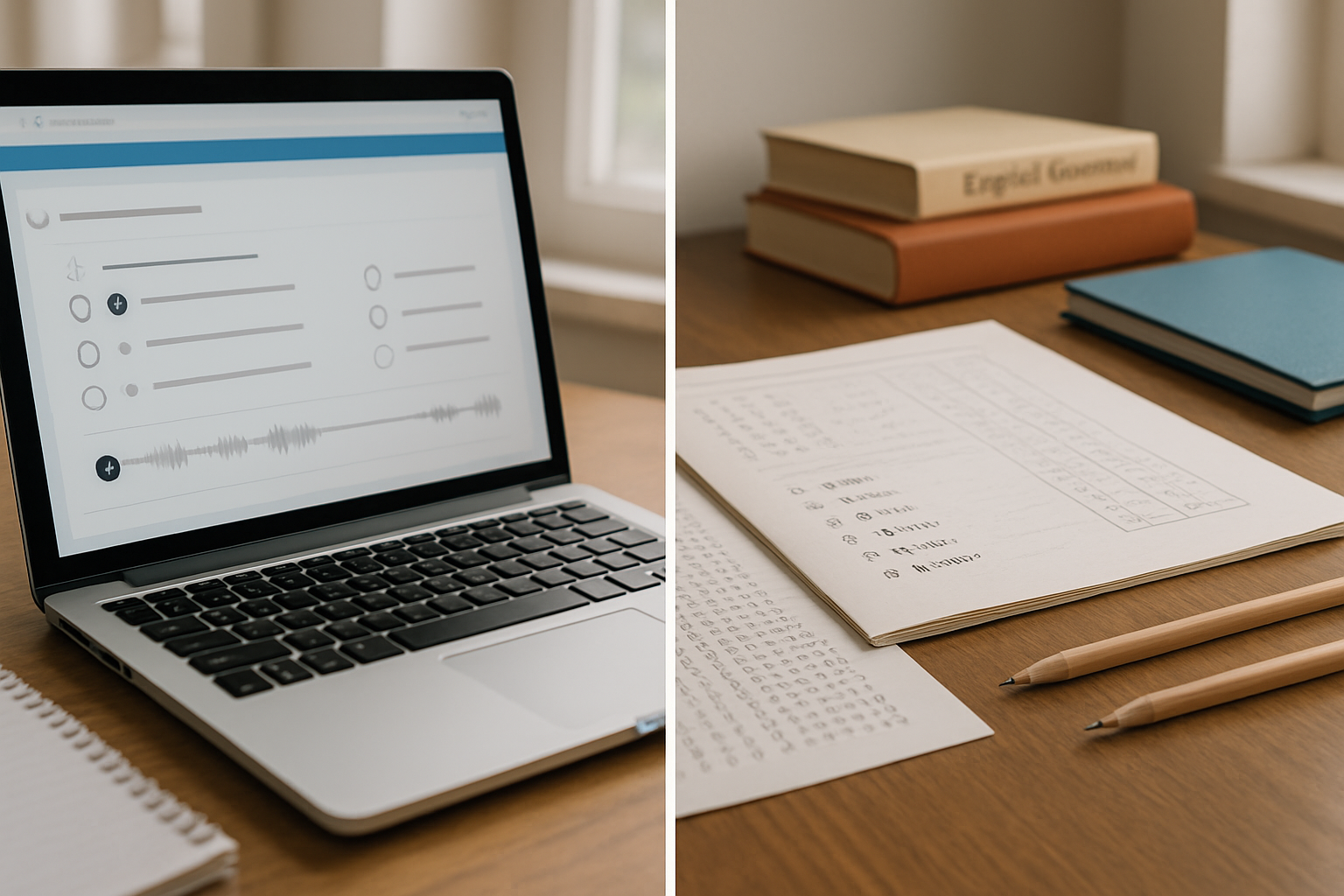
IELTS speaking involves face-to-face conversation with a human examiner, allowing for natural interaction and clarification requests. PTE uses computer-based assessment with automated scoring, which can feel impersonal but eliminates potential examiner bias. Indian students often prefer IELTS speaking format as it mirrors familiar classroom discussions, while PTE’s microphone-based system may challenge those uncomfortable with technology. The human element in IELTS provides flexibility for accents and speaking pace variations.
Writing task variations and Indian student strengths
IELTS requires two distinct writing tasks: Task 1 (graph/chart description or letter writing) and Task 2 (essay writing). PTE combines multiple writing formats including summarizing written text, essay writing, and summarizing spoken text. Indian students typically excel in IELTS writing due to their strong foundation in formal essay structures learned through Indian education systems. PTE’s integrated writing tasks demand quicker adaptation and multitasking skills, which can be challenging for traditional learners.
Listening comprehension challenges and opportunities
| Aspect | IELTS | PTE |
|---|---|---|
| Audio Quality | Clear, standard accents | Varied accents, realistic scenarios |
| Question Types | Multiple choice, fill-in-blanks, matching | Integrated with speaking/writing tasks |
| Note-taking | Allowed on paper | Digital note-taking only |
| Replay Options | No replay | Limited replay for some sections |
IELTS listening features predictable question formats with clear audio, benefiting students who prefer structured approaches. PTE’s listening integrates with other skills, requiring simultaneous processing that mirrors real-world English usage but increases cognitive load for test-takers.
Reading section complexity comparison
IELTS reading presents three lengthy passages with 40 questions, allowing students to manage time across familiar academic texts. PTE reading involves shorter passages but integrates with writing and speaking tasks, creating time pressure. Indian students often find IELTS reading more manageable due to their experience with comprehensive reading in academic settings. PTE’s multiple-choice questions with negative marking can be tricky, while IELTS maintains straightforward scoring without penalties for incorrect answers.
Cost Analysis for Indian Test-Takers

Test fees comparison in Indian rupees
IELTS costs ₹17,000 while PTE Academic charges ₹17,000-₹18,500 depending on the test center. Both tests fall within similar price ranges, making cost comparison for Indian students relatively straightforward.
| Test | Fee (INR) | Validity |
|---|---|---|
| IELTS | ₹17,000 | 2 years |
| PTE Academic | ₹17,000-₹18,500 | 2 years |
Retake costs and frequency limitations
IELTS allows unlimited retakes with a 3-day gap between attempts, while PTE permits retaking after 5 days. Each retake costs the full test fee. PTE vs IELTS scoring system differences mean some students need multiple attempts, making retake policies crucial for budget planning.
Preparation material expenses breakdown
Official preparation materials vary significantly. IELTS preparation books cost ₹500-₹2,000, while online courses range ₹5,000-₹15,000. PTE preparation materials are pricier at ₹1,000-₹3,000 for books and ₹8,000-₹20,000 for comprehensive online programs. Mock tests cost ₹200-₹500 per attempt for both.
Hidden costs including travel and accommodation
Test centers in smaller cities may require travel to metro areas, adding ₹2,000-₹8,000 for transport and accommodation. IELTS PTE booking availability India varies by location, with IELTS having more centers but PTE offering more frequent test dates in major cities.
Preparation Timeline and Resources

Average study duration required for each test
IELTS typically requires 6-8 weeks of focused preparation for Indian students with decent English skills, while PTE needs 4-6 weeks due to its computer-based format familiarity. Students switching from traditional English learning methods often find PTE’s digital interface easier to master quickly.
Free vs paid preparation materials effectiveness
Free Resources Comparison:
| Resource Type | IELTS | PTE |
|---|---|---|
| Official Practice Tests | 2 free tests available | Multiple free scored practice tests |
| YouTube Content | Extensive Indian creator content | Limited but growing content |
| Mobile Apps | Basic question practice | AI-powered speaking practice |
Paid materials show significant quality differences – IELTS coaching centers charge ₹15,000-50,000 while PTE online courses range ₹8,000-25,000. Free PTE resources often provide better value with official scored practice tests.
Online coaching options tailored for Indians
Indian EdTech platforms like Unacademy and BYJU’s offer specialized IELTS courses starting at ₹5,999, featuring Indian accents and cultural references. PTE-focused platforms like E2Language and PTE Tutorials provide live classes at ₹12,000-18,000, specifically addressing Indian pronunciation challenges and computer-based test anxiety.
Practice test availability and quality comparison
Practice Test Quality Analysis:
- IELTS: Cambridge official tests (₹1,500 each) provide accurate difficulty levels
- PTE: Pearson’s official practice tests include AI scoring feedback
- Third-party options: IELTS has more varied practice materials from Indian publishers
- Mock test frequency: PTE allows unlimited retakes of practice sections
PTE’s computer-based practice environment better simulates actual test conditions, while IELTS practice tests focus more on traditional paper-based question formats that many Indian students find familiar.
Test Availability and Booking Convenience
Test Centers Accessibility Across Indian Cities
| Test Type | Major Cities | Tier-2 Cities | Rural Areas |
|---|---|---|---|
| IELTS | 35+ centers | Limited presence | Minimal coverage |
| PTE | 50+ centers | Growing network | Better expansion |
IELTS operates through British Council and IDP centers primarily in metropolitan areas like Delhi, Mumbai, Bangalore, and Chennai. PTE has rapidly expanded its Pearson test center network, reaching smaller cities like Bhopal, Indore, and Coimbatore. This wider PTE availability gives students from tier-2 cities easier access without traveling to major metros.
Booking Slots Availability and Waiting Periods
PTE offers daily test slots with next-day availability in most centers, making IELTS PTE booking availability India significantly different. Students can often book and take PTE within 48-72 hours of registration. IELTS typically requires 2-4 weeks advance booking, especially during peak seasons (July-December) when university applications surge. Weekend slots fill up fastest for both tests, but PTE’s computer-based format allows more flexible scheduling throughout the week.
Rescheduling Policies and Flexibility Options
| Policy Aspect | IELTS | PTE |
|---|---|---|
| Rescheduling fee | ₹3,200 | ₹3,059 |
| Notice period | 5 weeks before | 24 hours before |
| Refund policy | Partial (medical reasons) | Full (24hr+ notice) |
PTE wins hands down for rescheduling flexibility. You can reschedule up to 24 hours before your test date, perfect for last-minute changes or preparation needs. IELTS requires five weeks notice for rescheduling, making it less accommodating for students with unpredictable schedules or those wanting extra preparation time.
University and Immigration Acceptance

Popular destination countries preference analysis
Most countries accept both IELTS and PTE for immigration and study purposes, but preferences vary significantly. Australia strongly favors PTE for student visas, with faster processing times and direct integration with their immigration system. Canada accepts both tests equally for Express Entry, though IELTS remains more popular among immigration consultants. The UK welcomes both for Tier 4 student visas, but many British universities still prefer IELTS due to historical ties. New Zealand treats both tests equally, while the US increasingly accepts PTE alongside IELTS for university admissions.
Indian university recognition patterns
Indian universities show mixed acceptance patterns for both tests. Most premier institutions like IIMs and IITs accept IELTS scores for their international programs, while PTE acceptance is growing but still limited. Private universities and international collaboration programs readily accept both tests. For MBA programs, IELTS holds stronger recognition, especially in top-tier business schools. Engineering and medical colleges typically prefer IELTS, though this trend is slowly changing as PTE gains credibility in the Indian academic landscape.
Immigration point system compatibility
| Country | IELTS Points | PTE Points | Maximum Score |
|---|---|---|---|
| Australia | CLB 9-10: 20 points | 79+ each: 20 points | 20 points |
| Canada | CLB 9-10: 136 points | 79+ each: 136 points | 136 points |
| New Zealand | 6.5+: 10 points | 65+: 10 points | 10 points |
Both tests offer identical point allocations in major immigration systems. Australian SkillSelect treats PTE and IELTS scores equivalently, with band 8 or PTE 79+ earning maximum points. Canada’s Express Entry system awards the same points for comparable scores across both tests. The key difference lies in score achievement difficulty rather than point allocation, making PTE vs IELTS scoring system crucial for Indian students planning immigration.
Professional body acceptance rates
Professional recognition bodies across different countries show varying acceptance rates. Medical councils in Australia, UK, and Canada accept both tests for registration, though IELTS historically dominates healthcare sector requirements. Engineering bodies like Engineers Australia and Professional Engineers Ontario recognize both certifications equally. Accounting bodies including CPA Australia and ACCA accept both tests, with increasing PTE adoption. Legal profession bodies remain conservative, with most preferring IELTS, though PTE acceptance is expanding in Australia and New Zealand’s legal certification processes.

Both IELTS and PTE have their own strengths, and the “easier” choice really depends on what works best for you. If you’re comfortable with human interaction and prefer a more traditional test format, IELTS might feel more natural. But if you’re tech-savvy and want faster results, PTE’s computer-based system could be your best bet. Indian students often find PTE’s automated scoring more predictable, while others appreciate IELTS’s wider acceptance among universities and immigration authorities.
Think about your specific goals, budget, and timeline when making this decision. Check which test your target universities or immigration programs prefer, consider the costs involved, and honestly assess which format matches your strengths. Remember, both tests measure the same language skills – the key is picking the one that lets you showcase your English abilities most effectively. Whichever path you choose, consistent practice and the right preparation strategy will get you the scores you need.