The PTE Academic exam pattern 2026 has undergone important updates that every test-taker needs to understand before sitting for their exam. Starting August 7th, 2025, Pearson introduced changes that affect test duration, question types, and scoring distribution – making it essential for students planning to study abroad or apply for immigration to stay informed about these modifications.
This guide is designed for international students targeting universities in Australia, UK, Canada, and New Zealand, as well as professionals seeking immigration through English proficiency requirements. If you’re planning to take the PTE Academic test this year, these changes could directly impact your preparation strategy and test performance.
We’ll walk you through the complete PTE Academic 2026 exam structure and format changes, including the two new question types that have been added to the speaking section. You’ll also get a detailed breakdown of the updated speaking and writing section timing (now 76-84 minutes), plus time management strategies for the reading and listening components. Finally, we’ll cover how the updated scoring system works and share practical preparation approaches that align with the new format to help you achieve your target score.
PTE Academic 2026 Exam Structure and Format Changes
Extended test duration from 2 hours to 2 hours 15 minutes
The PTE Academic 2026 has undergone significant structural changes while maintaining its core reliability as a computer-delivered English proficiency test. The most notable change is the extended test duration, which has increased from the previous 2 hours to 2 hours and 15 minutes, providing more comprehensive assessment opportunities. This adjustment reflects Pearson’s commitment to delivering accurate proficiency measurements while accommodating the introduction of new question types and enhanced evaluation methods.
Computer-delivered exam with AI-driven scoring system
The PTE 2026 scoring system has evolved to utilize a sophisticated Hybrid AI + Human Oversight model that represents a major advancement in assessment technology. While AI continues to evaluate oral fluency and pronunciation with precision, trained human examiners now review response content for relevance and originality. This hybrid approach has made template-based responses obsolete, as Pearson’s updated algorithms can detect “rhythmic monotony” – the flat, robotic tone associated with memorized scripts.
Three main sections with 22 different question types
The PTE Academic exam structure 2026 maintains its three-section format encompassing Speaking and Writing (76-84 minutes), Reading (29-30 minutes), and Listening (30-43 minutes). The total number of questions has been streamlined from the previous 78-82 questions to a more manageable 52-64 questions across 22 different question types. Notable reductions include fewer Describe Image tasks (from 6-7 to 3-4) and Re-order Paragraph questions (from 2-3 to 2-3), while maintaining the integrity of assessment standards.
Score range of 10-90 points for accurate proficiency measurement
The PTE scoring system updates continue to utilize the established 10-90 point scale, ensuring consistency with previous versions while incorporating enhanced accuracy through the new hybrid scoring model. This scoring framework provides precise proficiency measurement across all communicative and enabling skills, with results typically delivered within 48 hours. The scoring criteria remain globally recognized by over 3,500 institutions worldwide, Australian and New Zealand governments, and Canadian permanent residency applications through PTE Core.
New Question Types Added in 2026

Summarize Group Discussion in Speaking section
The PTE Academic exam pattern 2026 introduces the Summarize Group Discussion task as a significant addition to the speaking section. In this new question type, candidates listen to a discussion between three people and must effectively summarize the key points within a 2-minute timeframe, testing both listening comprehension and verbal synthesis skills.
Respond to a Situation task for practical skill assessment
Building on the enhanced real-world language application focus, the Respond to a Situation task requires candidates to address situational prompts through spoken responses. This practical assessment evaluates how well test-takers can apply English communication skills in realistic scenarios, moving beyond traditional academic contexts to measure authentic language usage.
Updated scoring distribution across all tasks
With these new PTE question types 2026, the scoring distribution has been revised to accommodate the additional tasks while maintaining the established 10-90 point scale. The integrated assessment approach ensures that the Summarize Group Discussion and Respond to a Situation tasks contribute meaningfully to overall speaking proficiency evaluation without disrupting the balanced scoring methodology.
Enhanced real-world language application focus
The PTE exam structure 2026 emphasizes practical English usage through these innovative question types. Both new tasks reflect authentic communication scenarios students encounter in academic and professional environments, aligning with the exam’s objective to assess candidates’ ability to use English effectively in real-world contexts rather than purely theoretical language knowledge.
Speaking and Writing Section Breakdown (76-84 minutes)
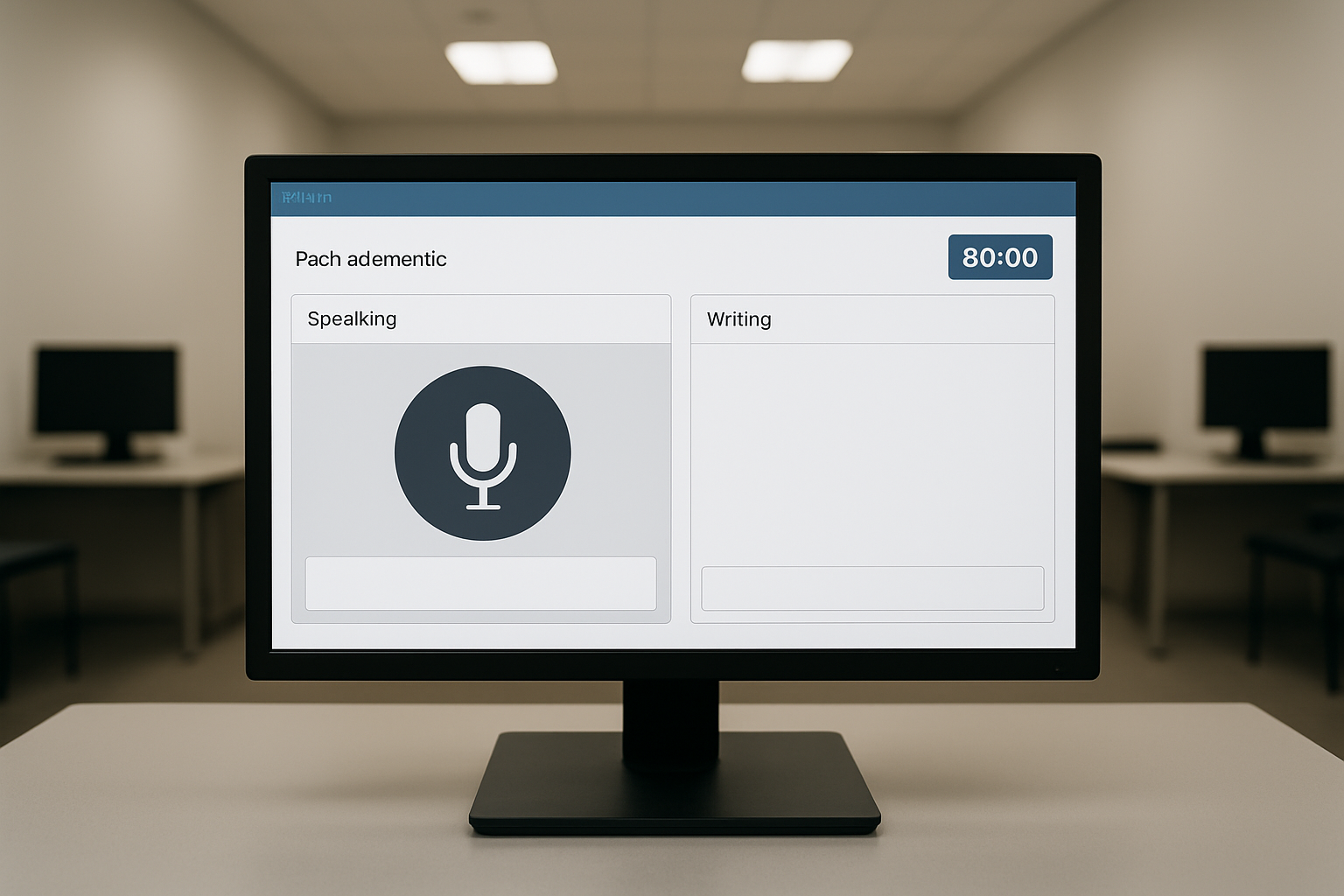
Core Speaking Tasks: Read Aloud, Repeat Sentence, Describe Image
The PTE Academic 2026 speaking and writing section maintains its integrated format, combining both skill sets within a 76-84 minute timeframe. Core speaking tasks include Read Aloud, where test-takers demonstrate pronunciation and fluency by reading text passages aloud, Repeat Sentence tasks that assess listening comprehension and speaking accuracy simultaneously, and Describe Image exercises requiring candidates to analyze and verbally present visual information including graphs, charts, and photographs.
Advanced Speaking Tasks: Re-tell Lecture, Answer Short Question
Advanced speaking components challenge test-takers with Re-tell Lecture tasks, demanding comprehensive listening skills followed by coherent oral summarization of academic content. Answer Short Question tasks evaluate quick thinking and precise responses to factual inquiries, testing both comprehension and speaking fluency under time pressure.
New Speaking Tasks: Summarize Group Discussion and Respond to a Situation
The PTE Academic format updates for 2026 introduce innovative speaking tasks including Summarize Group Discussion, where candidates listen to multiple speakers and provide concise oral summaries, and Respond to a Situation tasks that assess practical communication skills in real-world scenarios, reflecting the exam’s evolution toward more authentic assessment methods.
Writing Tasks: Summarize Written Text and Essay Composition
Writing components within this section encompass Summarize Written Text tasks requiring concise synthesis of complex passages into single sentences, and Essay composition exercises evaluating argumentative writing skills, organizational ability, and language accuracy across academic topics, maintaining the integrated assessment approach characteristic of PTE Academic exam structure 2026.
Reading Section Tasks and Time Management (29-30 minutes)

Fill in the Blanks with dropdown and drag-drop options
The PTE Academic 2026 reading section allocates 29-30 minutes for completion, featuring Fill in the Blanks tasks that require candidates to select appropriate words from dropdown menus or drag-and-drop options. This question type appears in two variants: Reading Fill in the Blanks (4-5 questions) and Reading & Writing Fill in the Blanks (5-6 questions), each requiring analysis of approximately 300-word texts to identify contextually appropriate vocabulary and grammatical structures.
Multiple choice questions with single and multiple answers
Multiple choice questions constitute a significant portion of the reading assessment, with 1-2 single-answer questions and 1-2 multiple-answer questions appearing in each test. These tasks demand careful analysis of 300-word passages, requiring test-takers to demonstrate comprehensive reading skills while distinguishing between correct and incorrect options under strict time constraints.
Re-order Paragraphs for logical sequence assessment
Re-order Paragraphs tasks (2-3 questions per test) challenge candidates to reconstruct logical text flow by arranging scrambled paragraphs in coherent sequence. This question type evaluates understanding of discourse markers, transitional phrases, and overall text organization within the allocated timeframe, requiring strategic approach to identify connecting elements between paragraphs.
Fast-paced timing requires strategic preparation approach
With only 32-41 minutes allocated for the entire reading section according to current PTE module timings, candidates must develop efficient time management strategies. The fast-paced nature of this section demands strict time restrictions during practice sessions, building module-specific expertise through targeted preparation that balances speed with accuracy across all question types.
Listening Section Components (30-43 minutes)

A. Summarize Spoken Text with 50-70 word limit
The PTE listening components in 2026 require precise comprehension skills within the designated time frame. This task demands candidates listen to audio recordings and create concise summaries adhering to the strict 50-70 word requirement, testing both listening accuracy and written expression abilities.
B. Multiple choice and fill-in-the-blank listening tasks
These PTE 2026 changes include varied question formats that assess detailed listening comprehension through interactive selection and completion exercises.
C. Audio-based comprehension: Highlight summaries and missing words
Advanced listening tasks focus on identifying key information gaps and summary highlights, requiring strategic attention to audio content details.
D. Write from Dictation for exact transcription skills
This component tests precise listening and typing accuracy, demanding word-for-word transcription of spoken content within the PTE Academic format updates.
Updated Scoring System and Assessment Criteria

AI algorithms evaluate accuracy, fluency, and pronunciation
The PTE 2026 scoring system utilizes a Hybrid AI + Human Oversight model, marking a significant departure from previous automated-only assessments. While AI algorithms continue to evaluate oral fluency and pronunciation with precision, trained human examiners now review response content for relevance and originality. This dual approach ensures comprehensive evaluation beyond mere technical accuracy.
Integrated skills assessment reflecting real-world usage
Previously focused on isolated skill testing, PTE Academic 2026 now emphasizes authentic communication standards that mirror real-world English usage. The updated assessment framework moves beyond rote memorization, requiring candidates to demonstrate spontaneous language production and adaptive communication skills. This shift reflects the examination’s evolution toward measuring practical English proficiency rather than template-based responses.
Grammar and vocabulary tested within context of tasks
With this enhanced approach, grammar and vocabulary assessment occurs within meaningful task contexts rather than standalone exercises. The scoring algorithms can now detect “rhythmic monotony” – the flat, robotic tone associated with memorized scripts. Human reviewers ensure candidates actually address prompts rather than deploying generic templates, making authentic language demonstration essential for success.
Final scores calculated from individual and combined skill performance
Now that we have covered the hybrid evaluation model, final PTE Academic scores derive from both individual skill assessments and integrated performance across multiple competencies. The 2026 system calculates results by analyzing how effectively candidates synthesize conflicting viewpoints, demonstrate appropriacy and professional tone, and navigate multi-speaker interactions. This comprehensive scoring approach reflects the examination’s commitment to measuring genuine English proficiency for global mobility and academic purposes.
Strategic Preparation Approaches for Success

Question-by-question Practice with Timed Conditions
Master individual question types by dedicating exactly 90 seconds for complex tasks like re-order paragraphs before moving forward. The 2026 AI scoring system penalizes time mismanagement, so practice each question format under strict time constraints to build automatic response patterns.
Full-length Mock Tests for Stamina and Concentration Building
Take complete PTE preparation tests under timed conditions to simulate the actual 2-hour exam experience. Full-length practice builds endurance and familiarizes you with the test flow, helping prevent fatigue-related mistakes during the actual PTE Academic exam pattern 2026.
Interface Familiarity Through Computer-based Practice Sessions
Position your microphone level with your nose, roughly two fingers’ width away to avoid breath sound interference. The 2026 headsets are incredibly sensitive to plosives, making technical setup crucial. Practice with calibrated platforms like MockMaster.ai and AlfaPTE that simulate the updated interface.
Response Evaluation and Mistake Analysis for Improvement
Record and analyze your speaking

The PTE Academic 2026 exam introduces practical updates, including two new speaking tasks and a slightly longer test duration, making it more aligned with real academic and professional communication. Understanding these changes and the updated AI-based scoring system is key to achieving a strong score.
With focused preparation, timed practice, and the right strategy, students can confidently adapt to the new pattern. At Vrinda PrepMaster, we guide learners through every update with structured practice and expert support—helping them perform with clarity and confidence.