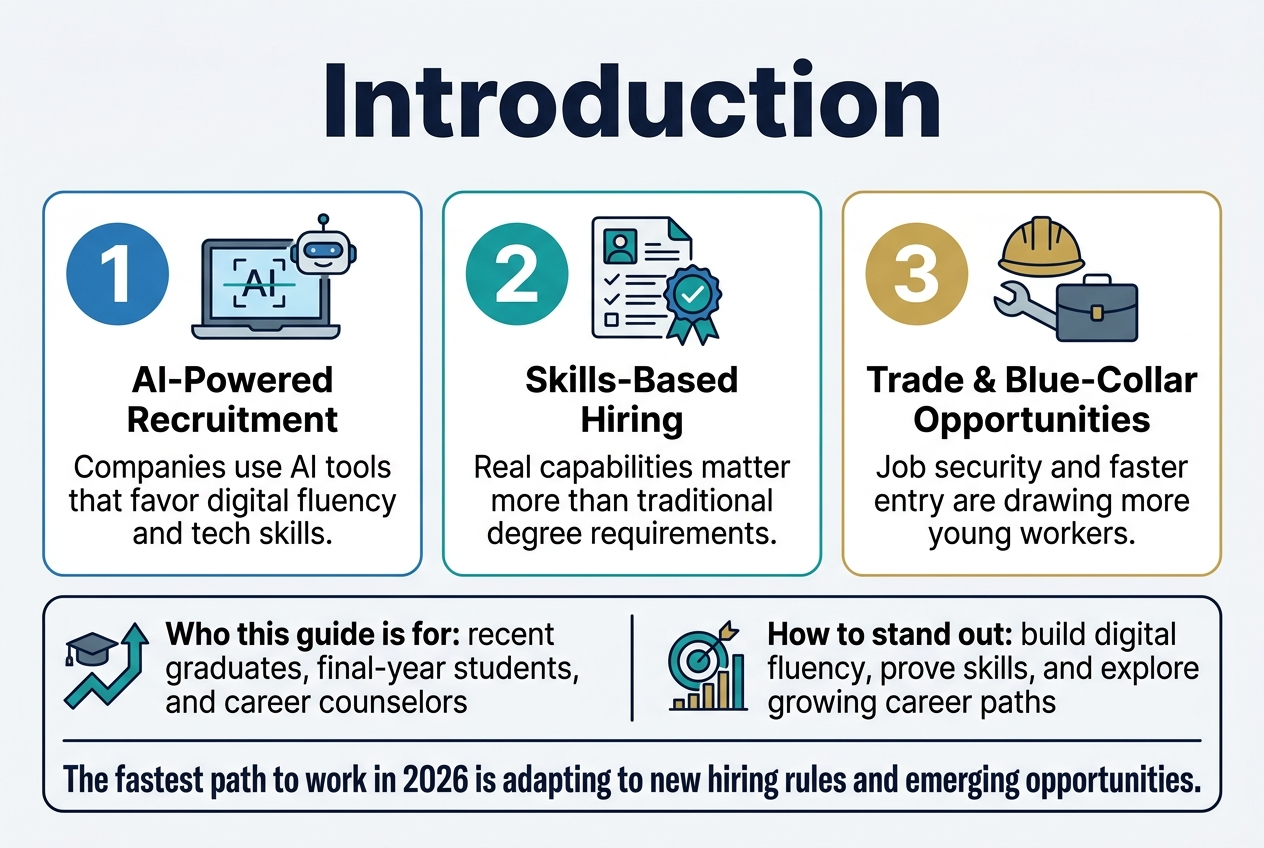
The 2026 job market is creating fresh opportunities for new graduates, but not all freshers will land roles at the same pace. This guide is for recent graduates, final-year students, and career counselors who want to understand which skills and strategies will fast-track entry into today’s evolving workplace.
The days of relying solely on your degree are fading fast. Smart freshers are already adapting to three major shifts that will define who gets hired first in 2026. Companies are increasingly using AI-powered recruitment tools that favor candidates with digital fluency and tech skills. At the same time, skills-based hiring is replacing traditional degree requirements, opening doors for graduates who can demonstrate real capabilities over credentials. Plus, blue-collar and trade opportunities are surging as younger workers discover these paths offer better job security and faster entry into stable careers.
We’ll explore how fresh graduates can position themselves for these market changes, which specific skills employers are prioritizing, and why some of the fastest-growing opportunities might not be where you’d expect to find them.
How Market Shifts Will Create New Opportunities for Fresh Graduates
Benefits of a More Balanced Labor Market for Entry-Level Hiring
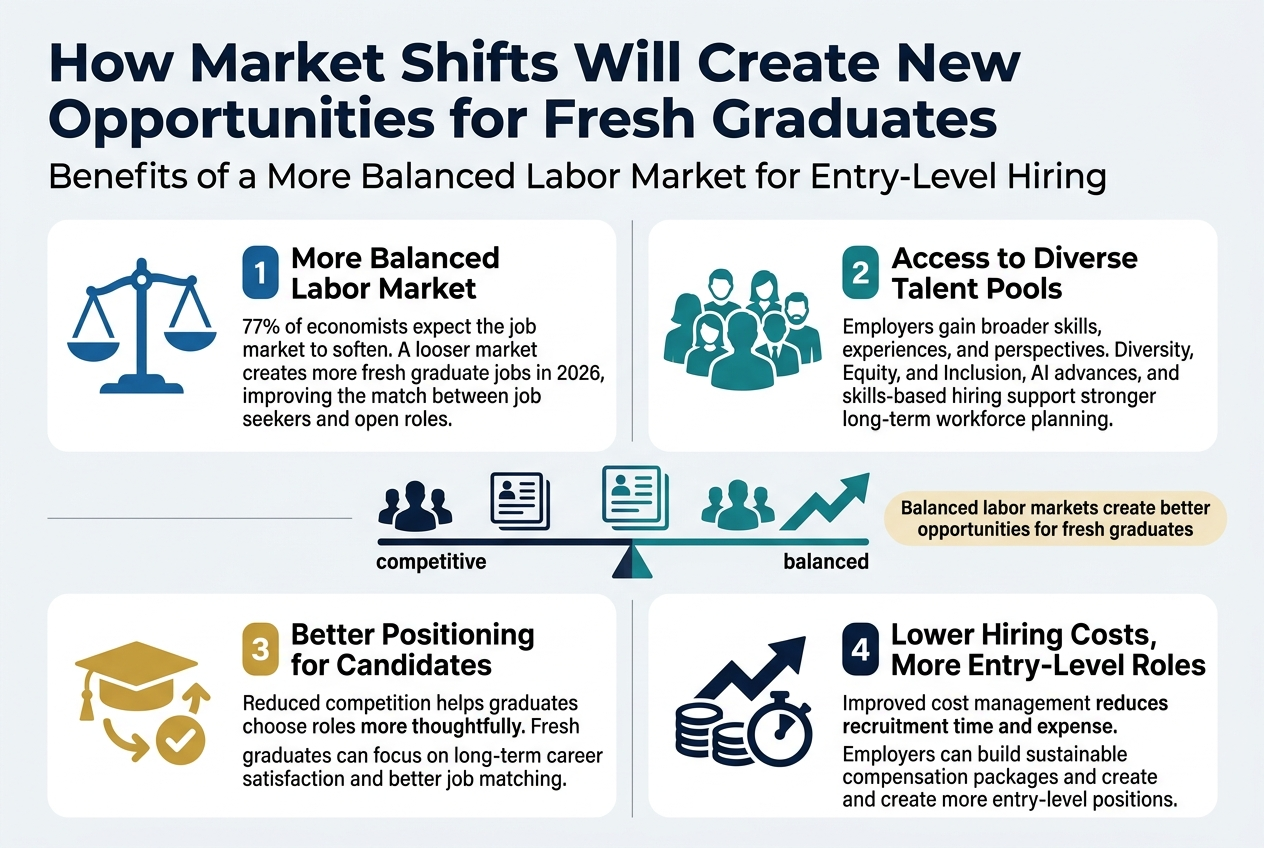
The 2026 hiring trends indicate that fresh graduates will benefit significantly from a more balanced labor market. With 77% of economists predicting the competitive job market will soften, this equilibrium creates increased opportunities for fresh graduate jobs 2026. A looser job market allows for better balance between active job seekers and available postings, making it easier for companies to attract highly qualified candidates while providing graduates with a wealth of opportunities and improved candidate experience.
Increased Access to Diverse Talent Pools for Employers
This market shift provides employers access to a more diverse workforce, offering broader ranges of skills, experiences, and perspectives vital for innovation and adaptability. Diversity, Equity, and Inclusion serves as the foundation for other labor market trends, including advances in AI and skills-based hiring. Companies can now focus on sustainable workforce planning, making fresher recruitment trends more strategic and long-term oriented.
Reduced Competition Among Candidates Creates Better Positioning
While the market becomes more competitive for candidates, this reduced competition actually benefits fresh graduates by creating better positioning opportunities. The balanced employment landscape allows graduates to focus on long-term career satisfaction rather than accepting the first available position. This shift enables more thoughtful career decisions and improved job matching.
Improved Cost Management Allows More Entry-Level Positions
A more balanced labor market contributes to improved cost management for employers by reducing recruitment time and costs. This efficiency facilitates organizational growth that leads to more future recruiting opportunities. Employers gain greater flexibility in structuring competitive yet sustainable compensation packages, ultimately creating more entry-level positions for fresh graduates entering the workforce.
AI-Powered Recruitment Will Favor Tech-Savvy Freshers
AI-Powered Recruitment Will Favor Tech-Savvy Freshers
Streamlined Screening Processes Benefit Qualified New Graduates
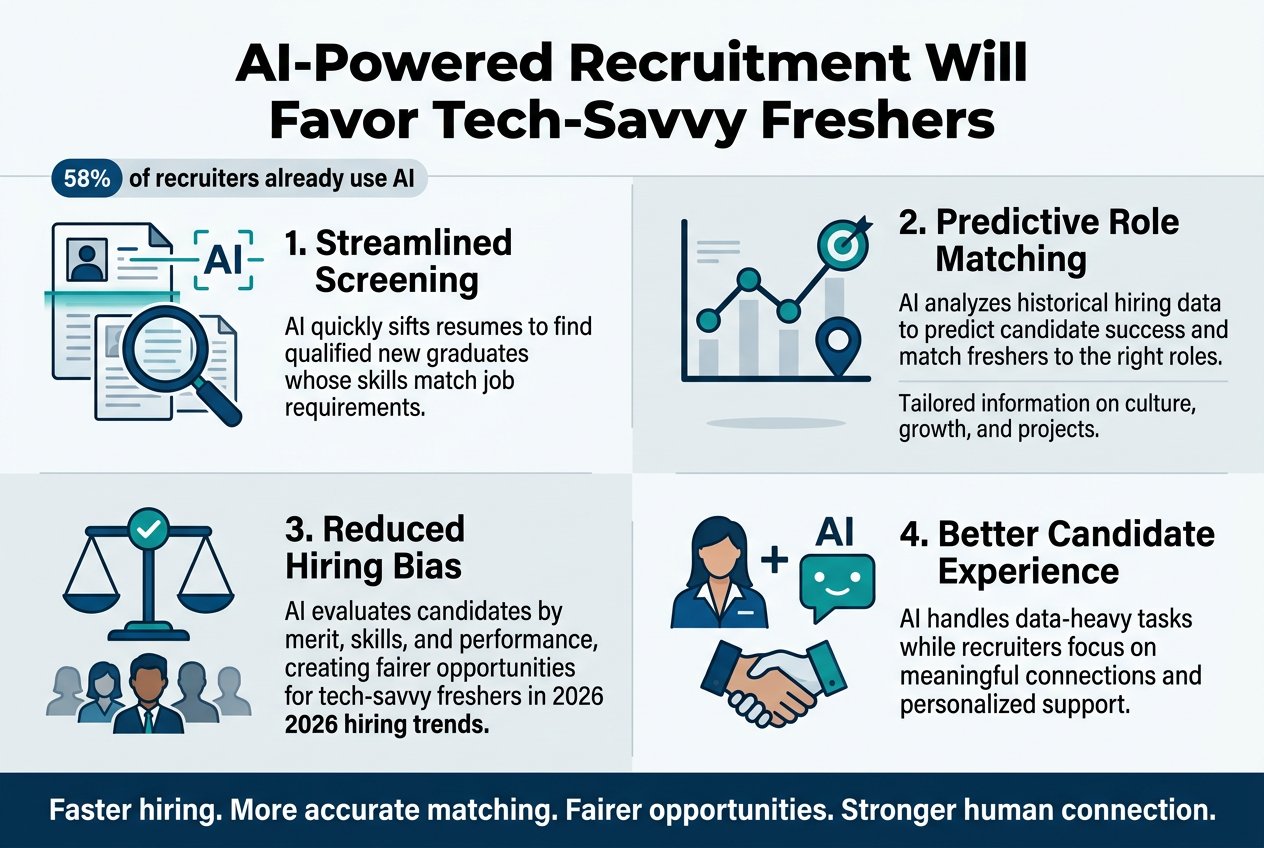
With 58% of recruiters already incorporating AI into their recruitment tech stack, AI-powered recruitment is revolutionizing how fresh graduates enter the job market. AI streamlines the initial screening phase by swiftly sifting through resumes to pinpoint candidates whose skills and experiences align with job requirements, accelerating the hiring process for qualified new graduates.
Predictive Analytics Help Match Freshers to Right Roles
AI leverages predictive analytics by analyzing historical hiring data to identify patterns that predict a candidate’s likelihood of success in a given role. This predictive capability helps recruiters identify suitable candidates and forecast their potential impact within an organization, while AI-driven analytics personalize the recruitment journey for candidates, offering tailored information about company culture, career growth, and projects.
Reduced Hiring Bias Creates Fairer Opportunities for All Candidates
AI minimizes biases in the hiring process by objectively evaluating candidates based on merit, skills, and performance, reducing the risk of biased decision-making. This leads to a fairer and more inclusive recruitment experience, encouraging employers to look beyond university degrees towards individual capabilities and potential, creating better opportunities for tech-savvy freshers in 2026 hiring trends.
Enhanced Candidate Experience Through AI-Human Collaboration
The synergy between AI, recruiters, and hiring managers enhances candidate experience, allowing recruiters to focus on meaningful connections while AI handles data-intensive tasks. The human touch remains integral, setting companies apart, especially for younger workers who prioritize employee well-being and personalized connections, creating a recruitment journey that is faster, more accurate, and tailored to candidates’ unique aspirations.
Skills-Based Hiring Will Replace Degree Requirements
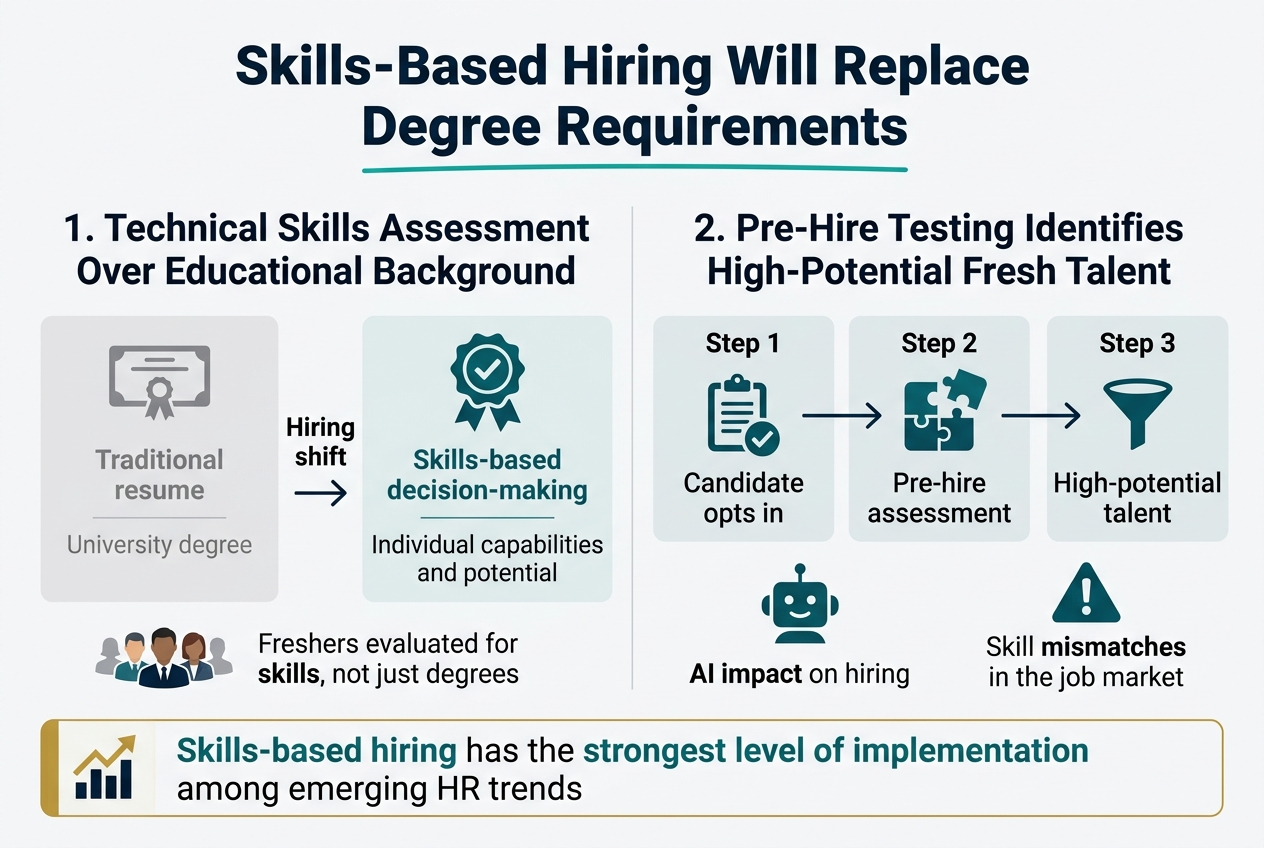
Technical Skills Assessment Over Educational Background
The traditional resume is losing ground as hiring shifts towards skills-based decision-making. Employers are increasingly looking beyond university degrees to focus on individual capabilities and potential, fostering an environment where diverse talent is valued. This shift represents a fundamental change in how companies evaluate freshers for entry-level positions.
Pre-Hire Testing Identifies High-Potential Fresh Talent
Pre-hire assessments add necessary friction to the application process, requiring candidates to opt-in for an assessment, which helps filter out candidates using automated applications. One survey found that skills-based hiring has the strongest level of implementation (planned or existing) among emerging HR trends. A focus on hiring based on skills and aptitude is gaining prominence due to AI’s impact on hiring and widespread skill mismatches in the current job market.
Blue-Collar and Trade Opportunities Will Surge for New Workers
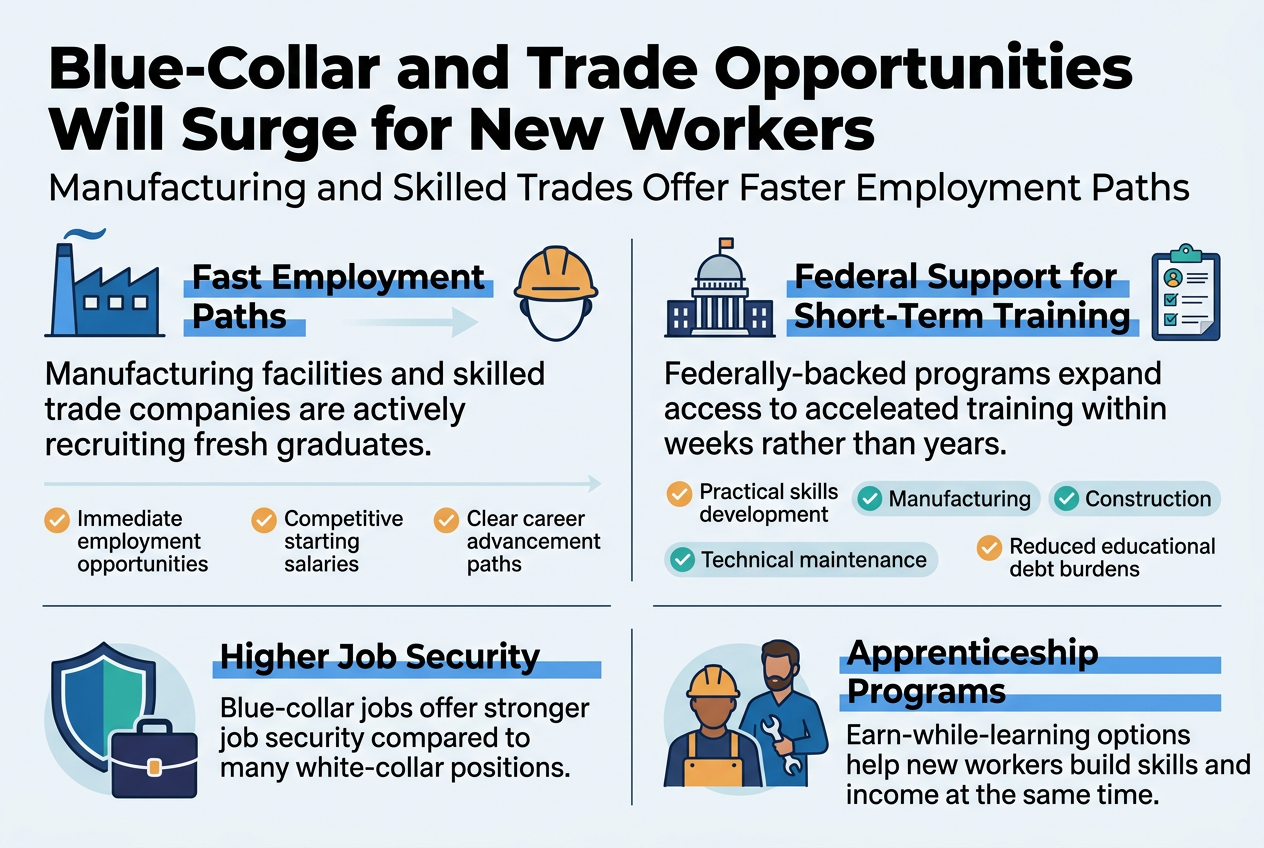
Manufacturing and Skilled Trades Offer Faster Employment Paths
Blue-collar jobs for graduates are emerging as a viable alternative to traditional white-collar careers in 2026 hiring trends. Manufacturing facilities and skilled trade companies are actively recruiting fresh graduates, offering immediate employment opportunities with competitive starting salaries and clear career advancement paths.
Federal Support for Short-Term Training Programs
Government initiatives are expanding access to accelerated training programs that prepare new workers for blue-collar positions within weeks rather than years. These federally-backed programs focus on practical skills development, enabling fresh graduates to transition quickly into manufacturing, construction, and technical maintenance roles while reducing educational debt burdens.
Higher Job Security Compared to White-Collar Positions
Apprenticeship Programs Provide Earn-While-Learning Options
Employee Advocacy and Employer Branding Will Attract Quality Freshers
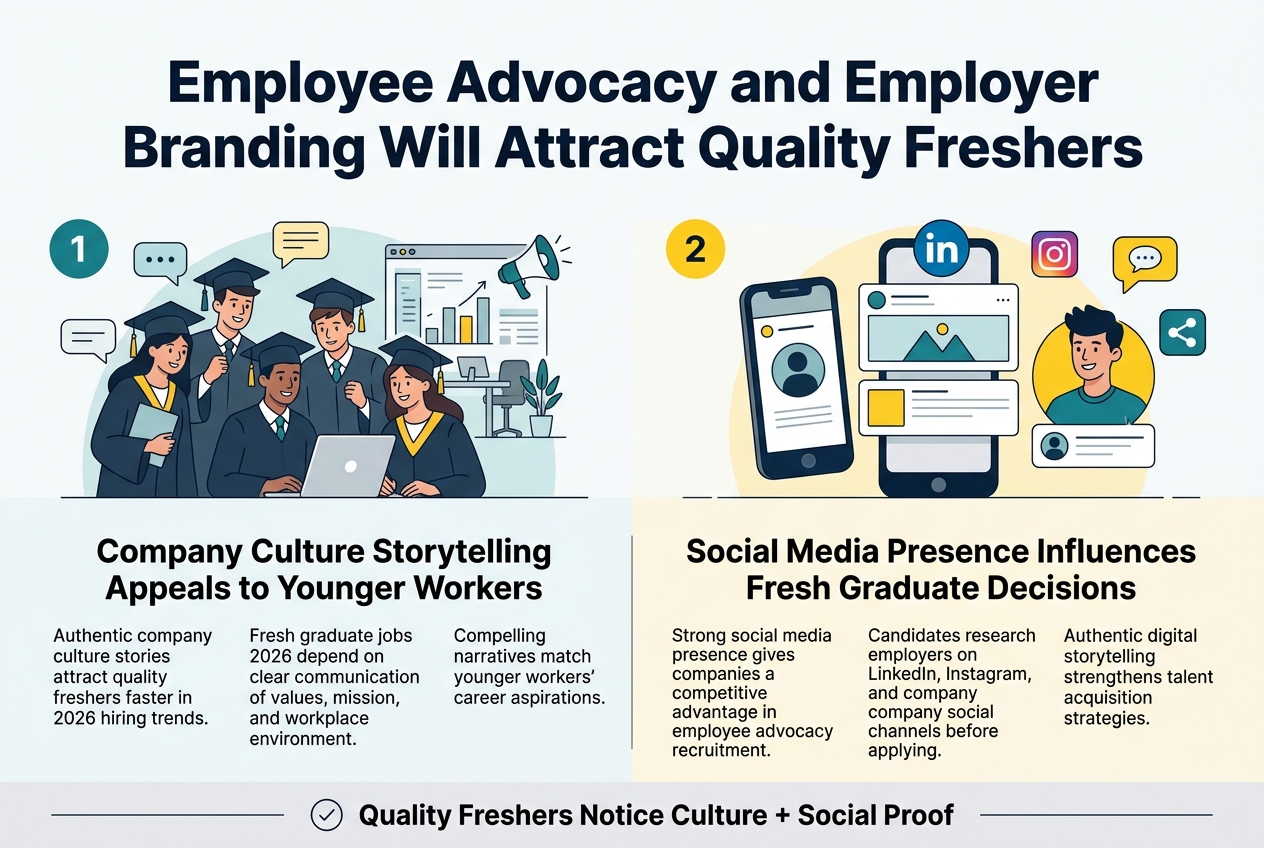
Company Culture Storytelling Appeals to Younger Workers
Organizations showcasing authentic company culture stories will attract quality freshers faster in 2026 hiring trends. Fresh graduate jobs 2026 will increasingly depend on how well companies communicate their values, mission, and workplace environment through compelling narratives that resonate with younger workers’ career aspirations.
Social Media Presence Influences Fresh Graduate Decisions
Companies leveraging strong social media presence for employee advocacy recruitment will gain competitive advantages in attracting tech-savvy freshers. Fresher recruitment trends indicate that candidates research potential employers extensively through LinkedIn, Instagram, and company social channels before applying, making authentic digital storytelling crucial for successful talent acquisition strategies.
Data-Driven Hiring Processes Will Speed Up Fresh Graduate Placement
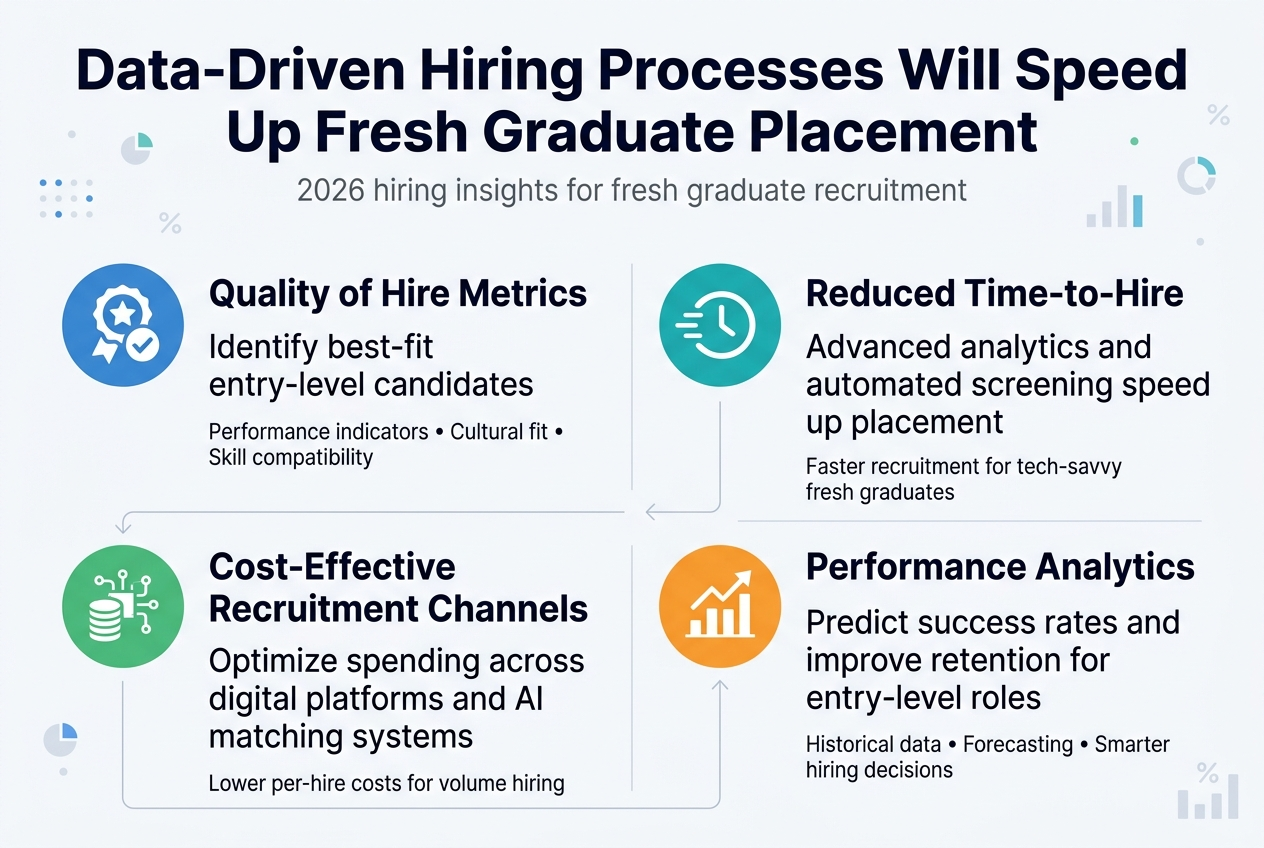
Quality of Hire Metrics Identify Best-Fit Entry-Level Candidates
Data-driven hiring processes in 2026 will revolutionize how companies identify promising fresh graduates through sophisticated quality of hire metrics. These metrics analyze candidate performance indicators, cultural fit assessments, and skill compatibility scores to predict long-term success rates for entry-level positions.
Reduced Time-to-Hire Benefits Eager Fresh Graduates
Advanced analytics and automated screening processes significantly reduce recruitment timelines, allowing eager fresh graduates to secure positions faster than traditional hiring methods. This acceleration particularly benefits tech-savvy freshers who can navigate digital application processes efficiently, giving them competitive advantages in the evolving job market landscape.
Cost-Effective Recruitment Channels for Volume Hiring
Organizations leverage data insights to optimize recruitment spending across multiple channels, enabling cost-effective volume hiring of fresh graduates. Digital platforms and AI-powered matching systems reduce per-hire costs while maintaining quality standards for large-scale fresher recruitment campaigns.
Performance Analytics Predict Fresh Graduate Success Rates
Predictive analytics models analyze historical performance data to forecast which fresh graduates will excel in specific roles, enabling more strategic hiring decisions and improved retention rates for entry-level positions.
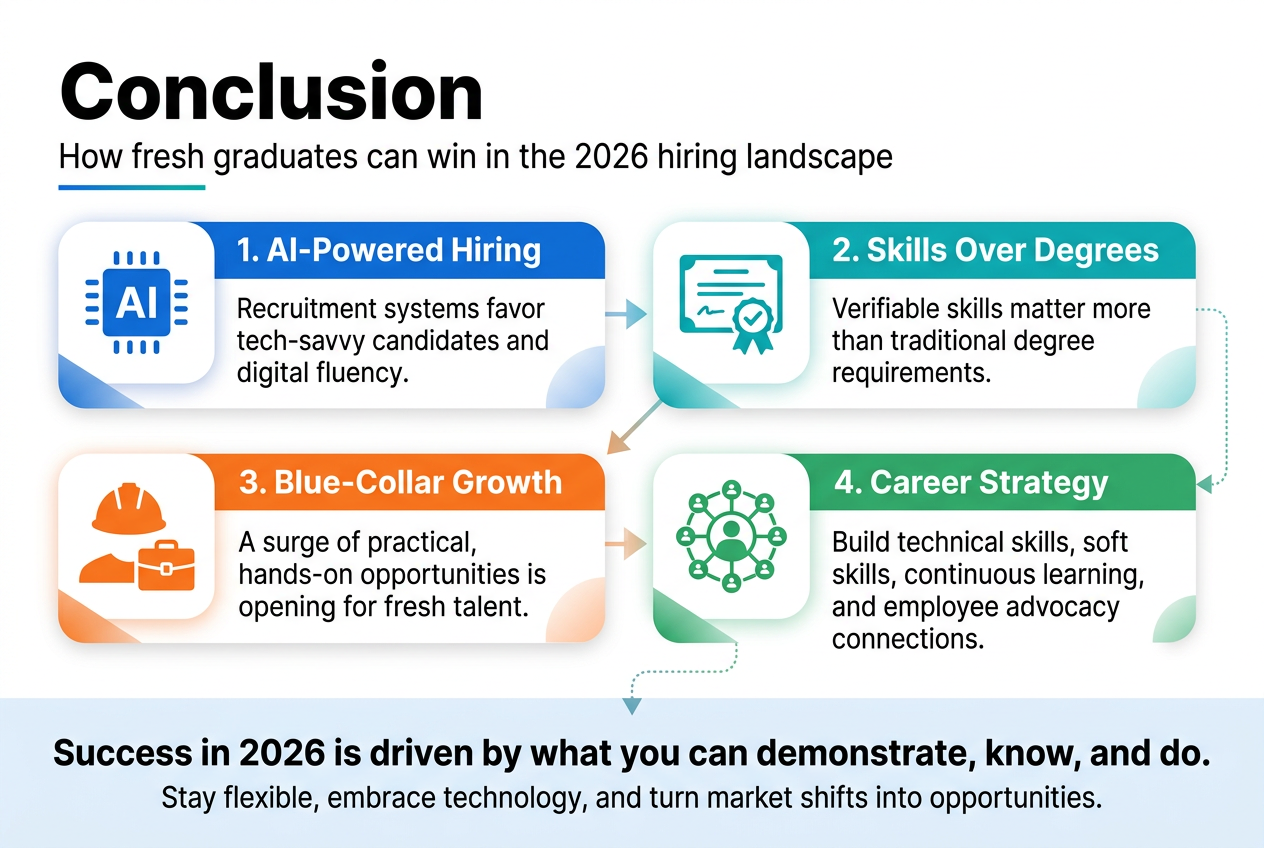
The 2026 hiring landscape presents unprecedented opportunities for fresh graduates who can adapt to rapidly evolving market demands. With AI-powered recruitment systems favoring tech-savvy candidates, skills-based hiring replacing traditional degree requirements, and a surge in blue-collar opportunities, freshers must position themselves strategically. Those who embrace continuous learning, develop both technical and soft skills, and understand how to leverage employee advocacy networks will find themselves at a significant advantage.
Success in 2026 won’t be determined by where you went to school, but by what you can demonstrate you know and do. Fresh graduates who focus on building verifiable skills, embrace technology as a career accelerator rather than a threat, and remain flexible in their career paths will not only get hired faster but build more resilient, future-proof careers. The key is to view these market shifts not as obstacles, but as opportunities to differentiate yourself in an increasingly competitive yet promising job market.