Overseas Education Loans: Your Comprehensive Guide to Funding International Studies
Pursuing higher education abroad is a life-changing decision, but it often comes with significant financial challenges. Education loans for overseas studies can bridge this gap, ensuring that financial limitations do not stand in the way of your international dreams. This guide explains everything you need to know about education loans for studying abroad, their types, eligibility, benefits, and the application process.
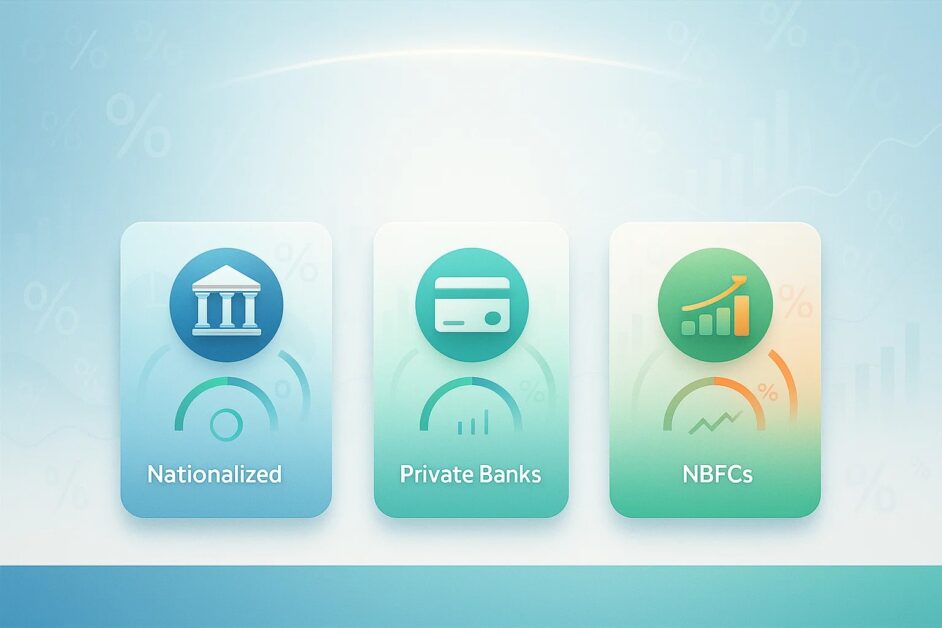
Types of Education Loan Providers
Nationalized Banks
Lower interest rates compared to private banks
Income tax benefits under Section 80E
Concessions for students admitted to top global universities
0.50% extra concession for female students
Highly accepted by visa officers
Require extensive documentation
Private Banks
Secured and unsecured loan options
No collateral loans available for Master’s programs
Special rates for premier universities
Faster processing compared to public banks
Higher loan amounts
Non-Banking Financial Companies (NBFCs)
Non-collateral loans up to ₹35–45 lakhs
100% financing coverage including tuition, living, and travel
Pre-admission and pre-visa loans available
Minimal EMI until graduation
Option for top-up loans
International Lenders (available mostly for USA & Canada students)
No collateral or co-signer required
Funding for students in 350 pre-approved universities
Scholarships guidance available
Student’s credit history not necessary
Secured vs Unsecured Loans
Secured Loans (With Collateral)
-> Require property/assets as collateral security
-> Lower interest rates (from 9% onwards)
-> Higher loan limit (up to ₹1.5 crore)
Unsecured Loans (Without Collateral)
-> No assets needed
-> Higher interest rates (11–12% onwards)
-> Limited loan amounts (₹45–50 lakhs)
Loan Amount Limits
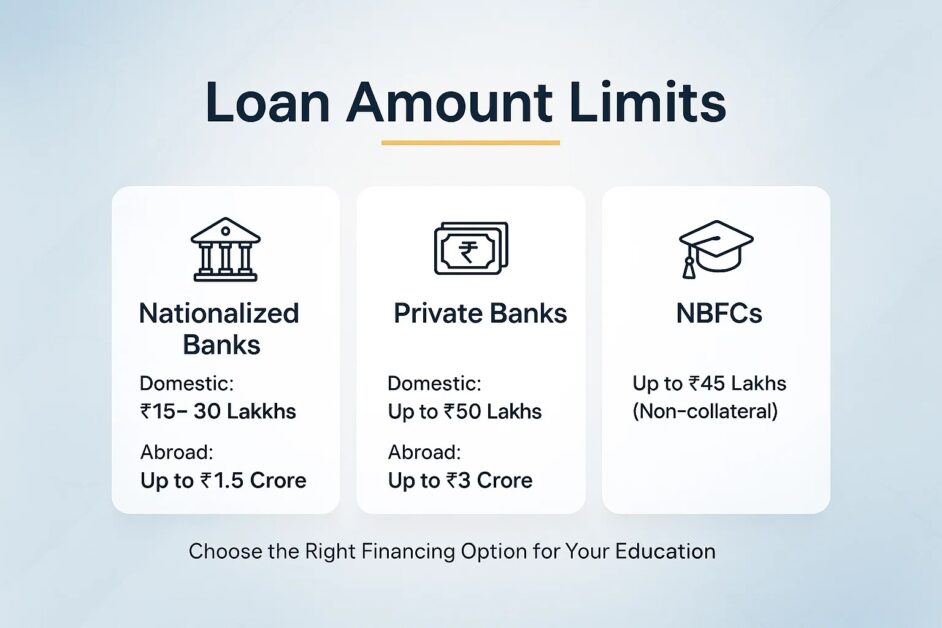
Nationalized Banks: Domestic up to ₹15–30 lakhs; Abroad up to ₹1.5 crore
Private Banks: Loan amounts up to ₹50 lakh for domestic education and up to ₹3 crore for studies abroad.
NBFCs: Up to ₹45 lakhs (non-collateral)
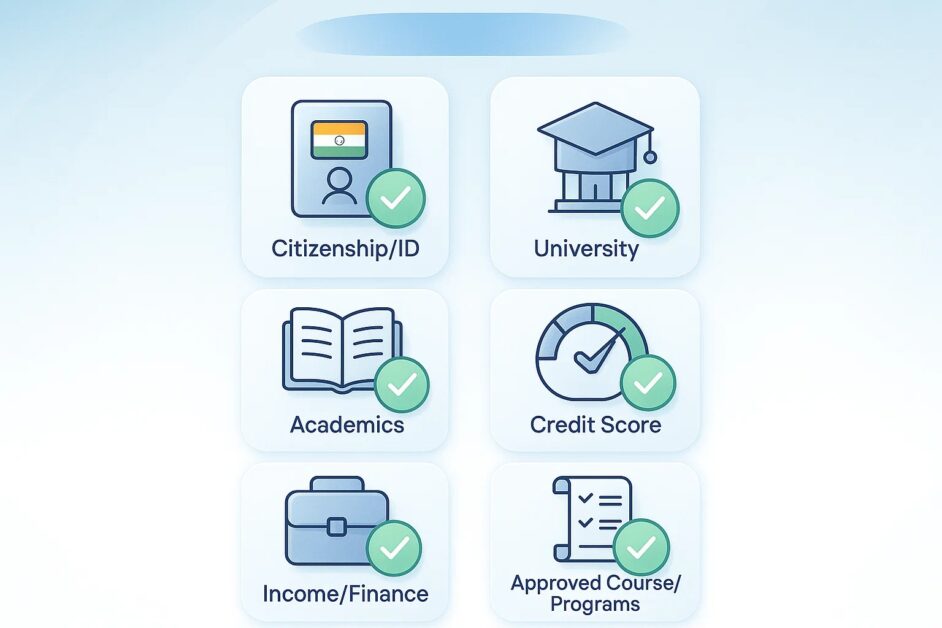
General Eligibility Criteria
Indian citizenship of applicant and co-applicant
Admission to a recognized foreign university
Minimum 60% academic record in higher secondary or graduation
Co-applicant with credit score above 600
Co-applicant monthly income >₹35,000
Course must fall under approved list of programs
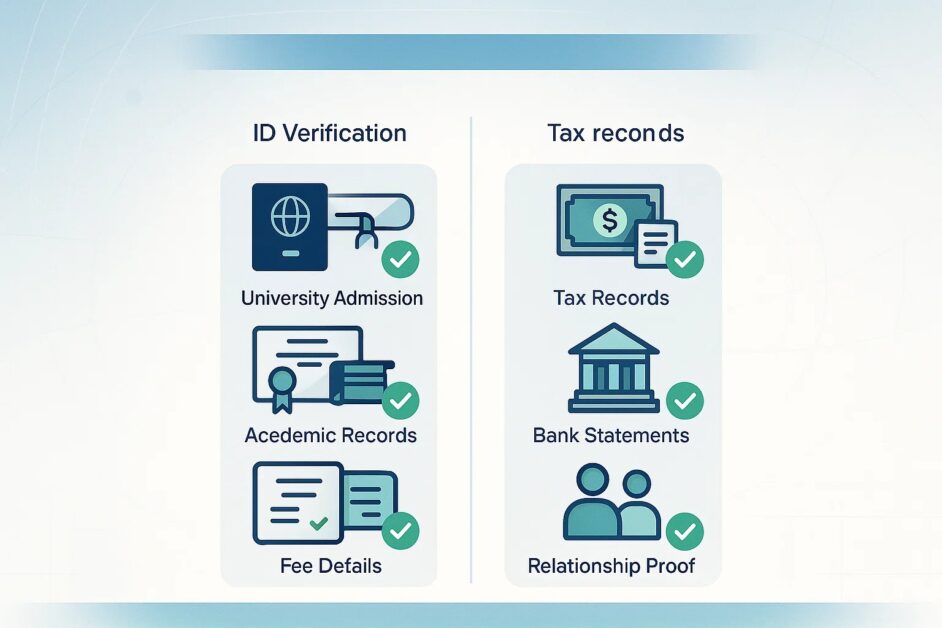
Documents Required
For Students: Required documents include KYC (Aadhaar, PAN, or Passport), admission letter, academic transcripts, and fee details.
For Co-Applicant: Required documents include income proof (salary slips, ITRs, Form 16), bank statements, and proof of relationship.
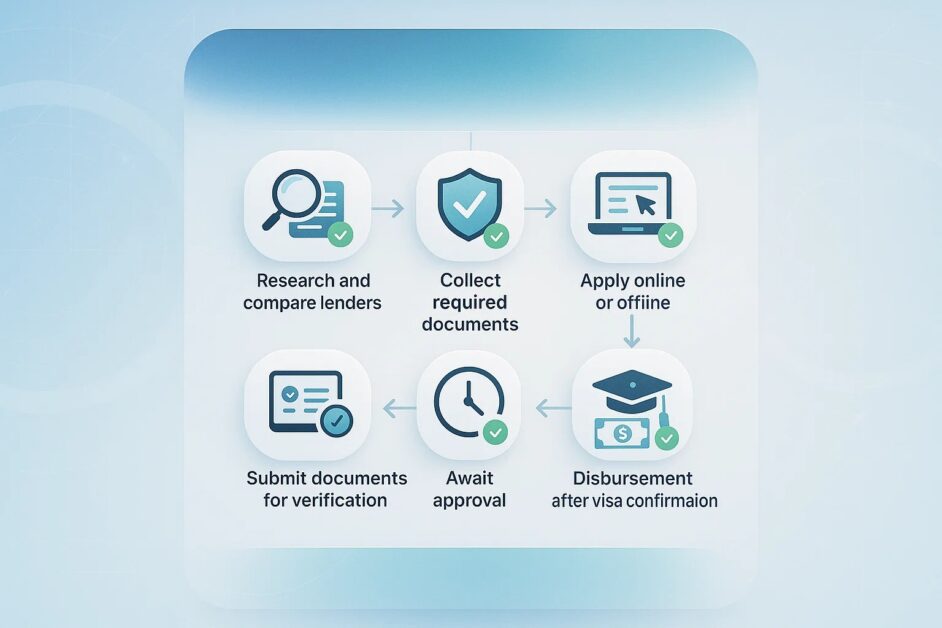
Application Process (Step-by-Step)
Research and compare lenders
Check eligibility criteria
Collect required documents
Apply online or offline
Submit documents for verification
Await approval (7 to 30 days)
Disbursement after visa confirmation
Interest Rates Overview
Nationalized Banks: 9% secured; 10–11% unsecured
Private Banks: 10–11% secured; 11–13% unsecured
NBFCs: 12–15% onwards
Benefits of Education Loans
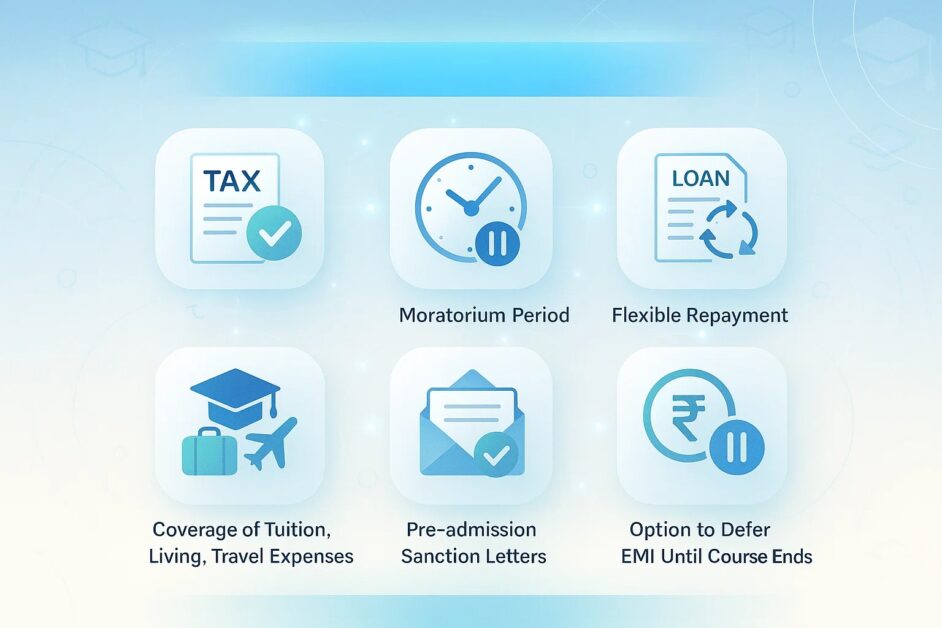
Income Tax benefit under Section 80E
Moratorium period of 6 months to 1 year after course completion
Flexible repayment tenure up to 15 years
Coverage of tuition, living, and travel expenses
Pre-admission sanction letters available
Option to defer EMI until course ends
Tips for a Successful Loan Application
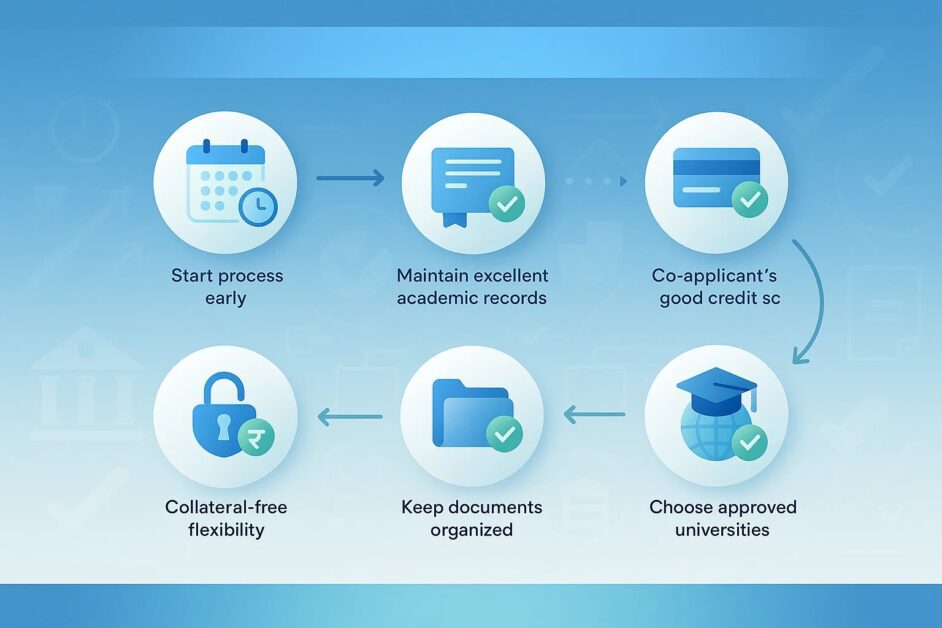
Start the process at least 6–12 months in advance
Maintain excellent academic records
Ensure co-applicant’s good credit score
Compare multiple lenders for best rates
Keep documents well-organized
Choose universities from approved lender lists
Consider collateral-free options for flexibility
Conclusion
Financing overseas education is easier today with multiple loan options available through nationalized banks, private lenders, NBFCs, and international organizations. By starting your planning early, keeping finances and documentation in order, and choosing the right lender type, you can ensure a smooth loan approval process. Remember, your international education dream is within reach with smart financial planning.