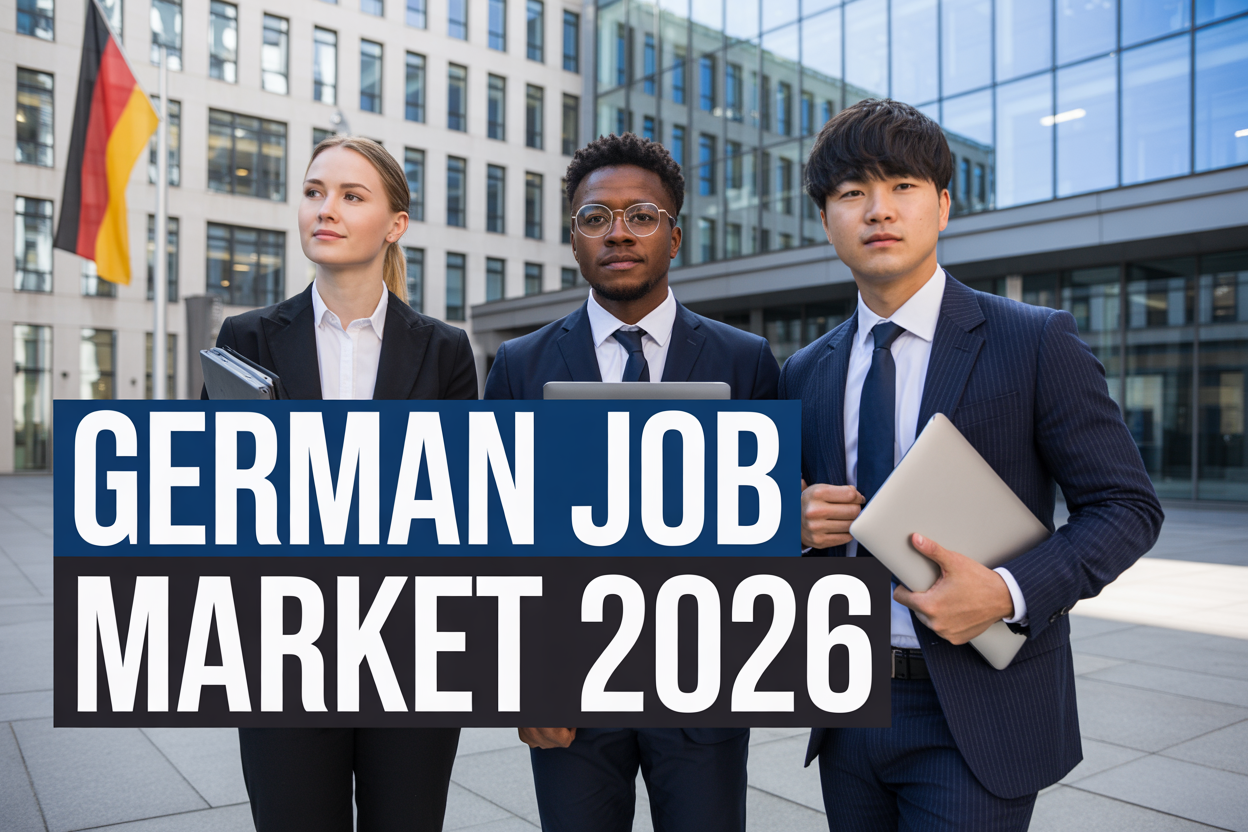
The German job market 2026 is booming with unprecedented opportunities for skilled professionals worldwide. This guide targets international job seekers, recent graduates, and career changers who want to tap into high paying careers Germany offers while understanding exactly what German language requirements jobs actually demand.
You’ll discover which sectors pay the most and why jobs in Germany for foreigners are expanding faster than ever before. We’ll break down the real German language levels for work you need for different industries—from tech roles where English dominates to traditional sectors where fluency matters. Finally, you’ll get a clear roadmap for career planning Germany style, including practical steps to position yourself for the best paying jobs Germany has to offer.
Stop guessing about German employment opportunities and start making informed decisions about your career move to Europe’s economic powerhouse.
Current State of the German Job Market in 2026
Key Economic Indicators Driving Employment Growth
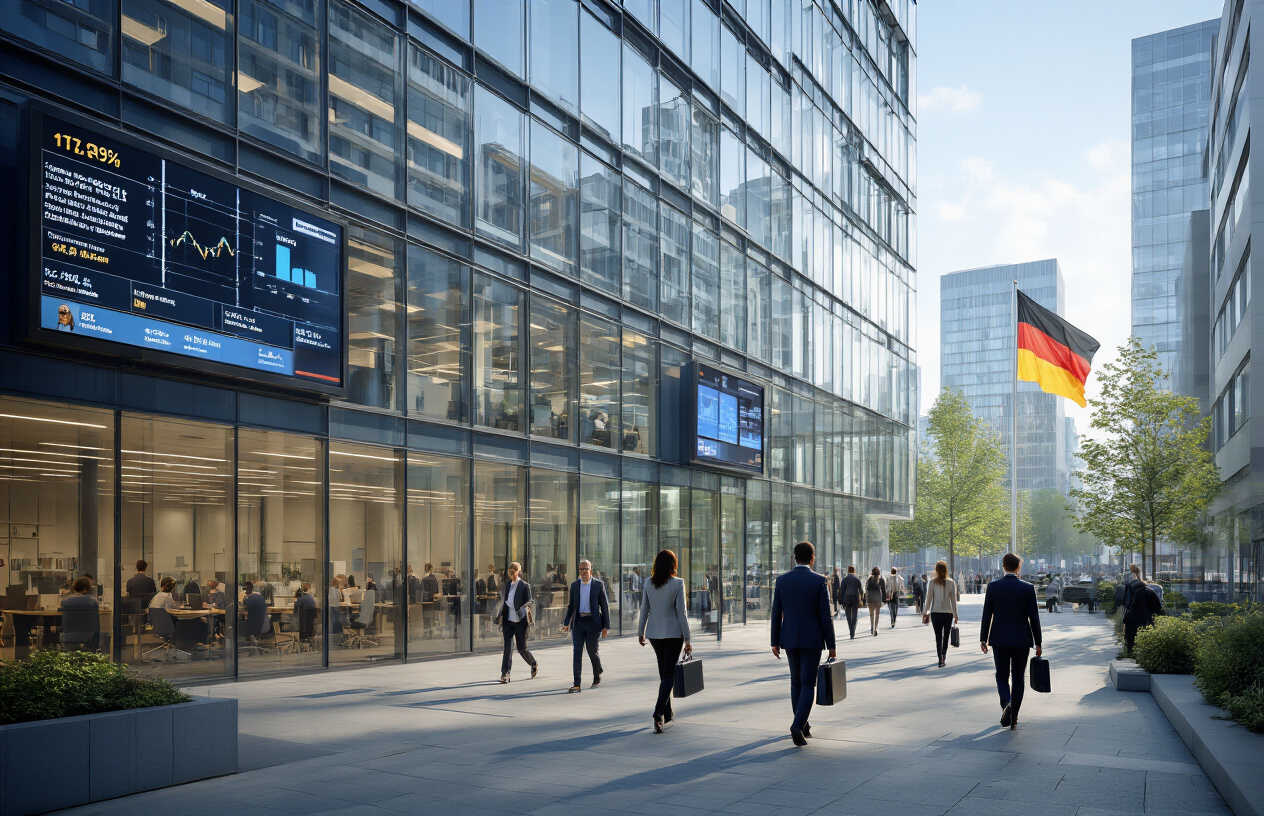
Germany’s economy shows strong momentum in 2026, with GDP growth at 2.8% and unemployment dropping to historic lows of 4.2%. The skilled worker shortage has intensified across all sectors, creating exceptional opportunities for international professionals. Labor market participation rates have reached 85%, while wage growth consistently outpaces inflation at 4.1% annually, making the German job market 2026 landscape particularly attractive for foreign talent seeking high paying careers Germany offers.
Most In-Demand Industries and Sectors
Technology and renewable energy lead employment demand, with artificial intelligence, cybersecurity, and green tech roles experiencing 40% growth year-over-year. Healthcare professionals face unprecedented demand, especially nurses and specialists, while engineering positions remain critically understaffed. Manufacturing continues its digital revolution, requiring skilled technicians and automation experts. The financial sector embraces fintech innovation, creating new roles for data analysts and blockchain specialists. These jobs in Germany for foreigners offer competitive salaries and excellent career progression opportunities.
Regional Job Market Hotspots Across Germany
Munich and Stuttgart dominate high-paying opportunities, particularly in automotive and aerospace industries, with average salaries exceeding €75,000 annually. Berlin’s startup ecosystem thrives, offering dynamic roles in tech and creative industries. Hamburg’s logistics and maritime sectors provide stable, well-compensated positions, while Frankfurt remains the financial hub attracting international banking professionals. Düsseldorf’s Japanese business community creates unique opportunities for multilingual candidates. Dresden and Leipzig emerge as affordable alternatives with growing tech scenes and competitive German employment opportunities.
Impact of Digital Transformation on Career Opportunities
Digital transformation reshapes traditional roles while creating entirely new career paths across all industries. Cloud computing, machine learning, and IoT specialists command premium salaries, often exceeding €90,000 annually. Remote work capabilities expand job accessibility for international professionals Germany seeks, reducing geographical barriers. Automation eliminates routine tasks but increases demand for human creativity and complex problem-solving skills. Companies invest heavily in digital upskilling programs, making career transitions more accessible and supporting long-term career planning Germany requires for success.
Highest-Paying Career Opportunities for International Professionals

Technology and Software Development Roles
Germany’s tech sector offers exceptional opportunities for international professionals, with software engineers commanding €70,000-€120,000 annually. AI specialists, cloud architects, and cybersecurity experts see the highest compensation packages. Major tech hubs in Berlin, Munich, and Hamburg actively recruit global talent, with many companies offering English-speaking work environments and competitive benefits packages.
Engineering and Manufacturing Positions
The backbone of Germany’s economy, engineering roles in automotive, mechanical, and industrial sectors pay €60,000-€110,000 for experienced professionals. BMW, Mercedes-Benz, and Siemens lead recruitment efforts for international engineers. Specializations in renewable energy, automation, and Industry 4.0 technologies command premium salaries. Manufacturing engineering positions often include comprehensive relocation packages and career advancement opportunities.
Healthcare and Medical Specializations
Medical professionals find lucrative opportunities across Germany’s healthcare system, with specialists earning €80,000-€150,000 annually. Surgeons, anesthesiologists, and radiologists top the salary charts. International doctors must navigate licensing requirements, but demand remains strong. Nursing professionals, particularly those with specialized training, also command competitive wages ranging from €45,000-€65,000, with additional benefits and job security.
Finance and Banking Career Paths
Frankfurt’s financial district attracts international talent with investment banking roles paying €90,000-€200,000 plus bonuses. Risk management specialists, financial analysts, and compliance officers find strong demand across traditional banks and fintech companies. Private banking and wealth management positions offer excellent growth potential. Many roles require minimal German initially, focusing instead on technical expertise and international experience.
Essential German Language Requirements by Career Field
Minimum Language Levels for Tech Industry Success
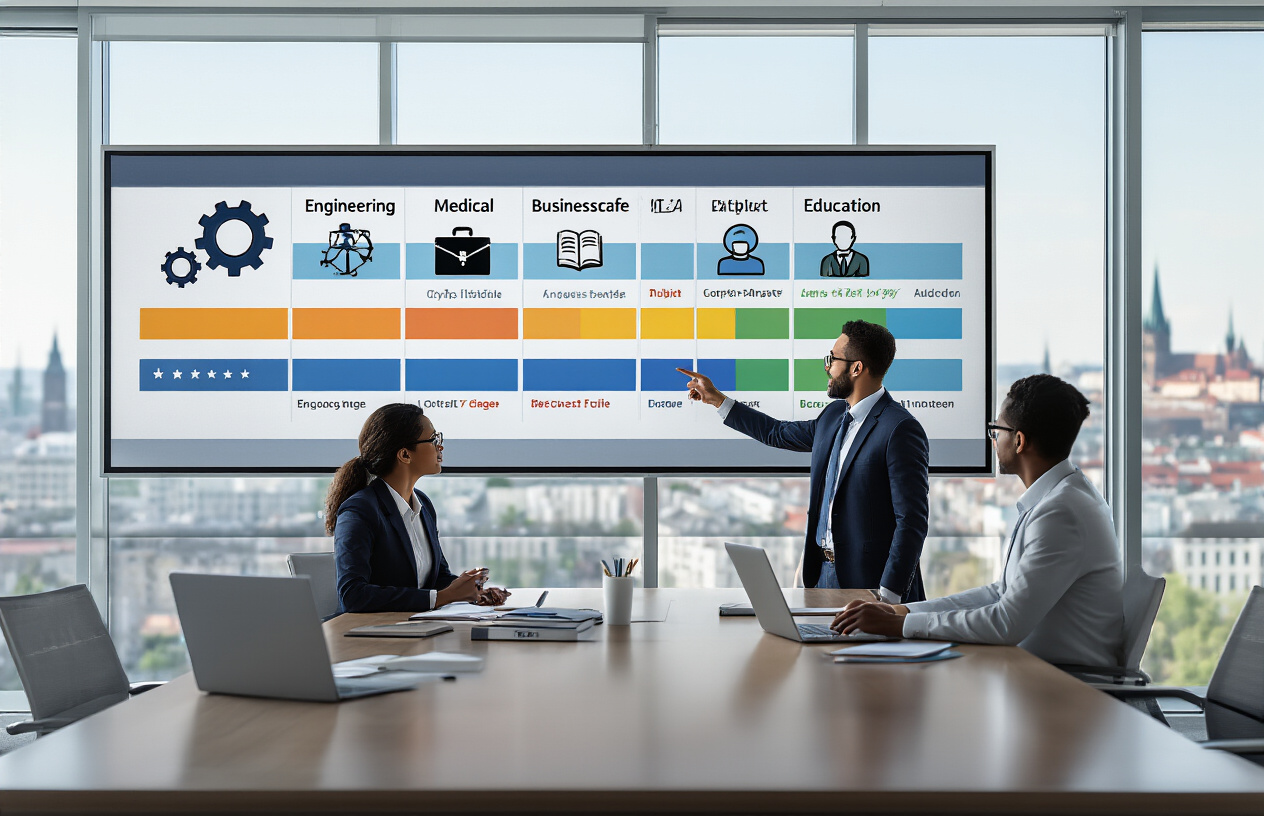
Tech companies in Germany’s 2026 job market typically require B2-level German for senior positions, though many international professionals succeed with B1 proficiency paired with strong English skills. Software developers and data scientists can often start with A2 German language levels, as technical roles prioritize coding abilities over conversational fluency. However, team lead positions and client-facing roles demand C1 proficiency to navigate complex project discussions and stakeholder meetings effectively.
Professional German Standards for Healthcare Roles
Healthcare professionals face the strictest German language requirements jobs in the market, with doctors needing C1+ certification for medical licensing. Nurses require B2 minimum for patient safety and documentation, while medical technicians can operate with B1 proficiency. The Fachsprachenprüfung (specialized language exam) remains mandatory for foreign medical graduates, making language preparation essential for international professionals Germany seeking healthcare careers.
Business-Level Language Needs in Finance and Consulting
Finance and consulting represent the most linguistically demanding sectors for jobs in Germany for foreigners, requiring C1-C2 German proficiency for client interaction and regulatory compliance. Investment banking and management consulting firms expect near-native fluency for presentation delivery and contract negotiations. Financial analysts can start with B2 certification, but career advancement in these high paying careers Germany depends heavily on mastering business German terminology and cultural communication nuances.
Strategic Career Planning for Maximum Earning Potential

Skills Development Priorities for High-Demand Roles
Focus on mastering digital transformation technologies, automation tools, and data analytics skills that German companies desperately need in 2026. Software development, cybersecurity expertise, and AI implementation knowledge command premium salaries across all industries. Engineering professionals should prioritize sustainable technology certifications, while healthcare workers benefit from specializing in geriatric care and medical technology integration.
Certification and Qualification Requirements
German employers value recognized credentials that demonstrate competency and commitment to professional standards. Industry-specific certifications like SAP modules, Cisco networking credentials, or medical board equivalencies significantly boost earning potential. International professionals must often complete credential recognition processes through relevant German authorities, which can take 6-18 months depending on the field.
Networking and Professional Development Strategies
Join industry-specific associations like VDI for engineers or BDI for business professionals to access exclusive job opportunities and mentorship programs. Attend trade fairs such as CeBIT for tech roles or Medica for healthcare positions where German companies actively recruit international talent. LinkedIn networking in German and English opens doors to hidden job markets that aren’t publicly advertised.
Timeline for Career Transition and Language Learning
Plan an 18-24 month timeline for complete career transition into the German job market 2026. Dedicate the first 6-9 months to intensive German language learning, targeting B2 level for technical roles and C1 for management positions. Simultaneously pursue relevant certifications and begin networking activities. The final 6-12 months should focus on active job searching while continuing language improvement and cultural integration preparation.
Practical Steps to Secure High-Paying German Employment

Job Search Platforms and Recruitment Channels
XING dominates the German job market 2026 landscape, making it essential for international professionals seeking high paying careers Germany. Connect directly with recruiters through this platform while building a strong professional network. LinkedIn works well for international positions, but German companies prefer XING for local hiring. StepStone and Indeed.de offer comprehensive job listings across industries. Specialized platforms like Gulp.de target IT professionals, while Academics.de focuses on research positions. Direct company applications often yield better results than job boards – German employers value initiative and personal connection.
Resume and Application Optimization Techniques
German applications require detailed cover letters explaining your motivation and cultural fit. Your CV should include a professional photo, personal details, and chronological work history without gaps. Address language requirements upfront – specify your German language levels for work clearly. Tailor each application to match specific job requirements, using keywords from the posting. Include relevant certifications and emphasize your international experience as an asset. German recruiters expect formal tone and structured presentation. Save documents as PDFs with clear naming conventions including your surname and document type.
Interview Preparation and Cultural Adaptation Tips
German interviews prioritize technical competence and cultural alignment over small talk. Research the company thoroughly and prepare specific examples demonstrating your skills. Punctuality is non-negotiable – arrive 5-10 minutes early. Maintain direct eye contact and offer firm handshakes. Germans appreciate honest answers about weaknesses when paired with improvement strategies. Prepare questions about company structure, growth opportunities, and team dynamics. Dress conservatively in business attire. Address interviewers formally using “Sie” unless invited to use informal “Du.” Follow up with a brief thank-you email within 24 hours, reiterating your interest and qualifications.

The German job market in 2026 offers incredible opportunities for international professionals who understand what employers really want. From tech and engineering roles commanding six-figure salaries to healthcare and finance positions with strong growth potential, the landscape is rich with possibilities. What matters most isn’t perfect German fluency across every field – it’s matching your language level to your target career and building the right skills that German companies desperately need.
Your path to a high-paying German career starts with honest self-assessment and strategic planning. Focus on industries where your current German level fits, invest in the specific language skills your chosen field requires, and don’t forget about networking and cultural understanding. The German job market rewards preparation and persistence, so start building your language foundation today while researching the career paths that align with both your skills and earning goals. The opportunities are there – you just need the right roadmap to reach them.